

Heat pump heating curve and weather compensation: what it is, why it is set 5 degrees too high, and how to do without it
Almost every heat pump sets its water temperature with a heating curve, also called weather compensation: the colder it is outside, the hotter the water sent to the heating system. The method was born with boilers, and on a heat pump it has a flaw you pay for on the electricity bill all winter. Here we explain how it works, why the person who sets it keeps it high to be safe, and how our units do without that margin.
01
What the heating curve is
The heating curve is a table: for every outdoor air temperature it gives a flow water temperature. At 10 °C outside the water goes, say, to 30 °C; at -5 °C it goes to 40 °C. The controller reads the outdoor sensor and sets the flow temperature accordingly. The installer sets it at commissioning by choosing the slope, how much the flow rises for every degree colder outside, and the offset, how high the whole curve sits.
02
The flaw: it works at a fixed point
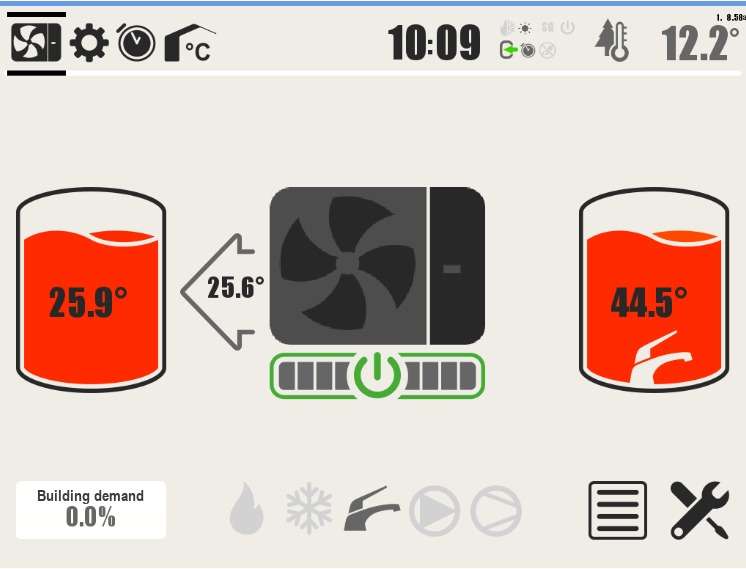
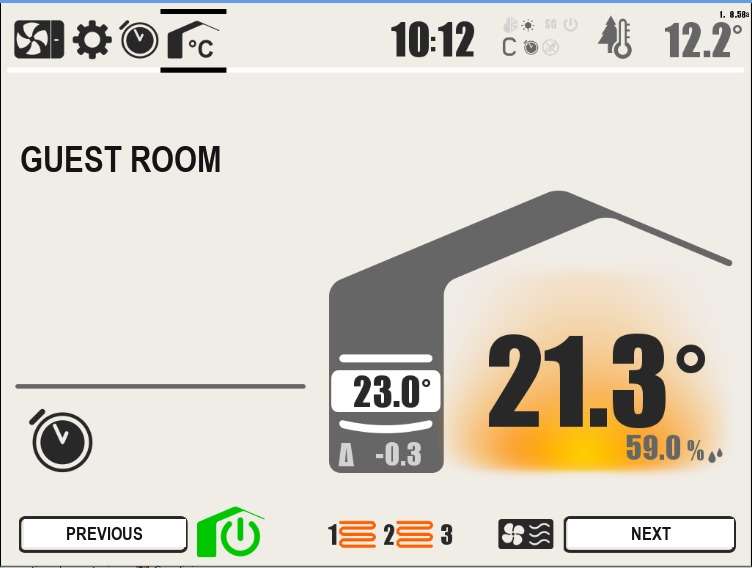
The heating curve only looks at the outdoor temperature. It does not know whether the house is at 19 or 22 degrees, whether the sun is on the windows, whether the oven is on or ten people are at dinner. It does not know whether the radiators are large or small, or whether the floor has already stored heat in the previous hours. At a given outdoor temperature it sends a given water temperature, full stop. It is not adaptive: it does not correct itself on the result. The panel of our units also shows the building demand as a percentage: how much output the house is asking for at that moment. It is exactly the number the heating curve cannot see.
03
Why the installer sets it 5 degrees higher
Whoever sets the curve does not want to risk leaving the family cold on the worst days, because their phone would ring. So they keep it high: typically about 5 degrees of flow temperature more than is really needed. It is caution, not a mistake. The problem is that those 5 degrees of margin stay there all season, including the days when they are not needed, which is almost all of them.
04
What that margin costs
On a heat pump the water temperature is the single item that weighs most on efficiency. In the article on COP we showed the certified data of one of our units: going from 35 to 55 °C flow temperature costs about a third of the COP, at any outdoor temperature. Every extra degree of flow temperature is paid in electricity all winter. A curve kept high to be safe is a system that uses more than it needs every day it runs.
05
How our heat pumps do without the curve
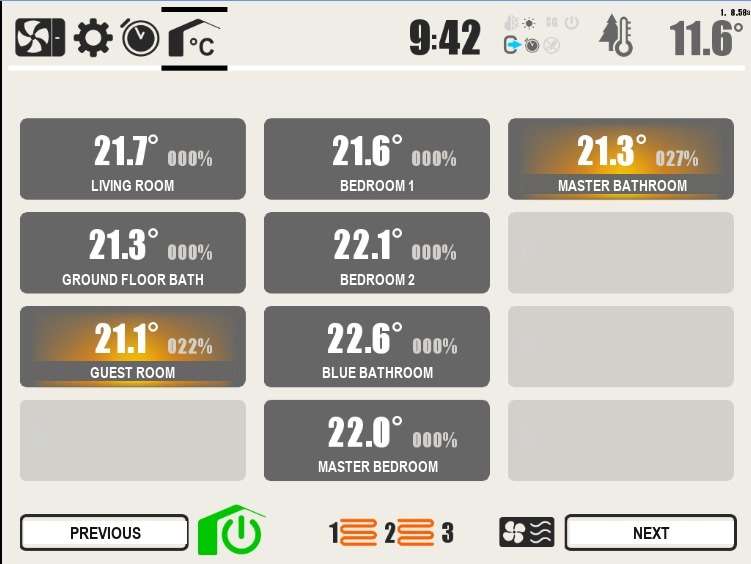
Templari heat pumps do not control on the outdoor temperature but on the room temperature. HCC, the control system fitted as standard on all our units, reads the room sensors and looks on its own for the lowest flow temperature that keeps the house at the requested temperature. If the rooms stay at 20 with 32 °C water, the unit stays at 32. If the house starts to cool, it raises the water by just what is needed. In practice it matches the heat pump to the heating system and to the house, without anyone having to guess the right curve. On the panel this setting is called automatic control on air: the system temperature you enter, say 40 °C, becomes the maximum that can be reached. It is a limit, not a target: below that ceiling the room temperature decides.
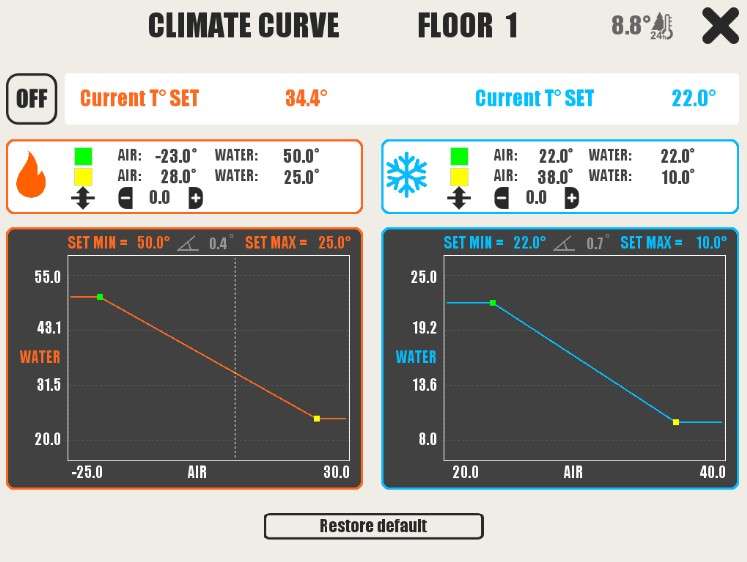
If you want a heating curve, the panel has one. It is set per zone, separately for winter and summer, with two points chosen according to the climate zone and the house: for any outdoor temperature you can ask for whatever water temperature you like. The values in the screenshot are the starting ones, which the restore key brings back: in winter 50 °C water at -23 °C outside and 25 °C at 28 °C outside, in summer 22 °C at 22 °C outside and 10 °C at 38 °C outside. Between the two points the water temperature follows a straight line, and the plus and minus keys shift the whole curve up or down. The outdoor temperature used is the average of the last 24 hours, so one cold night or an hour of sun does not make the water jump. With HCC active the curve is no longer needed: the unit sets the water from the rooms, as explained above.
06
Who decides how much cold is acceptable
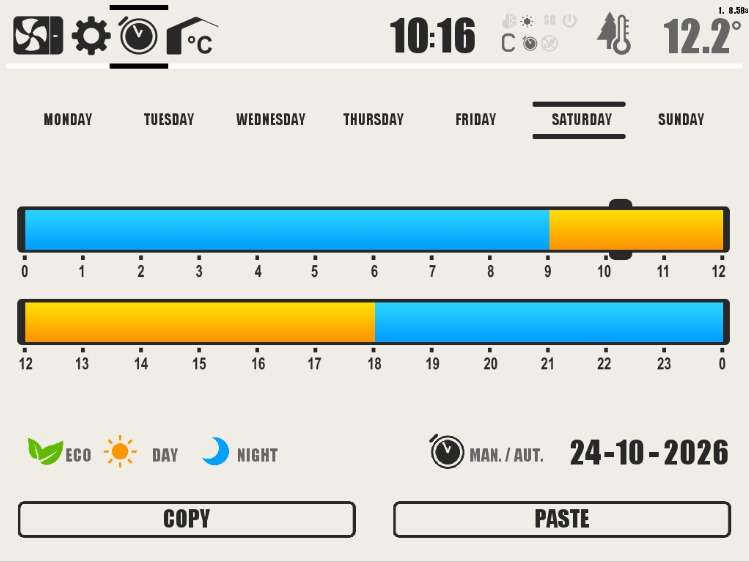
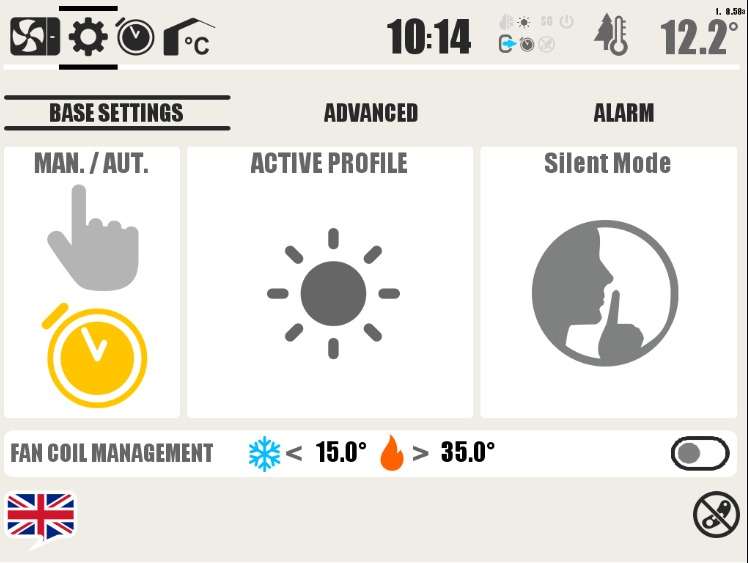
The margin is not fixed in advance by the installer; it is chosen by the people who live in the house: how far the temperature may drop below the setpoint before the unit steps in, a few tenths of a degree. The tighter the margin, the more often the unit steps in; the wider it is, the more it runs with low water. It is the same logic as the energy optimiser, which uses the walls of the house as storage: the unit runs with the lowest possible water and in the most favourable hours, and the seasonal efficiency rises by one or two COP points. On the optimiser screen you enter how far the set temperature may rise and fall, for example 0.3 °C up and 0.3 °C down. Time schedules are set day by day with three levels, eco, day and night, and copied from one day to the next. From the basic settings you choose the active profile, manual or scheduled operation, Silent Mode and fan coil management; in summer, when the unit cools, the buffer tank is set to 13 °C, for example.
07
It works with radiators too
With radiators the heating curve does more harm than with underfloor heating, because a radiator rated at 75 °C gives about half its output at 55 °C, as we explain in the article on radiators. Here the temptation to keep the water high to be safe is strong. Room-based control does the opposite: it sends high water only on the days when the radiators really need it, and on the days in between it drops. Our R290 air-to-water units reach 70 °C flow temperature, so the reserve for cold days is there, but it is used only when needed.
08
Old houses and heat pumps
In a house built before 1990 and never insulated a heat pump can be installed, radiators included: the propane unit is suitable and reaches the temperatures required. It has to be said plainly that it will use two or three times the electricity of a class A house, because the house loses two or three times the heat. It is precisely in these houses that room-based control matters most: every degree of flow temperature saved on mild days is worth a lot when the cold days already cost dearly.
09
What changes for the installer
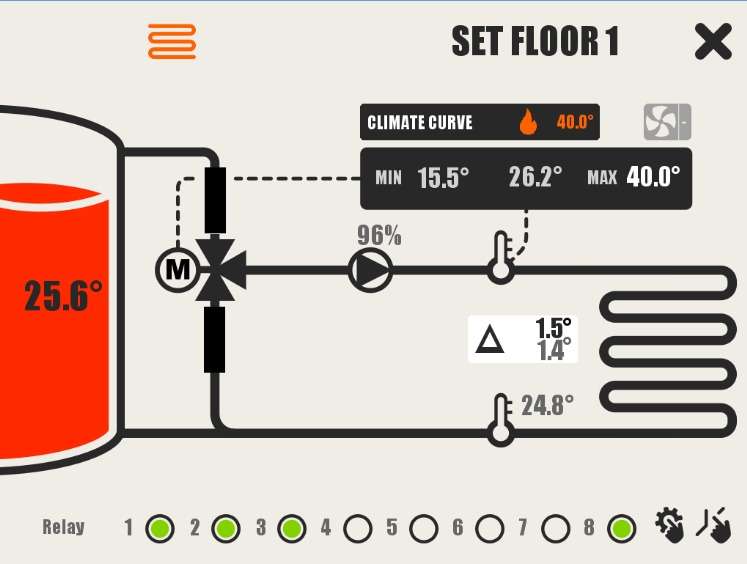
No curve to set and to adjust again in January, no calls about a cold house or a high bill: the unit finds its operating point on its own and keeps it as the season changes. The installer fits the room sensors and connects the system; the control does the rest. For underfloor heating the Floor board manages the mixing valve and the system-side circulator: two sensors on the flow and return manifold tell it how much water is really needed, and the circulator runs on PWM only as much as necessary, saving electricity all season long. In summer it keeps the water above the dew point, so the floor cools without condensation. In the article on system control we explain the boards that manage underfloor heating, fan coils and separate zones. The difference between flow and return is set, for example at 1.5 °C: as soon as the measured value drops below it, the circulator slows down. It is not a common control.
10
The next units
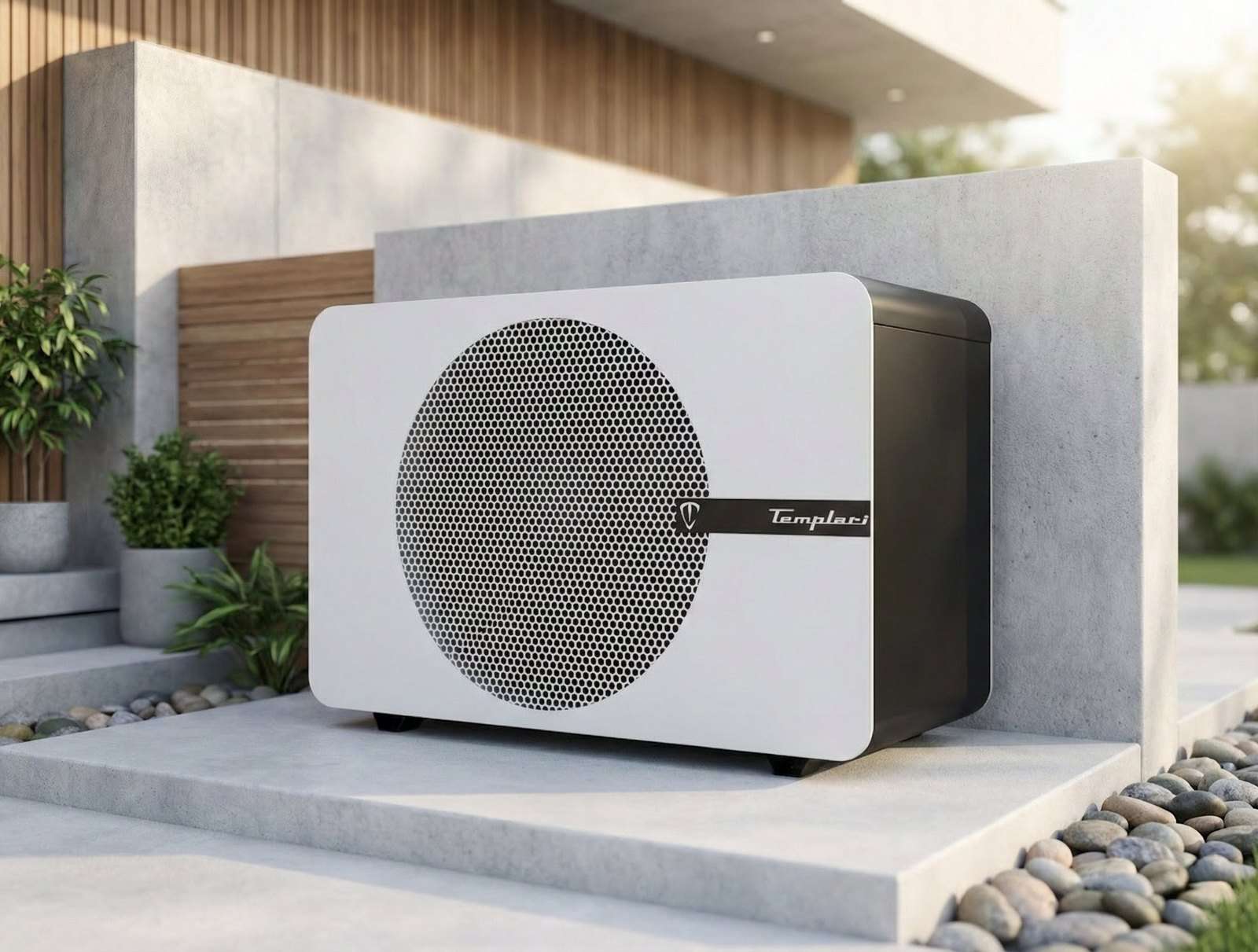
Room-based control is standard on all our heat pumps, including the two about to arrive: the Kita X, the propane heat pump for flats and small houses, and the new propane air-to-water unit for the home, with the compressor enclosed in an insulated housing that you can barely hear. If you are thinking about a heat pump for next season, ask us for information: we will tell you which of the two suits your house.
11
Should you turn it down at night?
Many people ask: in Germany “Wärmepumpe Nachtabsenkung” is searched 590 times a month. With a heat pump, switching off or turning down a lot at night is rarely worth it: the unit takes 5-10 minutes to reach steady running, and in the morning, with colder and more humid air, it would have to catch up with hotter water and a few more defrosts. Ours work like this: on during the day, roughly from 7 to 21, and at reduced output at night; in the warm hours the optimiser loads the walls with heat, which give it back at night. In an old house that loses a lot of heat, the unit stays on at night too.
12
Frequently asked questions
What is the heating curve of a heat pump?
It is the rule that links the flow water temperature to the outdoor temperature: the colder it is outside, the hotter the water. The installer sets it at commissioning.
How do you set the heating curve?
You choose the slope and offset of the curve on the controller, then correct it over the following weeks according to how the house responds. On our units there is nothing to set: the control works on room temperature.
Why is the heating curve kept high?
For safety: the installer adds about 5 degrees of flow temperature so as not to risk a cold house on the worst days. That margin stays all winter and costs efficiency.
How much do you save with a lower flow temperature?
From certified data, going from 35 to 55 °C flow temperature costs about a third of the COP. Always running with the lowest possible water raises seasonal efficiency by one or two COP points.
Does room-based control work with radiators?
Yes. It sends high water only on the days when the radiators need it; on mild days it drops. Our R290 air-to-water units reach 70 °C when required.
Can a heat pump go into an old, uninsulated house?
Yes, radiators included. It will use two or three times the electricity of a class A house, because the house loses more heat: that is why a control that keeps the water low on mild days pays off even more.
See also: Heat pump in an old house: it can be done, even with radiators, if you know what it will use · Heat pump buffer tank: is it needed, which type, what size and which to avoid · High temperature heat pump: up to 70 °C, how much more it uses and when you really need it · How to balance radiators for a heat pump: flow, valves and the right water temperature
All the technical tips are on the series page.


