

How long do heat pumps last: years of service, what wears out and what makes them last longer
Anyone buying a heat pump wants to know how many years it will last. In Germany “Wärmepumpe Lebensdauer” is searched 2,900 times a month, in France “durée de vie pompe à chaleur” 1,000, in the Netherlands 480. Our article on maintenance answers it in one line; here we give our figures, the ones measured in the field and the causes that shorten or extend a unit’s life.
01
How long it lasts: 20 years
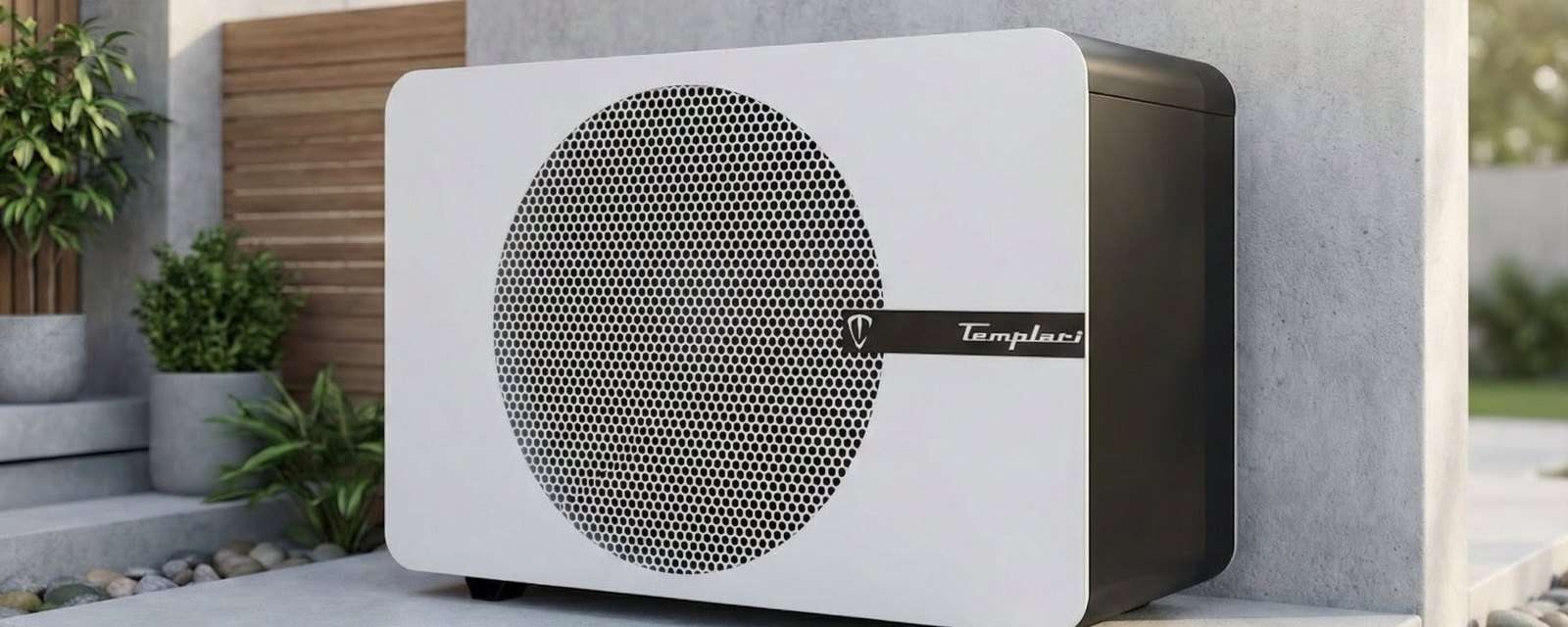
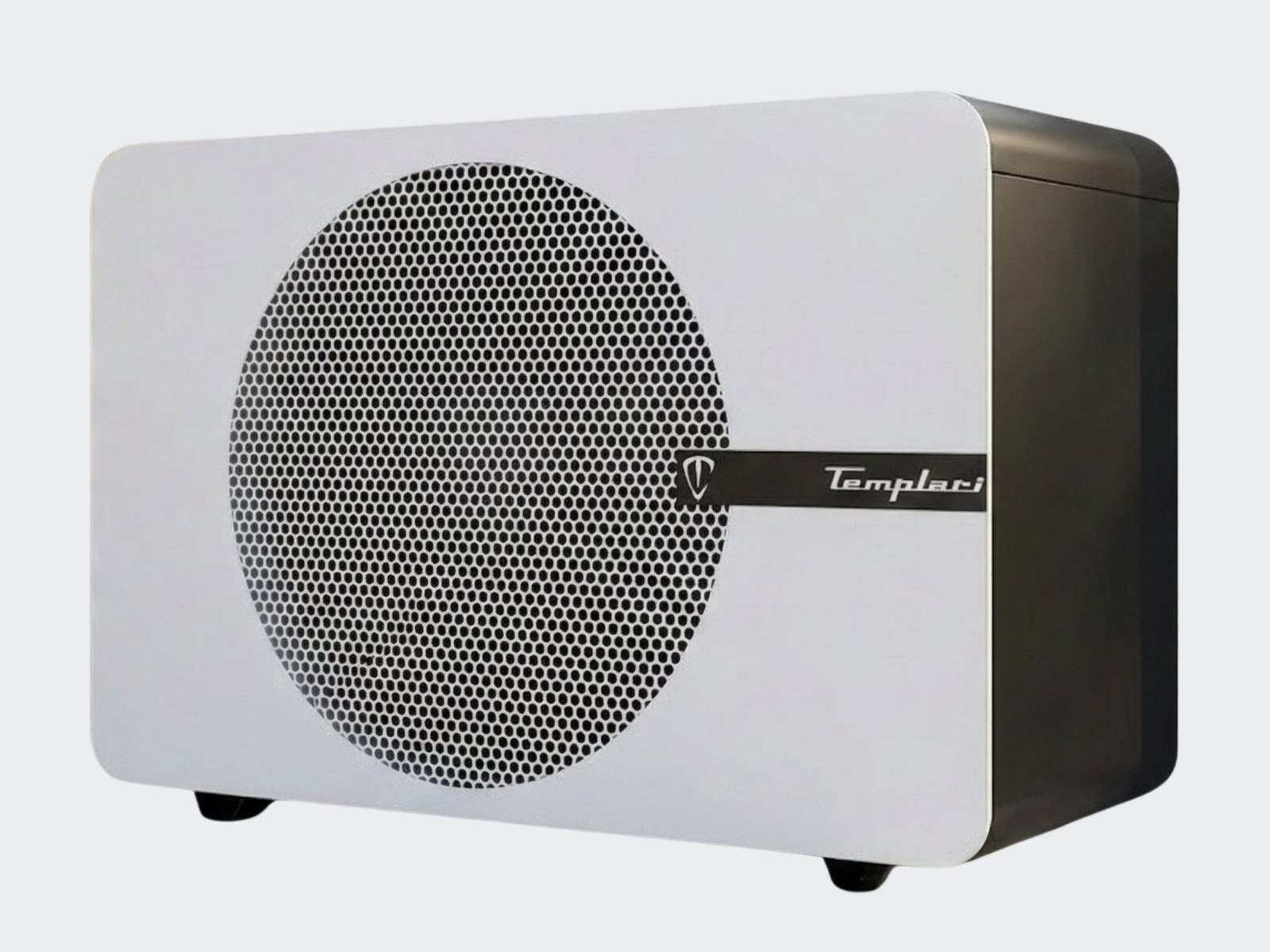
One of our air-to-water heat pumps lasts 20 years, like a ground source unit and like a boiler. We see it on installed units: one of our air-to-water units, five years old, in a home, has 17,075 operating hours and is still like new; on 25 October 2026 it heated at COP 6.42, that is 48.08 kWh of heat with 7.49 kWh of electricity.
02
In the field: the longest study
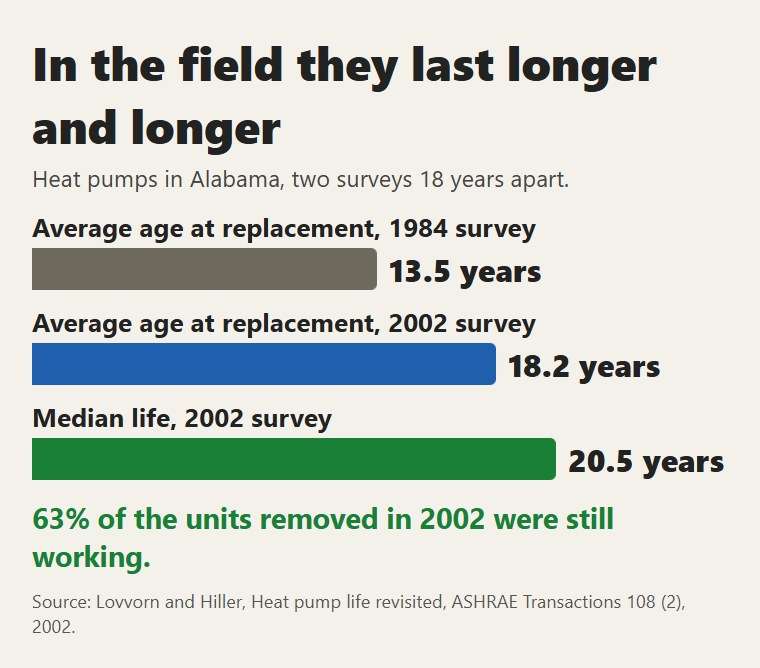
Heat pumps have been used in Alabama for decades, and the longest survey of their life was carried out there. In 1984 the average age of replaced units was 13.5 years; in 2002, with the same questions, it was 18.2 and the median life 20.5 years. 63% of the units removed were still working: they were replaced for other reasons. These were heat pumps from the 1970s and 1980s.
03
What wears out
The parts that work hardest are the compressor, the circulator, the valves and the sensors. They can be replaced: the Danish Energy Agency writes that in theory a heat pump’s life can be extended indefinitely by replacing worn parts, but that at some point a new unit is usually the better choice. We cover the compressor in the article on rotary and scroll compressors and the checks in the article on maintenance. The tray that collects condensate under the coil also works every winter with water and ice: in our units it is stainless steel, unlike others.
04
What shortens its life, and how to avoid it
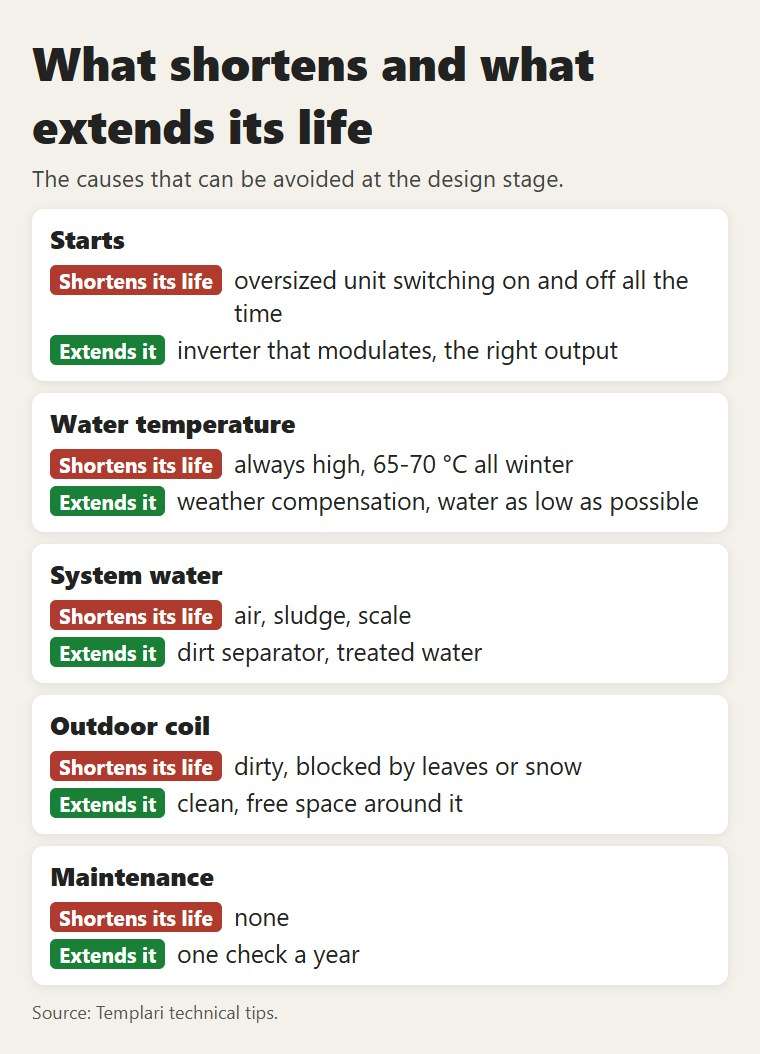
The first cause is starts: an oversized unit switches on and off all the time, and every start weighs on the compressor. A correctly sized inverter unit modulates and runs longer, as we explain in the article on inverters. Then the water temperature: the higher it is, the harder the compressor works, and weather compensation keeps it low. Then the system water, which must be treated and filtered. Finally frost: every defrost is one more cycle, and demand defrost runs far fewer than timed defrost; with HCC controlling on the rooms the unit defrosts very rarely and starts few times.
05
The gas inside the unit
A heat pump also lasts as long as its refrigerant stays available for servicing. Propane R290 is not a fluorinated gas: the phase-down in Regulation (EU) 2024/573 does not apply to it. Why we use it is in the article on propane R290.
06
Repair or replace
The Danish Energy Agency defines lifetime by comparing the cost of repairs with that of a new unit. When a 15 to 20-year-old heat pump needs a compressor, it is worth adding running costs to the sum: a modern unit with a higher COP spends less every winter. How to estimate running costs is in the article on how much a heat pump uses.
07
What to ask before buying
Five questions. Whether the output is calculated for the house or guessed. Whether the unit has an inverter and how low it modulates. How the system water is treated and filtered. Who provides service and for how many years spare parts are available. How often it needs checking. If you want an opinion on your house, ask us for information.
08
Frequently asked questions
How many years does a heat pump last?
One of our air-to-water units lasts 20 years, like a ground source unit. In the field, in Alabama, the median life measured in 2002 was 20.5 years.
Does a heat pump or a boiler last longer?
The same: a gas or pellet boiler lasts 20 years, and so does one of our air-to-water units.
What breaks in a heat pump?
The parts that work hardest: compressor, circulator, valves and sensors. They can be replaced; at some point a new unit is the better choice.
How can you extend a heat pump’s life?
With the right output and an inverter, which cut the number of starts; with system water as cool as possible, treated and filtered; with a clean outdoor coil and one check a year.
How long does a heat pump compressor last?
Usually as long as the unit, if it does not keep starting and stopping. An oversized unit wears it out sooner.
Can the refrigerant become a problem over the years?
Propane R290 is not a fluorinated gas, and the phase-down in Regulation (EU) 2024/573 does not apply to it.
Sources: Danish Energy Agency, Technology Data for Individual Heating Installations (2016-2017) · Technology Data for Heating Installations (2026) · Lovvorn, Hiller, Heat pump life revisited, ASHRAE Transactions 2002
See also: Ground source vs air source heat pump: running costs, lifetime and system cost compared
All the technical tips are on the series page.


