

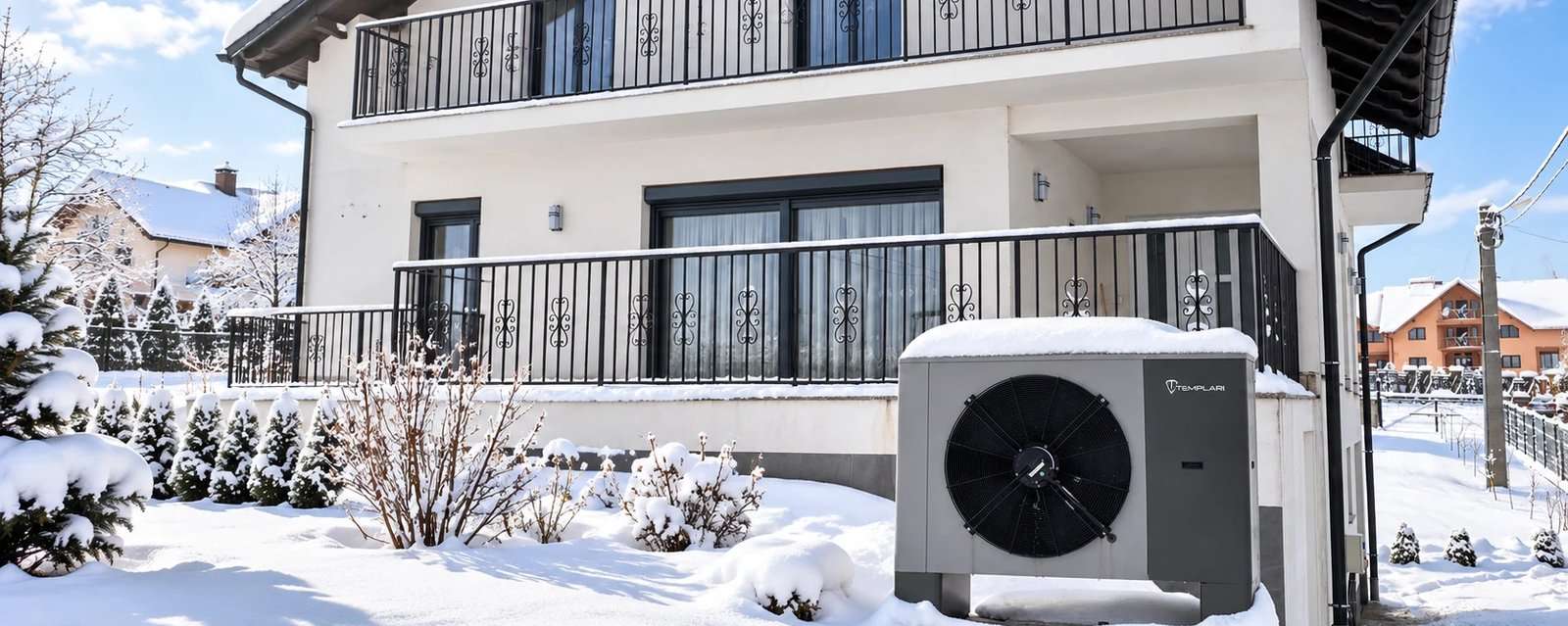
Heat pump defrost mode: timed or on demand, when the unit decides to stop
In the first tip we saw that in winter frost closes the air passage between the fins of the outdoor heat exchanger, and that every defrost takes heat away from the building. This time we look at the other half of the problem: who decides when to defrost, and by what criterion. It is the second thing to ask before you buy.
01
What happens during a defrost
The unit reverses its cycle. Heat, instead of going from the outdoor air into the system, goes from the system to the outdoor exchanger, which warms up and melts the ice. For a few minutes no heat reaches the building, and with fan coils cool air comes out. The electricity used is small, because the compressor works with a very small temperature difference; the real cost is the heat taken from the rooms and the minutes without heating, in the coldest hours of the day. Fewer defrosts means more hours of heating.
02
Timed defrost
Many heat pumps do it with a clock. Below a certain outdoor temperature, or when a sensor on the coil drops below a threshold, a count starts: every 30, 60 or 90 minutes of running the unit stops and defrosts, whether there is frost or not. It is the simplest and cheapest system, because it does not require understanding what is happening on the coil. The flaw is obvious: on a cold, dry night with little frost, the unit defrosts anyway; on a humid night near zero, when frost grows fast, it arrives late and finds the coil blocked by ice. In both cases the timing is wrong.
With a defrost every half hour the unit really heats one quarter of an hour out of two, and in those hours it goes from COP 3.5 to COP 1.75.

03
Our patented defrost
Our units do not look at the clock: they look at the coil. The Templari defrost system is patented. The on-board electronics, designed by us, continuously read the circuit variables and recognise when frost has covered the coil evenly and air no longer passes. Only then does the defrost start. If part of the coil is frosted and the rest is working, the unit keeps heating: there is no reason to stop. The result is the minimum number of defrosts that night requires: one fewer than needed is not possible, one more we do not do.
04
The problem is not the ice, it is the air
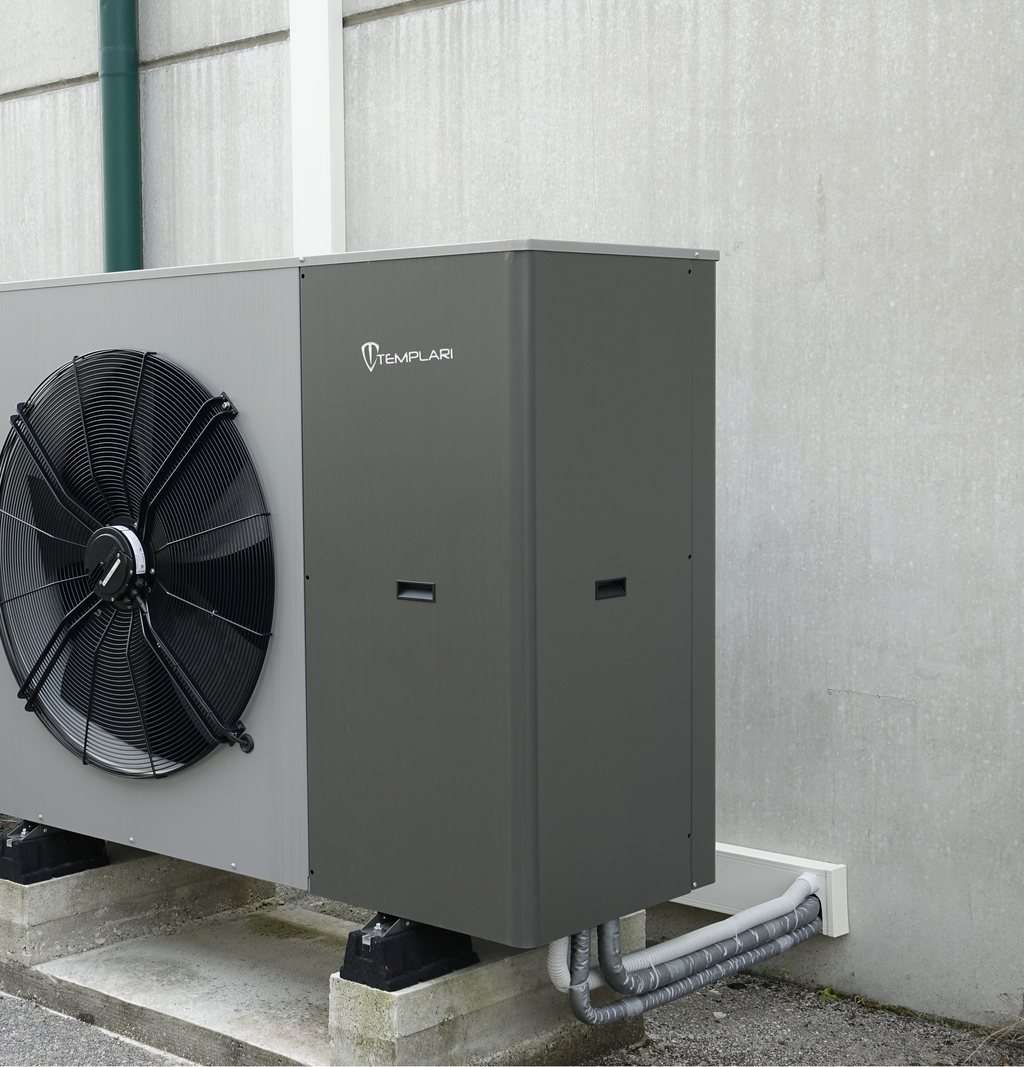
A coil with a thin layer of frost still exchanges heat, because air passes through it. The damage begins when frost closes the passage: less air passes, the exchanger gets colder to collect the same heat, more frost forms, and within minutes the passage is closed. This is why fin spacing matters so much: with 2.5 millimetres frost has room to grow for a long time before closing the air passage, with 1.5 the passage closes much sooner. An exchanger with wide fin spacing and a defrost that starts only when air no longer passes are two halves of the same choice: the first lengthens the time between defrosts, the second avoids the useless ones.
05
How to check, before you buy
Two questions for the seller, in addition to the three figures from the first tip:
- does the defrost start on a timer or on demand? If on demand, by what criterion does the unit know the coil is blocked?
- how many defrosts does it do on a humid night at zero degrees?
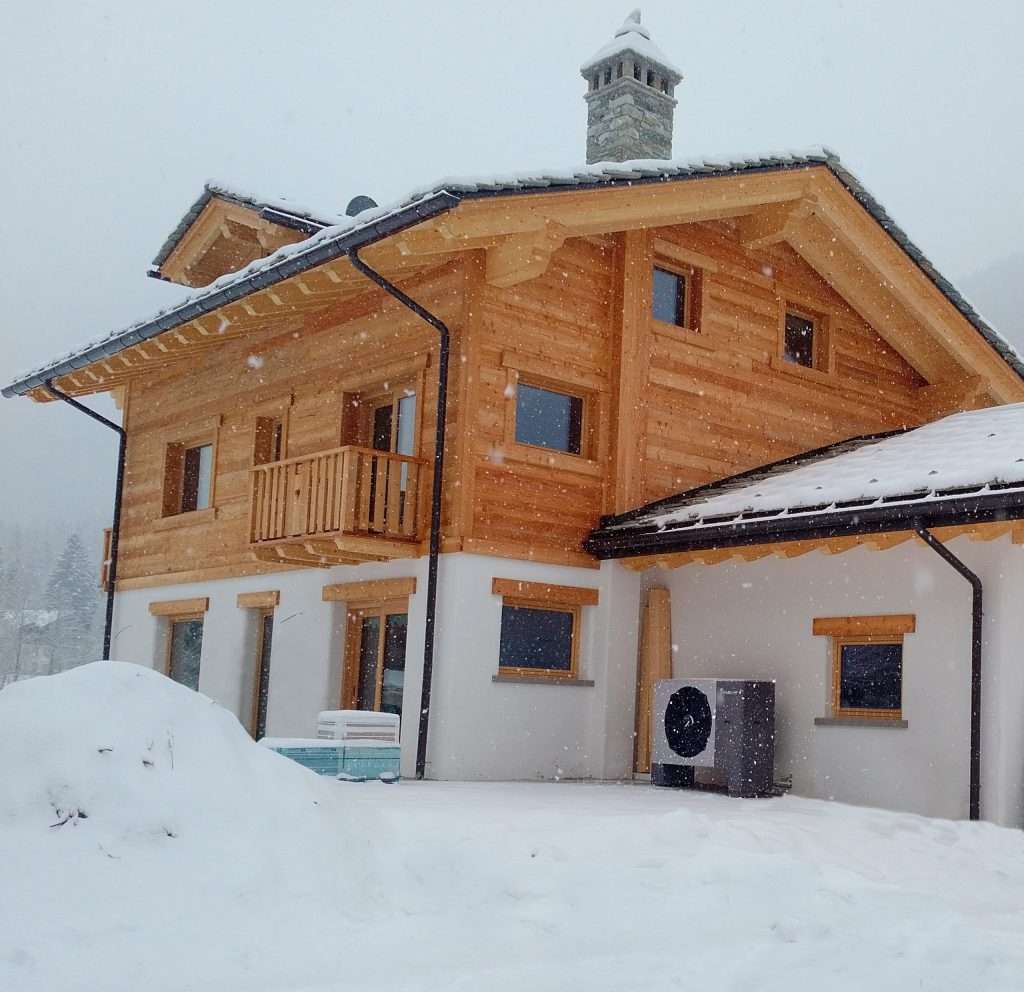
And a check you can do yourself: on a cold, humid day, watch an installed outdoor unit. If it stops at regular intervals with a clean exchanger, it is a clock.
The technical data sheets of our air-to-water heat pumps and of the Kita Air for industrial buildings are on the site.
06
Frequently asked questions
Why does my heat pump keep defrosting?
Often because it defrosts on a timer: every 30, 60 or 90 minutes it stops, whether there is frost or not. On a damp night close to zero, on the other hand, it arrives late and finds the coil already blocked with ice.
What is the difference between timed and demand defrost?
Timed defrost follows a clock. Demand defrost starts only when frost covers the coil evenly and air no longer passes. Ours is patented and does the minimum number of defrosts that night requires.
Does a heat pump heat during defrost?
No: it reverses the cycle and takes heat from the system to melt the ice. For a few minutes no heat reaches the rooms, and with fan coils cool air comes out.
How can you tell whether a heat pump defrosts on a timer?
Watch an installed outdoor unit on a cold, damp day: if it stops at regular intervals with a clean heat exchanger, it defrosts by the clock.
See also: How does a heat pump work: heat is not produced, it is moved · Heat pump COP: what it is, how it is measured, and why it is not the same in the fog · Heat pump maintenance and servicing: what to do, how often, and how long a heat pump lasts · Heat pump in cold weather: down to what temperature does it work? Below freezing, at -20 and -25 °C · Heat pump noise: how many decibels, how far from the neighbours and why it is louder in winter · Heat pump with ice, steam or water underneath: what is normal and when to call for service · Heat pump not heating or using too much electricity: the real causes and what to check
Next tip: why an inverter heat pump is sized to run at half capacity, and why it is the heat exchanger, not the compressor, that has to be twice as big. Read it here.


