


How to balance radiators for a heat pump: flow, valves and the right water temperature
“How to balance radiators” is searched 3,600 times a month in the UK and “balancing radiators” 1,900; in Germany “hydraulischer Abgleich” 14,800. The problem is the same everywhere: rooms too hot near the boiler and cold at the far end of the house. With a heat pump balancing matters more, and we explain why with a simple sum.
01
What balancing is
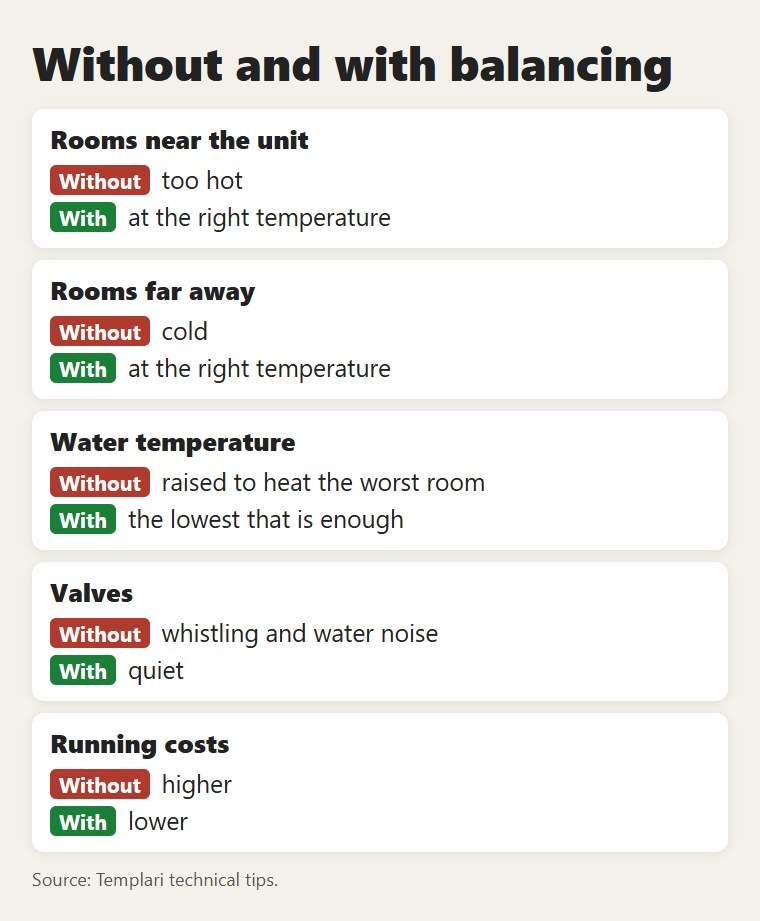
Hot water takes the easiest path: radiators close to the unit, with short pipes, get too much; those far away get too little. Balancing the system means giving each radiator, or each underfloor circuit, the amount of water its room needs, by setting valves, lockshields and flow meters.
02
Why it matters more with a heat pump
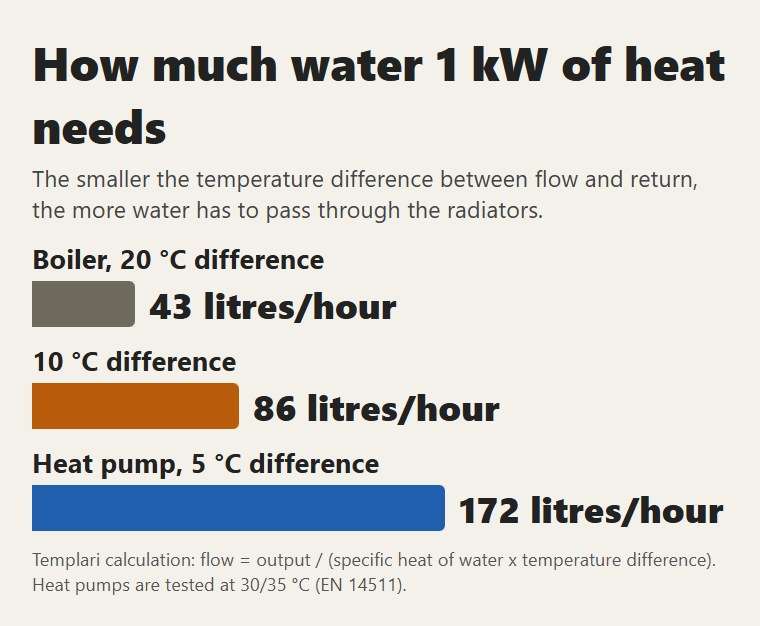
A boiler works with about 20 degrees between the water going out and coming back; a heat pump with about 5, and that is how the standards test it (EN 14511, 30/35 °C). To deliver the same heat it has to circulate four times the water: 172 litres an hour for each kW instead of 43. If the system is not balanced, the worst room stays cold and the water temperature gets raised to heat it. Every degree costs: the Kita X uses 178 kWh of electricity for 1,000 kWh of heat with water at 35 °C and 228 with water at 55 °C, as we explain on the page on pros and cons.
03
How it is done
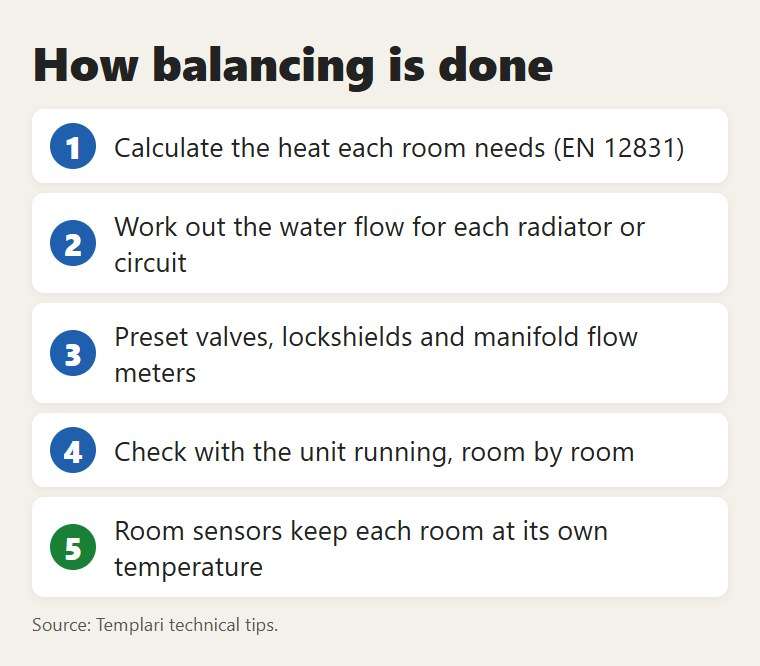
You start by calculating the heat each room needs (EN 12831), work out the water flow for each radiator or circuit, preset the radiator valves and lockshields or the underfloor manifold flow meters, and check with the unit running, room by room. Without a calculation you can do a trial by looking at temperatures, but it is not full balancing. How to tell whether your radiators are enough is in the article on radiators, water temperature in the article on weather compensation.
04
What room sensors do
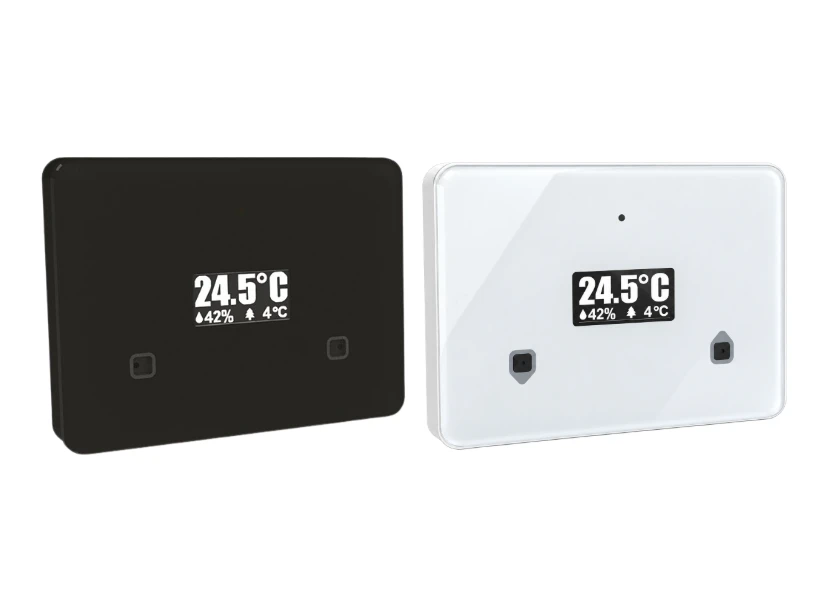
Our heat pumps are controlled by the HCC electronics, which read each room’s temperature with ROOM or DOME sensors and, for underfloor heating, drive the mixing valve, circulator and actuators with the Floor board. The unit works for the rooms, not for the buffer tank. The electronics help keep each room at its temperature, but they do not replace set valves: first you balance, then you control. See the article on system control and the one on why it is not a boiler.

05
In Germany it is required for the grant
In Germany the KfW grant for a new heating system requires the system to be optimised with hydraulic balancing, proven with the VdZ form. It is not red tape for its own sake: it is why a heat pump uses what it promised.
06
What to ask the installer
Three things: the room-by-room heat calculation, the preset values written down for each valve or circuit, and the check with the system running. For an opinion on your system, ask us for information.
07
Frequently asked questions
How do you balance radiators?
Calculate the heat each room needs, work out the flow for each radiator, preset the valves and lockshields, and check with the system running, room by room.
Why does a heat pump need balanced radiators?
Because it works with about 5 degrees between flow and return instead of a boiler’s 20: it has to circulate four times the water, 172 litres an hour per kW instead of 43. Without balancing you end up raising the water temperature and using more.
Can I balance my radiators myself?
You can do a trial by checking radiator and room temperatures. Full balancing starts from a room-by-room calculation and is done by the installer.
Are thermostatic radiator valves enough?
No: they close when the room is warm, but they do not give more water to a room that gets too little. Balance first, then set the thermostatic valves and sensors.
Does underfloor heating need balancing?
Yes, circuit by circuit, with the manifold flow meters: short circuits take more water than long ones.
What is hydraulic balancing?
It is the setting that gives each radiator or underfloor circuit the amount of water its room needs. Without it, radiators near the unit overheat and those far away stay cool.
Source: KfW, Merkblatt 458 Heizungsförderung · EN 14511 · EN 12831
See also: Heat pump with underfloor heating: water temperature, running costs and summer cooling
All the technical tips are on the series page.


