

Heat pump COP: what it is, how it is measured, and why it is not the same in the fog
Anyone comparing two heat pumps looks first at one number: the COP. It is the right number to look at, and it is also the easiest one to make look better than it is. In this tip we explain what the COP is and how it is obtained, why the rated value is born in a laboratory and not in January fog, what changes with the outdoor temperature and with the water temperature, what SCOP, EER and SEER are, and which parts of the machine decide whether that number holds up in winter.
01
What the COP is and how it is obtained
COP stands for coefficient of performance. It is the thermal energy the heat pump sends to the heating system, divided by the electrical energy it uses to do so. If the machine brings 4 kW of heat into the house and the meter shows 1, the COP is 4: for every kWh paid on the bill, four reach the radiators or the floor. The other three it takes from the outdoor air for free.
The calculation starts from three measurements. On the water circuit you read the flow rate, the flow temperature and the return temperature. The heat delivered is the flow rate times the temperature difference times the specific heat of water: 1.72 m³/h with a 5 °C difference make 10 kW. On the electrical side a wattmeter measures what the compressor, fan, electronics and internal pumps draw. Dividing the first number by the second gives the COP.
It is the figure that says how good a machine is, and it is indeed the first one compared. The problem is where it is measured.
02
In the laboratory, not in the fog
The rated COP is born in a climatic chamber, under conditions set by the EN 14511 standard. The most quoted one, A7/W35, means air at +7 °C and water at 35 °C. Another test point, A2/W35, has air at +2 °C with humidity around 84%. These are clean, steady conditions, the same for everyone, and they serve to compare machines. The house, however, is not in a laboratory.
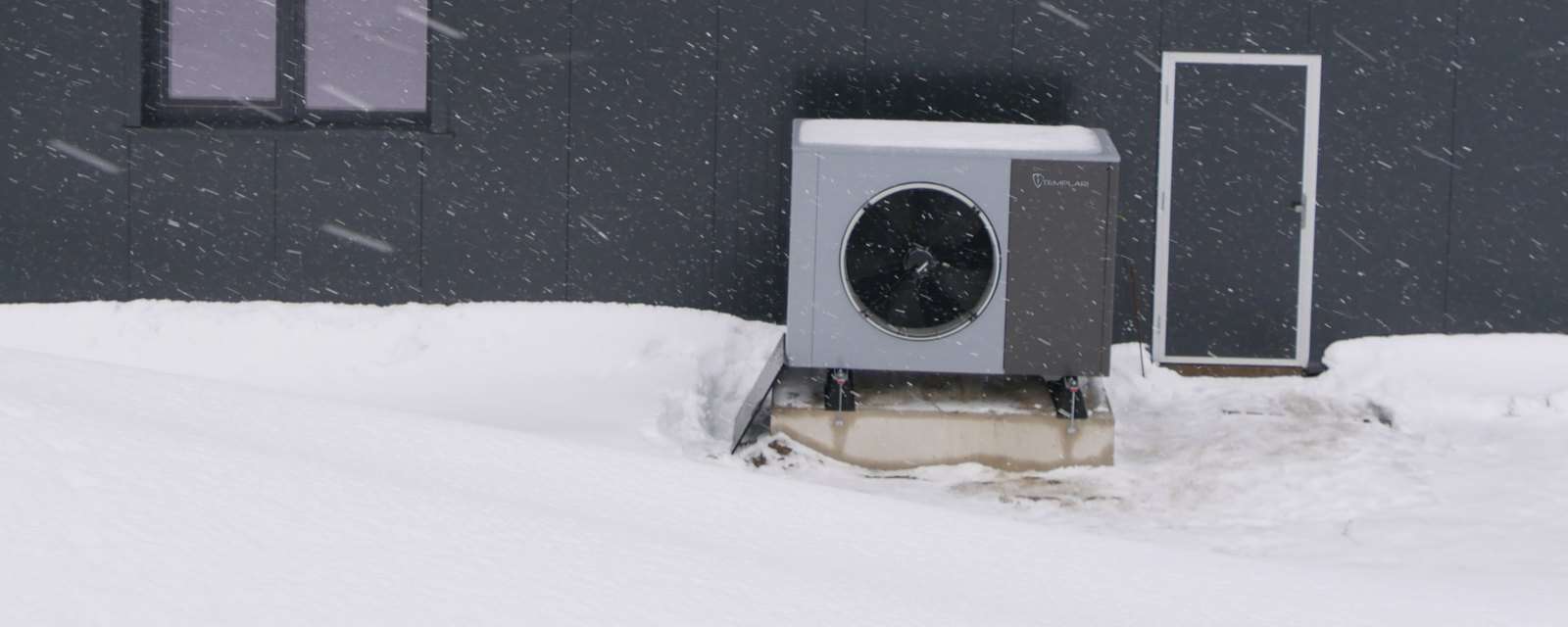
In winter in the Po Valley the reality is different. With 2 °C outside and fog, humidity reaches 90% and often 100%. The air crossing the outdoor coil cools by a few degrees, the vapour settles on the fins and freezes. Frost grows quickly and closes the air passages. The fan struggles, the coil exchanges less and the machine, to keep heating, has to stop and defrost.
During defrosting the heat pump does not heat the house: for a few minutes it takes heat from the system and sends it outside to melt the ice. That energy is paid for and does not reach the radiators, so the real COP of the day drops.
In the laboratory this part is often not seen. A test is short, often an hour and a half at steady state. If frost forms slowly, the measurement ends before the first defrost and the machine dodges it. The result is a table that does not account for defrosting, and it is a way of making the numbers look better than they are. The number is true, but it describes a machine that has dodged the hardest part of winter.
03
What makes the difference: coil, fan and circuit
What makes the difference is the quality of the refrigerant circuit, piece by piece.
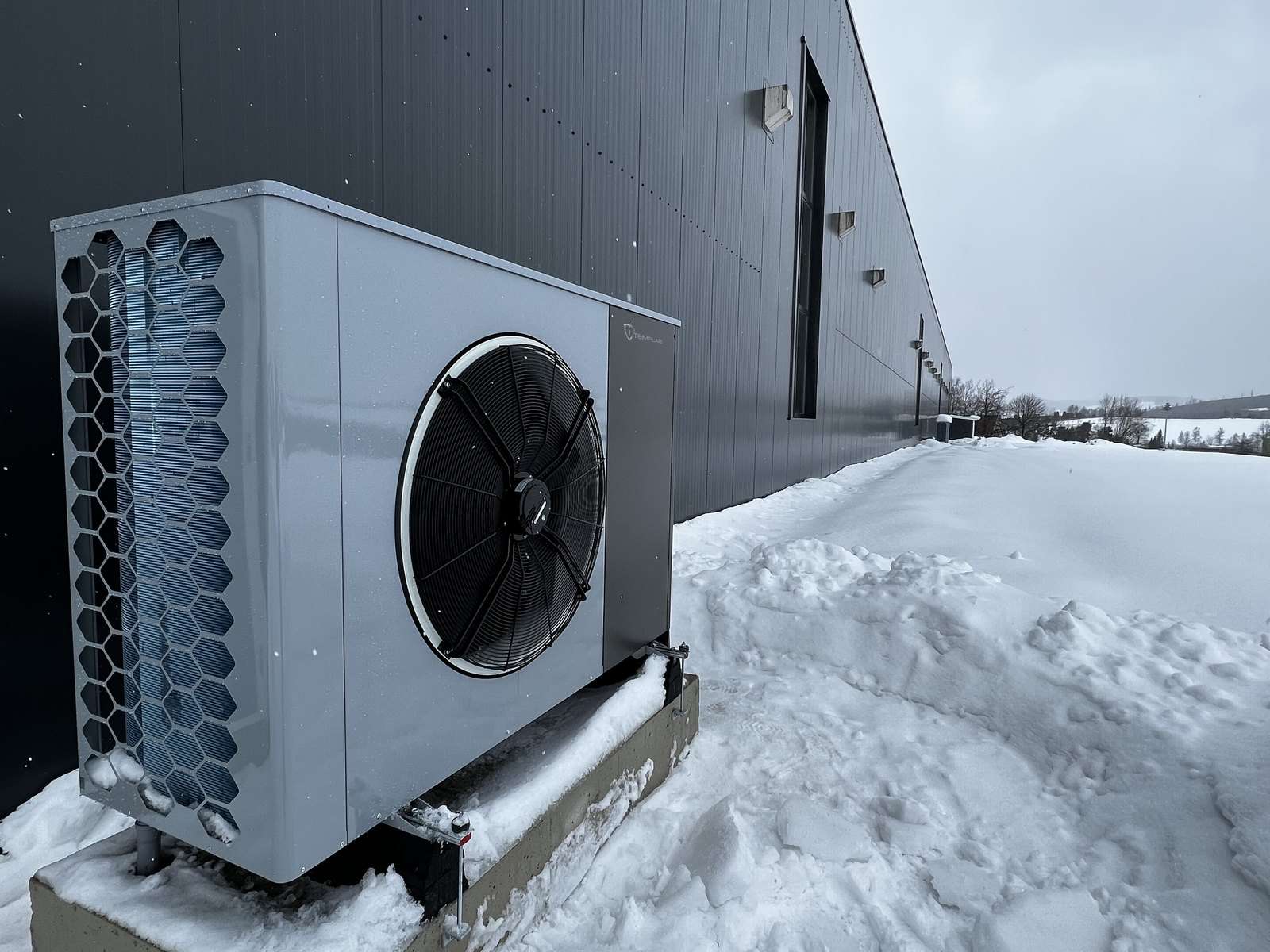
- Coil and fan. With fins spaced 2.5 mm apart and a large exchange surface, frost takes longer to close the passages, and defrosts are less frequent and shorter. We explained this in the tip on fin spacing and in the one on defrosting.
- Pipe diameter. Narrow pipes cost less but hold the refrigerant back: the compressor has to push harder to move the same amount of gas, and that extra effort is paid on the bill.
- The 4-way valve. It is the valve that reverses the cycle for defrosting and for cooling. If it is small for the machine, the gas struggles to get through, and efficiency is lost in every hour of operation.
- The water exchanger, in air-to-water units. More plates mean more surface between refrigerant and water: the compressor can work at a lower pressure to give the system the same temperature, and the COP rises.
- The distributor inside the plates. When present, it splits the refrigerant equally among all the plates. Without it, some plates work hard and others hardly at all, and the exchanger performs as if it were smaller.
- Compressor and inverter. The compressor must be chosen for heating in winter, not adapted from cooling (tip on compressors), and the inverter must let it work at half capacity for most of the season, where efficiency is highest (tip on sizing). The inverter uses energy too: part of the current entering it becomes heat in its components. On our residential machines the inverter is silicon carbide (SiC): it switches with fewer losses than traditional silicon, runs cooler and leaves more energy for the compressor. It is efficiency gained without touching the circuit: we explain the difference between SiC and IGBT in the tip on the inverter.
These are components you cannot see in a data sheet. In the laboratory COP they weigh little; in January fog they make all the difference.
04
The COP changes with the air outside and the water inside
The same compressor, with the same coil, gives different numbers depending on how cold it is outside and how hot the water must be. The closer the two are, the higher the COP. You can see it in the European HP Keymark certification sheets, measured by an independent laboratory at part load according to EN 14825. For one of our 8 kW propane air-to-water units:
Two things to read in this table. First: the “COP 10” some people search for does exist, but at +12 °C with underfloor heating and the machine at minimum, not in January. Second: going from 35 to 55 °C flow temperature costs about a third of the COP at every outdoor temperature. That is why it pays to send the water at the lowest temperature the system accepts, and keep 70 °C for the days when it is really needed, as we explain in the tip on radiators.
| Outdoor air | Water at 35 °C (underfloor) | Water at 55 °C (radiators) |
|---|---|---|
| -7 °C | COP 3.59 | COP 2.56 |
| +2 °C | COP 5.84 | COP 4.19 |
| +7 °C | COP 7.64 | COP 5.77 |
| +12 °C | COP 10.37 | COP 8.16 |

05
SCOP: the number that goes on the bill
The COP is a snapshot at a single temperature. The SCOP, seasonal coefficient of performance, is the film of the whole winter: the EN 14825 standard takes the hours of a typical winter, splits them by outdoor temperature, measures the COP at -7, +2, +7 and +12 °C and takes the hour-weighted average. The result says how much heat you get for every electrical kWh over the whole season, and from there comes the energy class on the label.
For the same machine as in the table, the certified SCOP is 5.75 with water at 35 °C and SCOP 4.20 at 55 °C. It is the number to compare between two heat pumps, at the same water temperature and climate: the Keymark sheet gives it for the average climate and, when available, for the cold one. The SCOP too, however, is born in the laboratory from the same tests we discussed above: it says who is more efficient, not how much you will consume in your house.
06
EER and SEER: the same thing in summer
When the heat pump cools, the ratio between cooling delivered and electricity used is called EER, energy efficiency ratio. The SEER is its seasonal version, like the SCOP for heating. The mechanism is identical, with the roles reversed: the hotter the outdoor air and the colder the water must be, the lower the EER. A machine with a large coil and a fan that moves air through it well has a good EER for the same reason it has a good COP: it exchanges a lot of heat with a small temperature difference.
07
The energy label: what A+++ means
In Italy “etichetta energetica pompa di calore” is searched 210 times a month, in Germany “Energieeffizienz Wärmepumpe” 260. The label does not show the SCOP but the seasonal efficiency ηs: the SCOP divided by 2.5, the factor Europe uses to convert electricity into primary energy, minus 3 points for the controls.
The class depends on that number and on the water temperature. With water at 35 °C, as for underfloor heating, A+++ means at least 175%; with water at 55 °C, as for radiators, at least 150% (EU Regulation 811/2013; today’s label has been in use since 26 September 2019). Our Kita X has 221.5% at 35 °C and 172.7% at 55 °C: A+++ in both.
Two A+++ units can still be very different: the class is a step and does not say how far above the threshold a unit is. To compare them, look at the SCOP, or the ηs, at the same water temperature and in the same climate.
08
What it means for the bill
A house that needs 15,000 kWh of heat a year, with a real SCOP of 4, buys 3,750 kWh of electricity. With a real SCOP of 3 it buys 5,000: 1,250 kWh more, every year, for the same house at the same temperature. The difference between 4 and 3 is the difference between a machine that stays close to its rated numbers even in the fog and one that loses them along the way. In the tip on consumption we did the sums by size; in the one on useful capacity we explain why at -7 °C capacity matters as much as COP.
09
How to read a data sheet without being misled
- At what conditions the COP is given: air, water, full or part load. A COP without its conditions says nothing.
- Who measured it: an HP Keymark certification or an independent laboratory is worth more than a catalogue number.
- The SCOP at 35 and at 55 °C, not only at 35.
- The capacity delivered at -7 °C: a machine can have a good COP and not enough capacity when it is needed.
- The weight, which tells how much coil and how much exchanger are inside (tip on air conditioners and heat pumps).
- The fin spacing and how it handles defrosting.
- What water temperature it reaches without electric heaters.
10
The COP that counts is the one you read on the display
The laboratory is for comparing, the house is for paying. That is why our machines are built for the second: coil with 2.5 mm fins, plate exchanger sized with margin, compressor chosen for the cold, silicon carbide inverter on the residential range, water at 70 °C when needed. And we do not promise efficiency: you read it on the display.
11
Frequently asked questions
What is the COP of a heat pump?
The ratio between the heat the machine sends to the system and the electricity it uses. COP 4 means four kWh of heat for every kWh paid.
What is a good COP?
It depends on the conditions it is measured at. At +7 °C with water at 35 the certified values exceed COP 7; at -7 °C with radiators at 55 even an excellent machine sits between COP 2.5 and 3. Comparing two COPs only makes sense at the same conditions.
What does a heat pump with COP 5, 7 or 10 mean?
They are real values at mild outdoor temperatures and low water temperature, typically between +7 and +12 °C with underfloor heating. They are not the January COP.
What is the difference between COP and SCOP?
The COP is measured at a single temperature. The SCOP is the hour-weighted average over a typical winter, according to EN 14825, and it is the number behind the energy class.
What is the EER?
The COP of cooling: cooling delivered divided by electricity used. The SEER is its seasonal version.
Why does the COP drop with cold and fog?
Because the coil finds less heat in the air and, with humid air, gets covered in frost. The machine has to defrost, and in those minutes it uses energy without heating the house.
See also: Heat pump heating curve and weather compensation: what it is, why it is set 5 degrees too high, and how to do without it · Heat pump in cold weather: down to what temperature does it work? Below freezing, at -20 and -25 °C
All the technical tips are on the series page. The next one in two weeks.


