

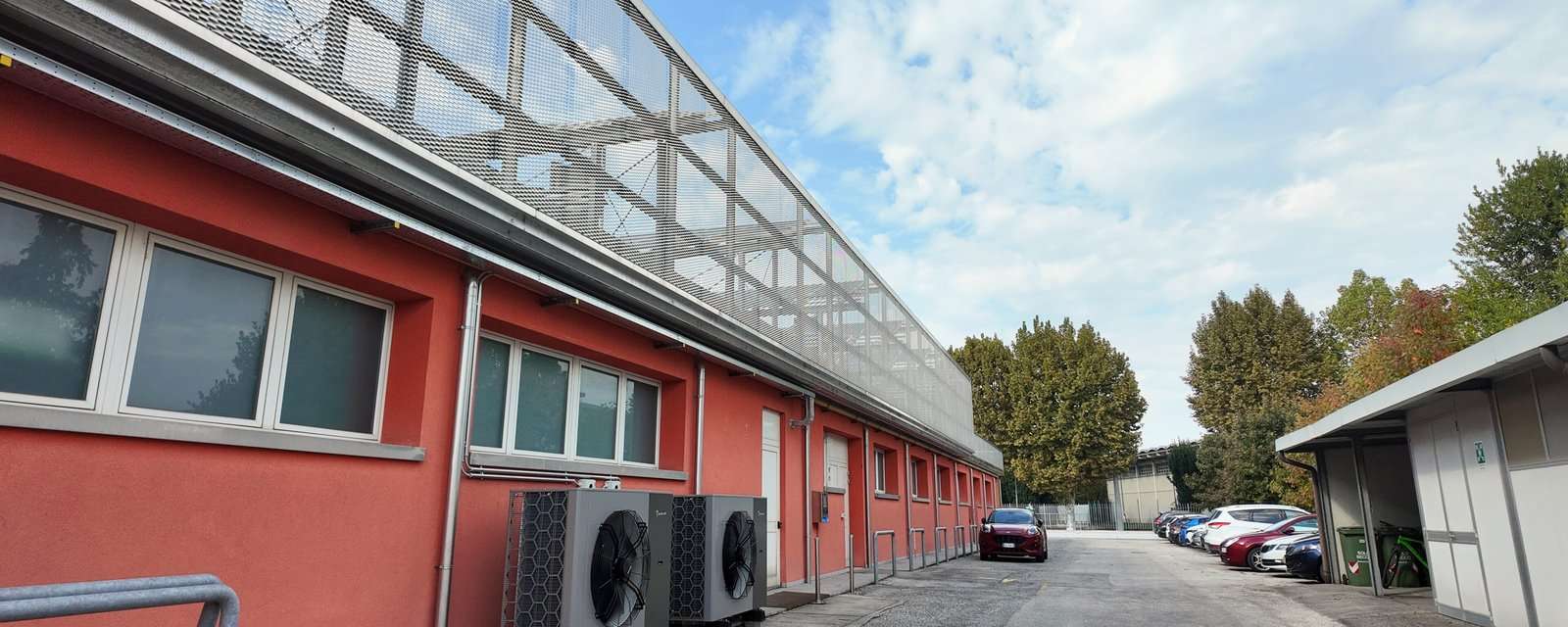
Air conditioner vs heat pump: not the same machine
An air conditioner and a heat pump work on the same cycle: a gas that evaporates on one side, taking in heat, and condenses on the other, giving it off. That is why many people think they are the same machine, and that an air conditioner that “also heats” in winter is enough to heat a building. The difference lies in two parts: the outdoor coil and the compressor.
01
Same cycle, two opposite jobs
An air conditioner is born for summer. Indoors, the coil gives off cold, and the heat it removes from the rooms has to go somewhere: the outdoor coil discharges it, so it works hot, hotter than the July air. The two coils always do the opposite of each other: if the indoor one cools, the outdoor one heats.
In winter the cycle reverses and the roles swap: the indoor coil heats the house and the outdoor one has to take heat from cold air. To do so it must work colder than the air, and when the air is at zero and humid its surface drops below zero. That is where frost forms.
02
The coil: an air conditioner's is not made for the cold
An air conditioner’s outdoor coil is designed to discharge heat, so it is small and its fins are tightly packed: in summer there is no frost and the space between the fins is not needed. In winter that same coil fills with frost within minutes: the narrow fins close up, air no longer passes and the machine has to stop, reverse the cycle and melt the ice, taking the heat from the house. In fog, or below a certain outdoor temperature, it can no longer run continuously: it spends more time defrosting than heating.
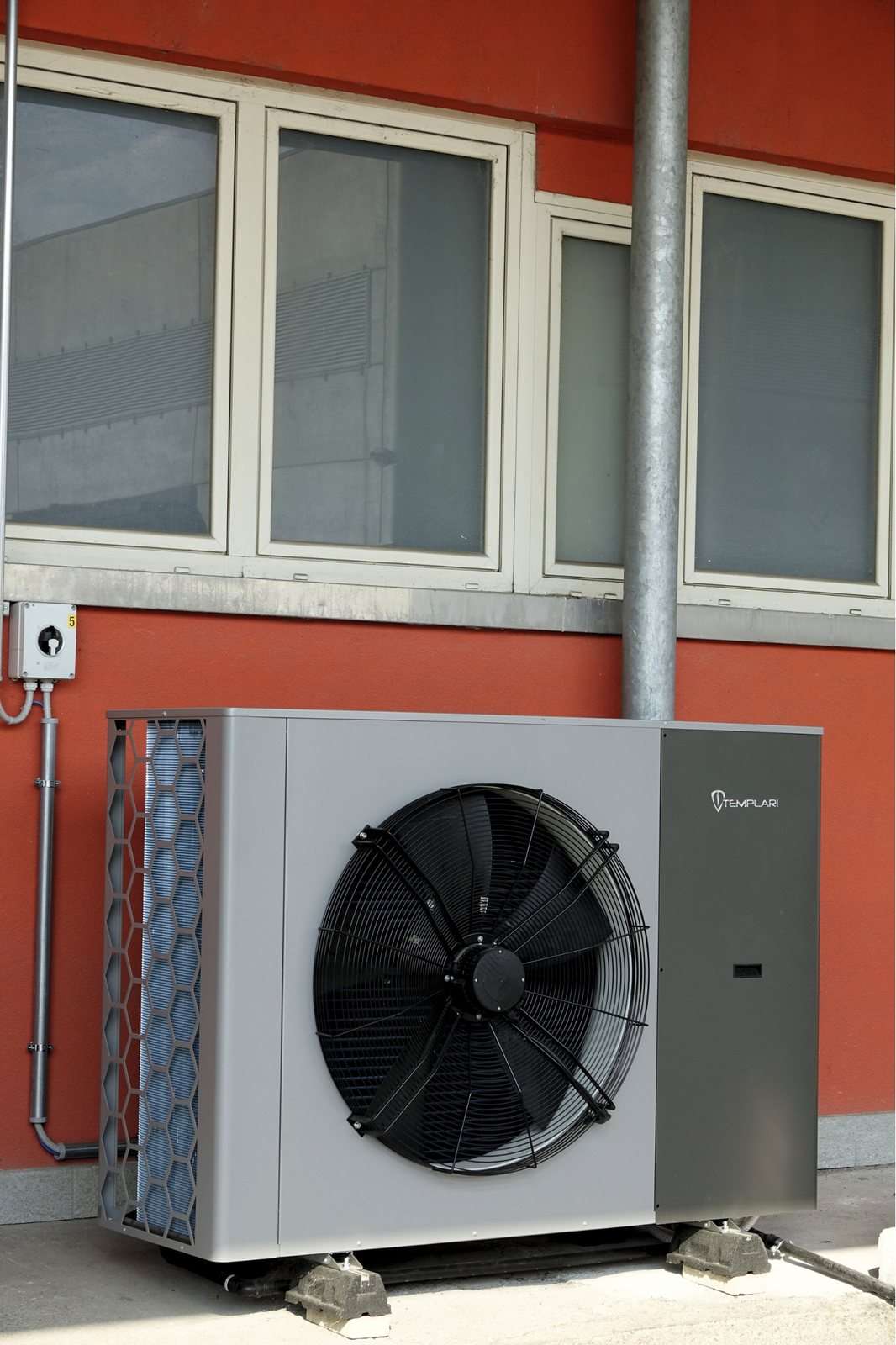
A heat pump’s coil is designed for winter: fins at 2.5 millimetres instead of 1.5, 0.15 millimetre aluminium, internally grooved copper tube, hydrophilic coating, a big fan turning slowly. Why these things matter we explained in the tip on fin spacing and in the one on defrosting.
03
The compressor: twice the lift
The compressor draws low-pressure gas from the cold coil and delivers it at high pressure to the hot one. The effort it makes depends on the ratio between the two pressures, which in turn depends on how far apart the two temperatures are.
In summer an air conditioner works between the room air and the outdoor air: the lift is small. Its compressor is built for that, and usually evaporates down to -10 or -15 °C: below that, it is not designed to go. A heat pump in winter works between outdoor air at or below zero and the water or warm air to be sent indoors: the pressure ratio is roughly double. Its compressor, preferably a scroll, is built to withstand that mechanical force: a sturdier structure, and the ability to evaporate down to -30 or -35 °C. With propane (R290) our scrolls reach -30 °C; with R32 and vapour injection, -37 °C. How compressors are made and why we use the scroll is in the tip on compressors.
04
The weight tells you before the datasheet does
All of this shows without opening the machine: just weigh it. Our air-to-water heat pumps for homes, from 8 to 20 kilowatts, weigh between 180 and 220 kilos. A split air conditioner of the same output weighs between 60 and 120. The difference is not iron added for the sake of weight: everything scales together. A coil with wide, thick fins has to be bigger to have the same surface, and needs more copper and more aluminium; a bigger coil needs a bigger fan to move air through it slowly; a bigger coil and fan need a bigger cabinet; and a compressor built for twice the lift weighs more than an air conditioner’s rotary. Every part grows with the others, and the scales add them up.

05
How to check, before you buy
If a machine is offered to heat all winter, four questions:
- what it was born for: to cool, with heating added, or to heat;
- how much the outdoor unit weighs, in relation to the kilowatts;
- the outdoor coil: fin spacing and thickness, fan diameter;
- the compressor: type, and down to what evaporating temperature it works.
An air conditioner heats in winter, as long as the air is mild and dry. On humid nights at zero, when the heat is really needed, the difference between the two machines shows on the bill and on the thermometer.
06
Frequently asked questions
Can an air conditioner heat like a heat pump?
It heats while the air is mild and dry. In fog and at zero degrees its outdoor coil, small and with tightly packed fins, clogs with frost and spends more time defrosting than heating.
What is the difference between an air conditioner and a heat pump?
The same cycle with two different parts. The heat pump’s outdoor coil is built for winter, with fins 2.5 mm apart instead of 1.5, and its compressor handles a compression ratio about twice as high, evaporating down to -30 or -35 °C.
How much does an air-to-water heat pump weigh?
Ours, from 8 to 20 kW, weigh between 180 and 220 kg; an air conditioning split of the same output weighs between 60 and 120. The weight comes from a larger coil, fan, casing and compressor.
What should you ask before heating a whole winter with a machine?
What it was designed for, how much the outdoor unit weighs compared with its kW, fin spacing and thickness with the fan diameter, and down to what evaporating temperature the compressor works.
See also: How much electricity does a heat pump use: per day, per year and by size, with the data sheet figures · Hybrid boiler and hybrid heat pump: what they really are, and why we do not make them · Air to air heat pump: how it works, pros and cons, and when it makes sense for heating · Heat pump in cold weather: down to what temperature does it work? Below freezing, at -20 and -25 °C
All the technical tips are on the series page. The next one in two weeks.


