

Cooling with a heat pump: underfloor or fan coils, how efficient it is and what you need
In summer the same air-to-water heat pump that heats the house can cool it. It is a much searched topic: in Germany “Wärmepumpe kühlen” 4,400 times a month, in France “pompe à chaleur réversible” 6,600, in Italy “raffrescamento a pavimento” 1,900, in the Netherlands 1,000. Here we explain how a heat pump cools, when underfloor makes sense and when fan coils do, what temperature the water must be, how efficient it is and what to do about humidity. Room control is covered in the article on the complete system.
01
How a heat pump cools
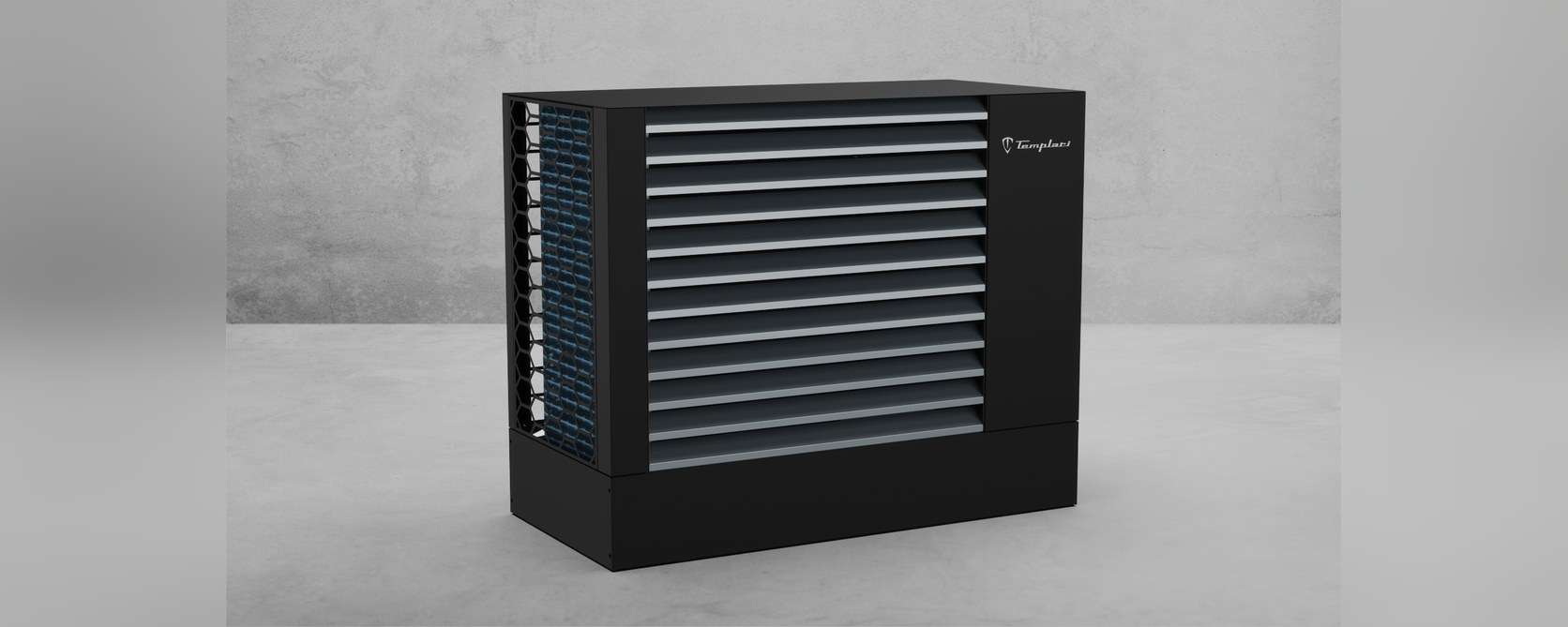
In summer the unit reverses its cycle: a four-way valve swaps the roles of the two heat exchangers. The outdoor coil, which in winter takes heat from the air, in summer throws it out; the water heat exchanger, which in winter heats the water, in summer chills it. The house pipes carry cool water instead of warm. No second unit is needed and the gas stays the same: in our air-to-water units it is propane. How the cycle works is explained in the article on how a heat pump works.
02
Underfloor or fan coils
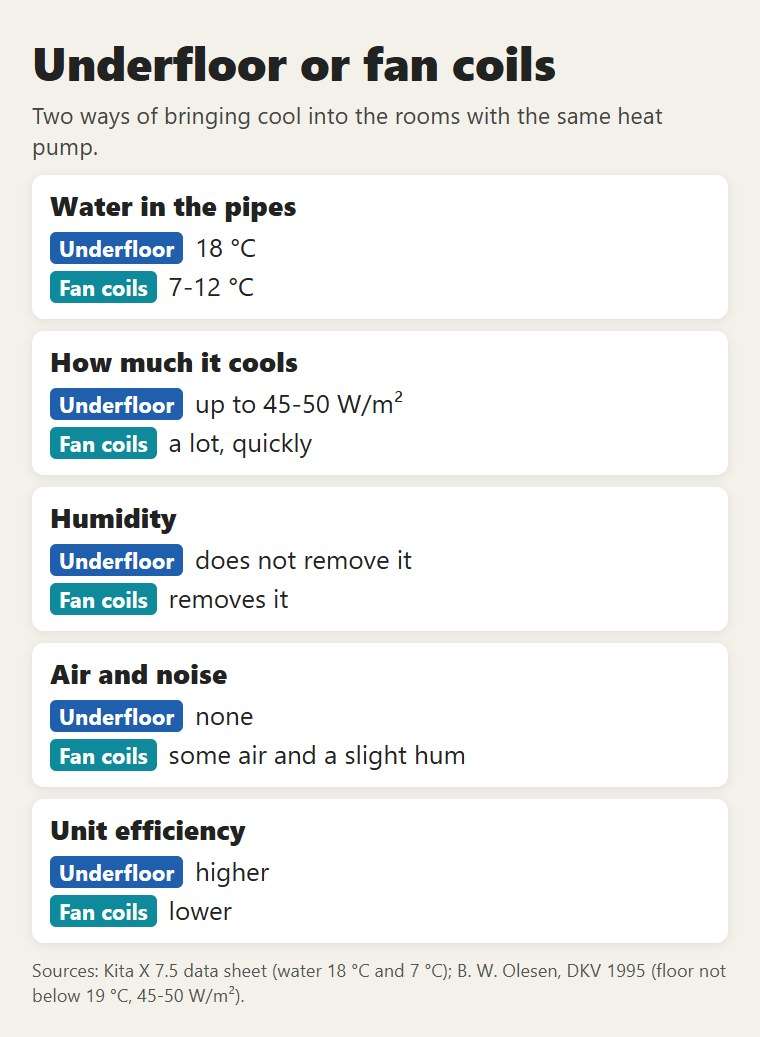
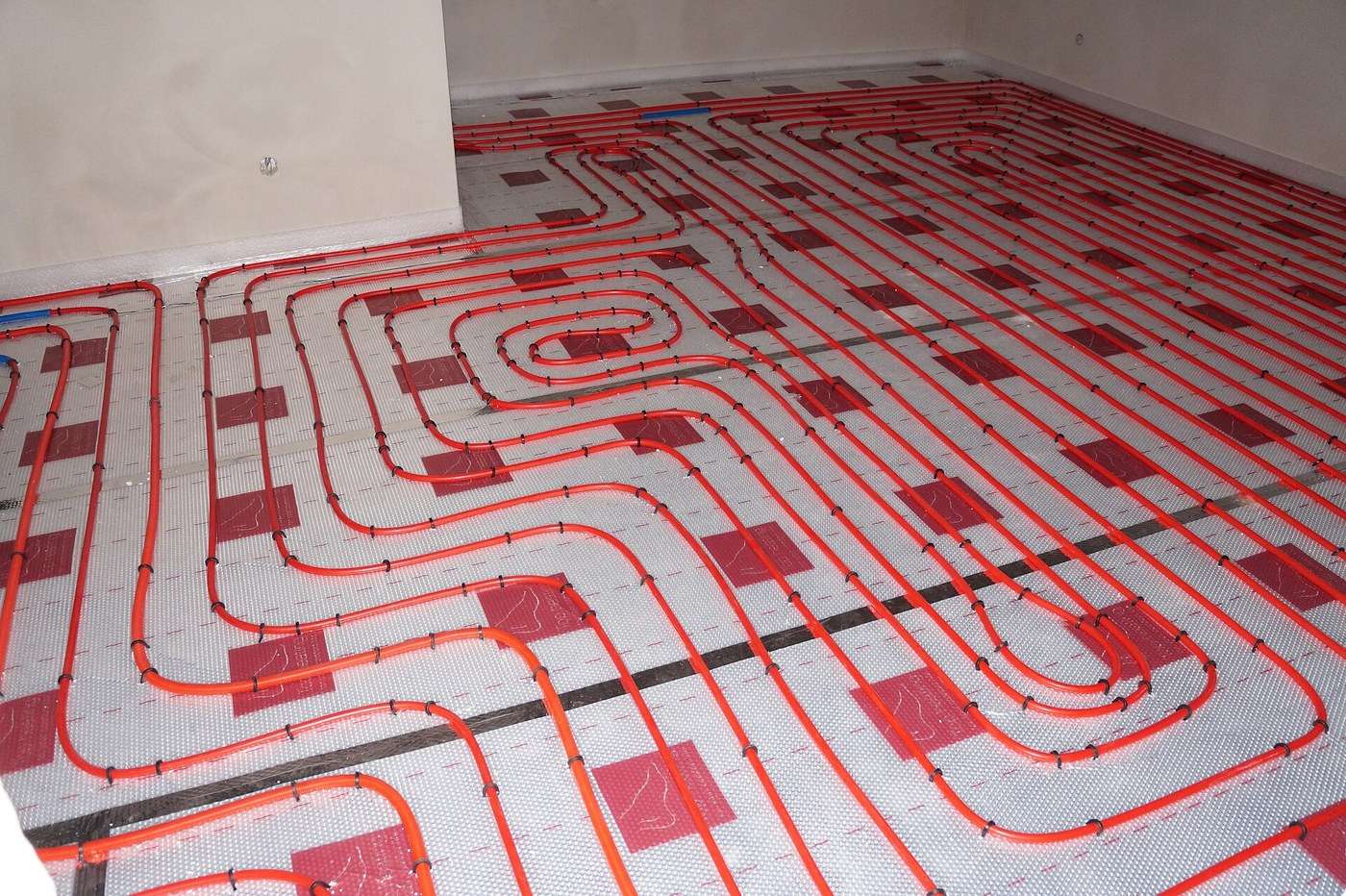
Coolness reaches the rooms in two ways. With underfloor, water at about 18 °C runs through the pipes: it cools without draughts and without noise, but not much, because the floor must not go below 19 °C to be comfortable standing or sitting, so it removes at most 45-50 W per square metre (Olesen, 1995). And it does not remove humidity. Fan coils work with water at 7-12 °C: they cool quickly and, since the air passes over a cold coil, they condense humidity and drain it away. In exchange they make a little air movement and a slight hum. In homes they often work together: underfloor for most of the heat, a fan coil or a dehumidifier for the humidity.
03
How efficient: water at 18 °C against 7 °C
The cooler the water, the harder the unit works. The Kita X 7.5 data sheet puts it in numbers: with 35 °C outside, making water at 7 °C it has an EER of 3.21, making it at 18 °C an EER of 4.88, that is 52% more cooling for every kilowatt-hour of electricity. Over the whole summer, according to EN 14825, the SEER is 4.91 with fan coils and 6.21 with underfloor. That is why the water is kept as warm as the system allows: 18 °C for underfloor and, for fan coils, only as cold as needed to remove humidity.

04
Humidity and the dew point
The limit of underfloor cooling is the dew point: if the water drops below the temperature at which the moisture in the air condenses, the floor gets wet. At 26 °C and 60% humidity the dew point is about 17.6 °C: that is why underfloor runs at around 18 °C and humidity is measured in every room. If the air is drier the water can go lower and the floor cools more. With HCC the water temperature stays above the dew point of the most humid room and the dehumidifier starts when needed: how, we explain in the article on the complete system.
05
Pipes, buffer tank and condensation
In summer everything that carries cold water must be insulated with anti-condensation material: pipes, manifolds and buffer tank. Below the dew point the room air condenses on them and drips. That is why our buffer tanks are insulated for both hot and cold, as we explain in the article on the buffer tank. Fan coils have a tray that collects condensation: it must be connected to a drain.
06
In summer the roof makes the electricity
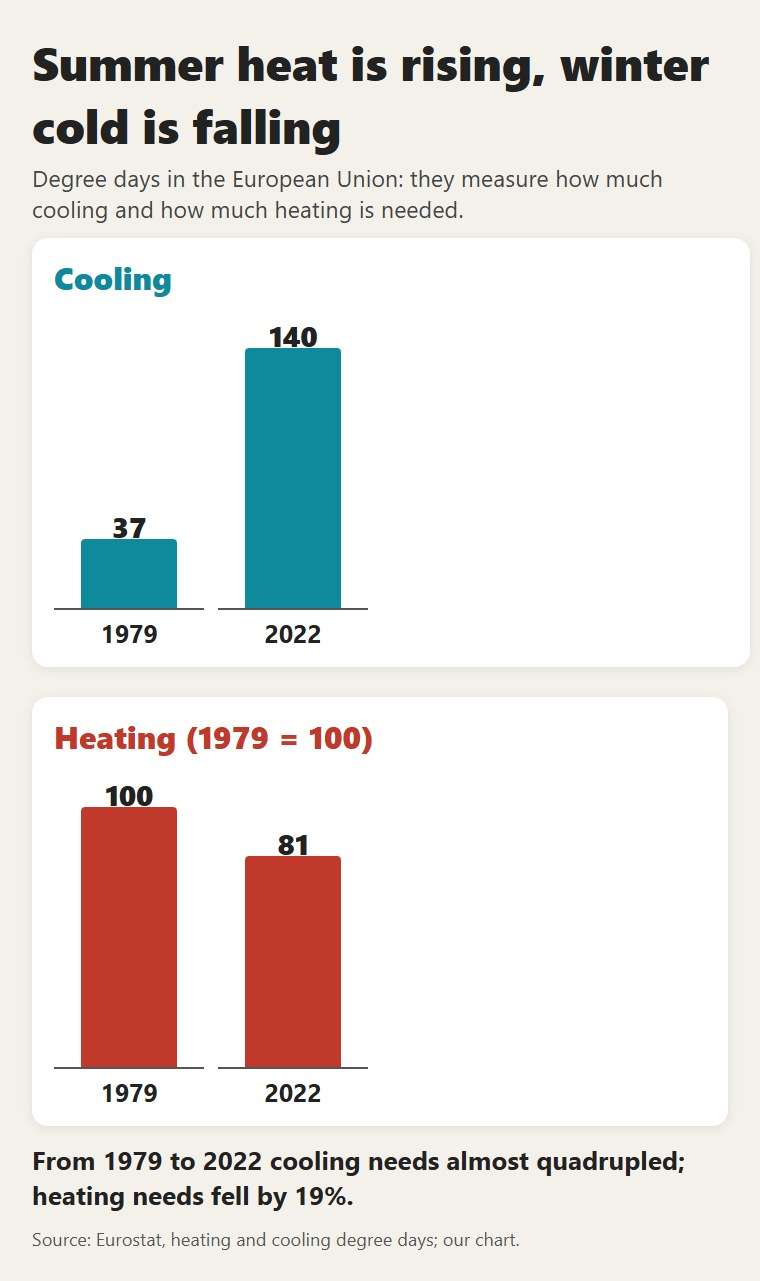
The need for cooling is growing: according to Eurostat, cooling degree days in the European Union went from 37 in 1979 to 140 in 2022, almost four times as many, while heating degree days fell by 19%. Heat comes in the sunny hours, when solar panels produce the most: much of the electricity for cooling comes from the roof. We cover it in the article on heat pumps and solar panels.
07
Our units
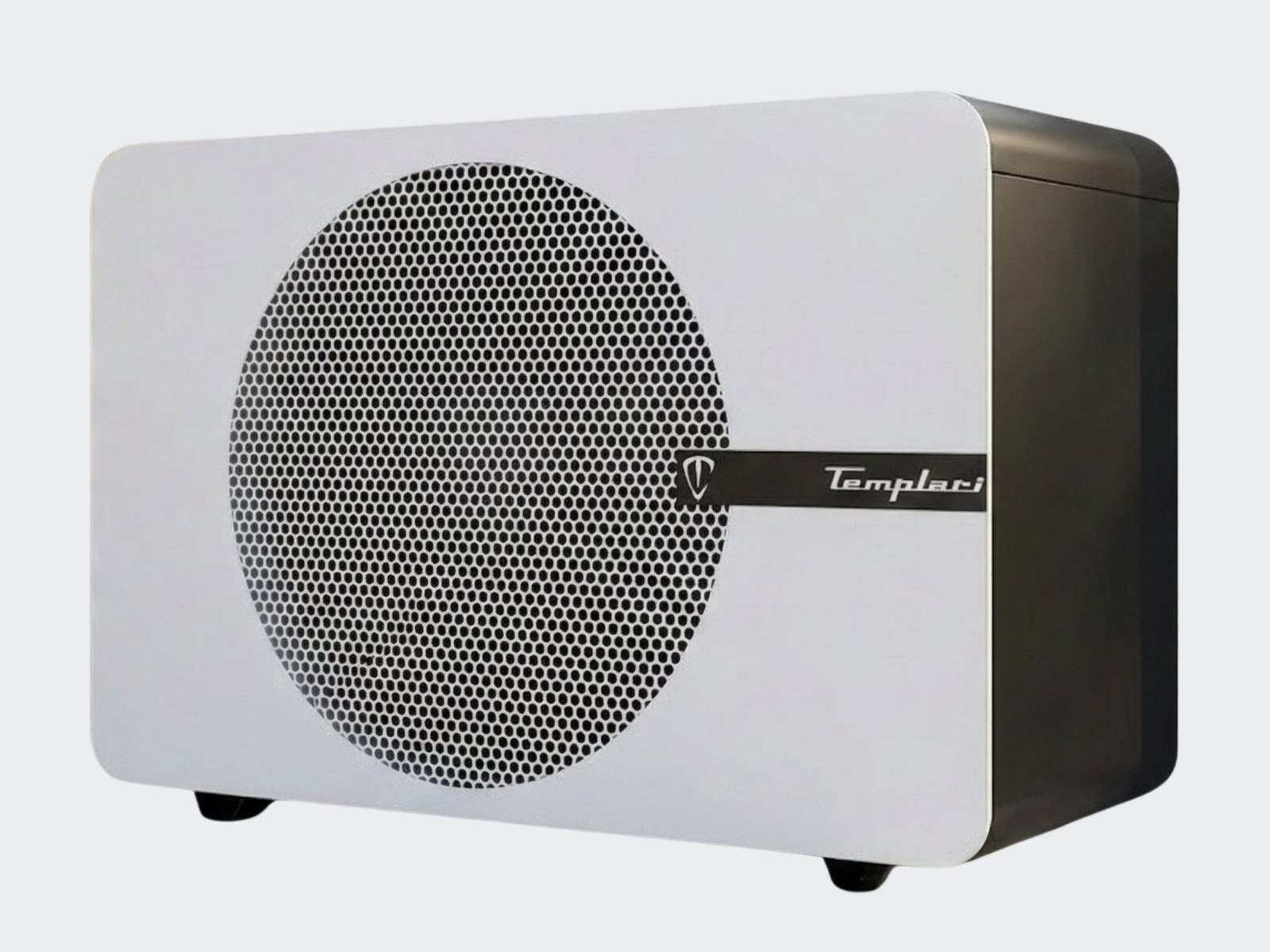
Our propane air-to-water units heat in winter, cool in summer and make hot water all year round, with the same unit. For flats and small houses there is the Kita X at 7.5 and 9 kW: the cooling figures above are its own.
08
What to ask the installer
Five questions. Whether the heat pump is reversible and how much it cools with 35 °C outside. With which emitters: underfloor, fan coils or both. What temperature the water will run at in the floor and how room humidity is controlled. Whether pipes, manifolds and buffer tank are insulated against condensation. And where the fan coils drain their condensation. If you want an opinion on your house, ask us for information.
09
Frequently asked questions
Can an air-to-water heat pump cool?
Yes, if it is reversible: in summer it reverses its cycle and sends cool water through the pipes. Our propane air-to-water units heat and cool with the same unit.
Is underfloor cooling or fan coils better?
Underfloor is silent and makes the unit more efficient, but removes at most 45-50 W per square metre and does not remove humidity. Fan coils cool more and dehumidify, with some air movement and a slight hum. They are often used together.
What water temperature for underfloor cooling?
Around 18 °C, in any case above the dew point: at 26 °C and 60% humidity it is about 17.6 °C.
Does underfloor cooling cause condensation?
Only if the water drops below the dew point. To avoid it, humidity is measured in the rooms, the water is kept above that value and, if needed, a dehumidifier is switched on.
How much does a heat pump use for cooling?
Little: the Kita X 7.5 has a SEER of 6.21 with underfloor and 4.91 with fan coils, so for every kilowatt-hour of electricity it removes 5 to 6 kilowatt-hours of heat from the house. And in summer much of the electricity can come from solar panels.
Do the pipes need insulating for cooling?
Yes: pipes, manifolds and the cold water buffer tank must be insulated with anti-condensation material, otherwise the air condenses on them and drips.
Sources: B. W. Olesen, DKV 1995 (IIR) · Eurostat, Heating and cooling degree days
See also: Heat pump with underfloor heating: water temperature, running costs and summer cooling · Fan coils with a heat pump: when to choose them, what water temperature they need and how they cool
All the technical tips are on the series page.


