

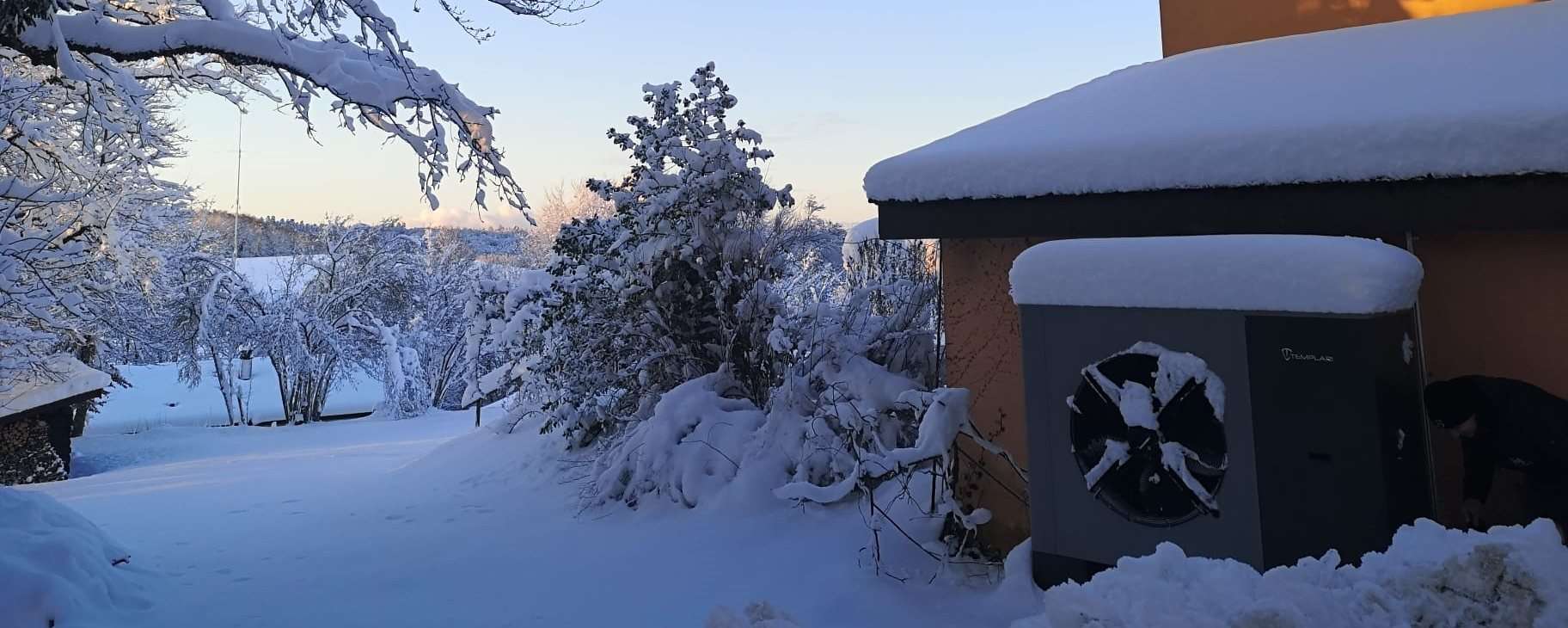
Best air source heat pump: the 10 things to check before you buy
The best air-to-water heat pump is the one that heats your home in January, in fog, at low cost and without stopping. The highest COP in the catalogue does not guarantee that on its own. In this guide we list what to check before you buy, in the order a heating engineer checks it. Almost every point links to the article that explains it in depth.
01
1. Output at -7 °C, not the rated output
The big number on the datasheet is measured with +7 °C outside. When it is cold the unit delivers less: on our air-to-water units, on average, 76% of the rated output is left at -7 °C. Choose the unit on the output left on the coldest day, not on the rated figure: we explain it in the article on useful output.
02
2. COP with the conditions next to it
A COP without the air and water temperatures next to it tells you nothing. At +7 °C with water at 35 °C a good unit reaches COP 7 and more; at -7 °C with radiators at 55 °C even an excellent unit sits between COP 2.5 and COP 3. Two units can only be compared under the same conditions. How it is measured and why it changes in fog is in the article on COP.
03
3. SCOP at 35 and 55 °C
SCOP is the average over the whole winter and sets the energy class. Read it at 35 °C if you have underfloor heating, at 55 °C if you have radiators. For one of our 8 kW air-to-water units the HP Keymark certification gives SCOP 5.75 at 35 °C and SCOP 4.20 at 55 °C. A figure certified by an independent laboratory is worth more than a catalogue one.
04
4. The outdoor coil and defrost
In winter the coil frosts up and the unit has to defrost: during those minutes it uses power without heating. Widely spaced fins (2.5 mm on ours), a large surface and a defrost that starts when needed, not on a timer, make the difference between the laboratory COP and the January one. See the article on fins and the one on defrost.
05
5. Weight
Weight tells you how much coil, copper and heat exchanger there is inside. An air-to-water heat pump built for winter weighs 180-220 kg; an air conditioning split 60-120. For the same output, the lighter unit usually has the smaller coil. It is the subject of the article on air conditioners and heat pumps.
06
6. How hot the water gets
Radiators need hot water: our air-to-water units reach 70 °C without electric heaters, for domestic hot water too. A unit that reaches 55 °C is fine with underfloor heating; with old radiators it may not be enough. We cover it in the article on radiators.
07
7. Refrigerant
Propane R290 is a natural gas with almost no climate impact and outside the F-Gas obligations: no periodic leak checks, no logbook. It works well at high water temperatures and goes into monobloc units, with all the gas outside the home. How it is built inside is explained in the article on R290.
08
8. Sizing
A heat pump that is too big keeps starting and stopping, uses more and lasts less; one that is too small cannot cope in winter. The right size comes from the heat loss calculation of the house. With an inverter the unit then runs at half output for most of the season, where it is most efficient: that is the article on sizing.
09
9. Noise, with the distance
A decibel figure without a distance cannot be compared. Look at the sound pressure at 1 or 5 metres, and at where the unit will go: away from bedrooms, not shut in a corner.
10
10. Who installs it and who looks after it
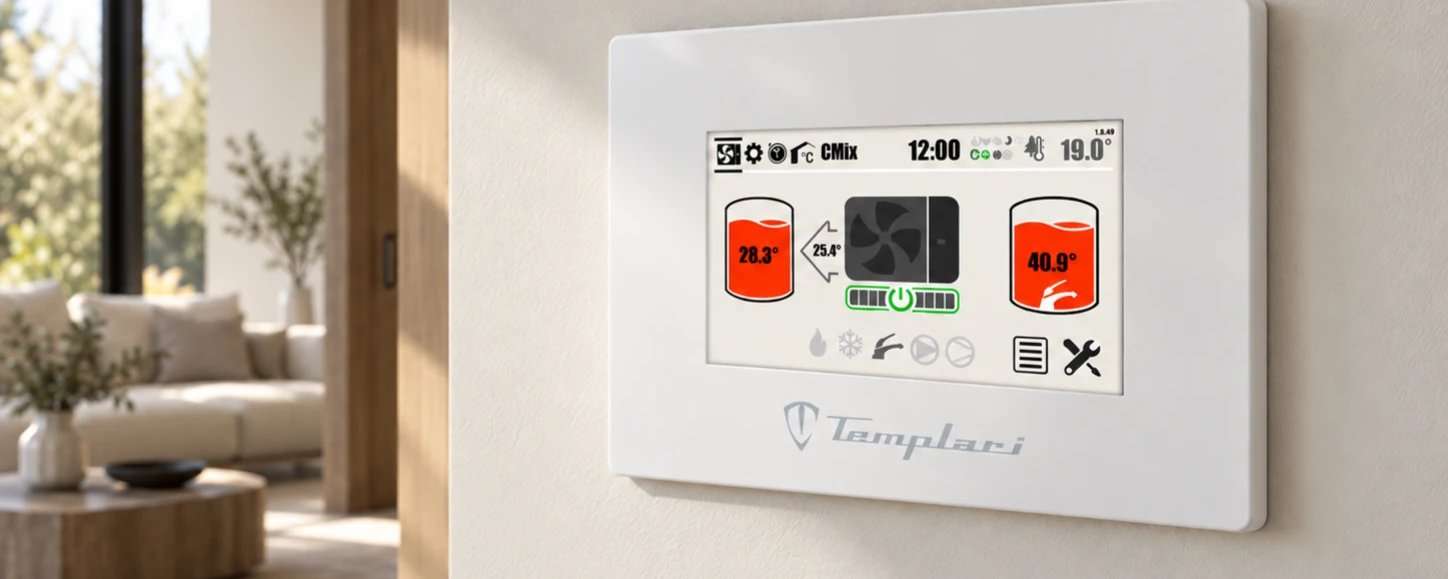
A good unit installed badly performs like a mediocre one. What counts is who installs it, who does the maintenance and whether you can read the efficiency. Ours are monitored remotely and the real COP is shown on the display.
11
In short
| What to check | Why |
|---|---|
| Output at -7 °C | it is the output on the coldest day |
| COP and SCOP with conditions | without conditions they cannot be compared |
| Coil and defrost | they decide the COP in fog |
| Weight | it tells you what is inside |
| Maximum water temperature | needed with radiators |
| Refrigerant | R290: no F-Gas obligations |
| Sizing | neither too big nor too small |
| Noise at a stated distance | dB without metres mean nothing |
| Installer and service | a good unit installed badly performs poorly |
12
Frequently asked questions
What is the best air-to-water heat pump?
The one that still has the output your home needs at -7 °C, with a COP certified at your system’s conditions, a coil built for winter and an installer who sizes it on the calculation.
Is a bigger or a smaller heat pump better?
The right size, chosen on the heat loss calculation. Too big and it keeps starting and stopping; too small and it is not enough in winter.
What COP should a good heat pump have?
It depends on the conditions: COP 7 and more at +7 °C with water at 35 °C, between COP 2.5 and COP 3 at -7 °C with water at 55 °C. Compare the certified SCOP at the water temperature of your system.
Does an air-to-water heat pump work with radiators?
Yes, if it reaches the temperatures needed: ours reach 70 °C.
R32 or R290?
For a new monobloc air-to-water unit, R290: a natural gas, outside the F-Gas obligations, good at high water temperatures.
How much does an air-to-water heat pump weigh?
One built for winter weighs 180-220 kg. The weight tells you how much coil and heat exchanger there is inside.
How many m² does an air-to-water heat pump heat?
It depends on how much heat the house loses, not on the m². As an order of magnitude, on the coldest day an A or B class house needs 25-40 W/m², a renovated house 50-70 W/m², a house built before 1990 and never insulated 80-120 W/m². A renovated 150 m² house therefore needs about 8-10 kW. The real figure comes from the heat loss calculation.
All the technical tips are on the series page.


