

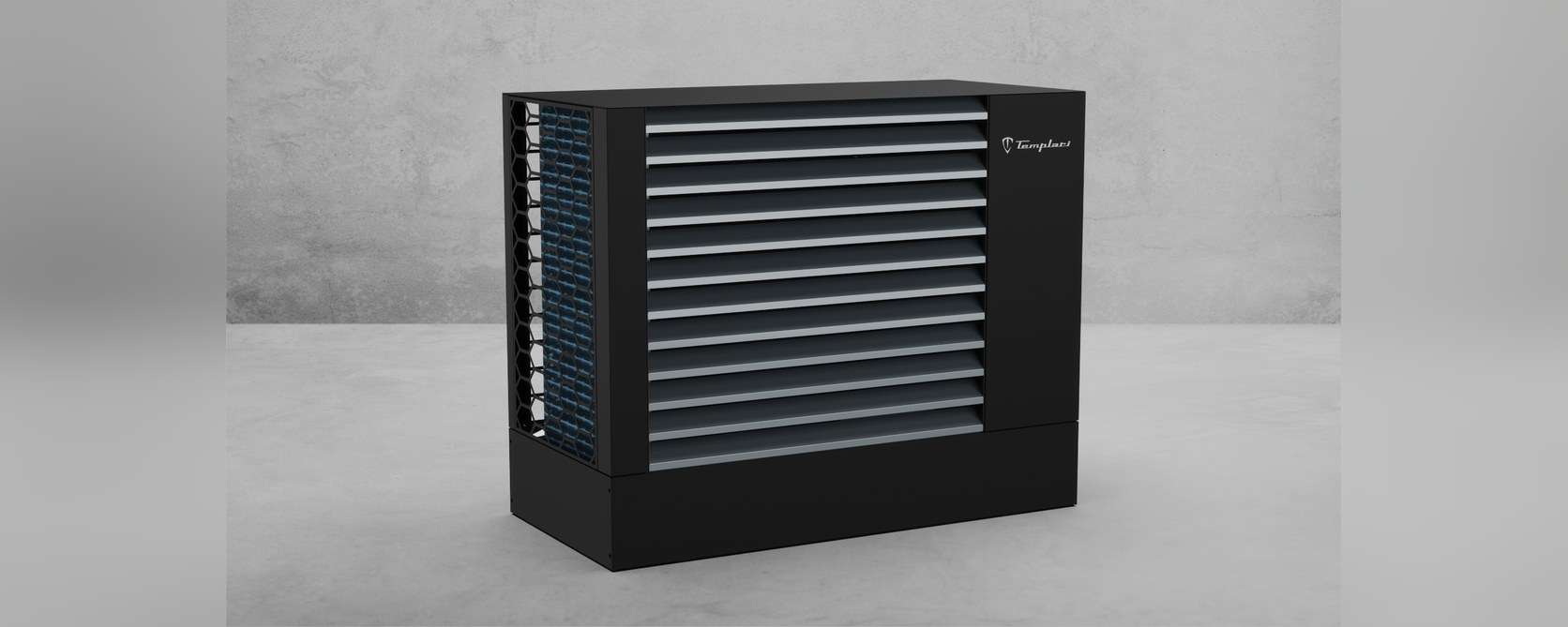
Heat pump not heating or using too much electricity: the real causes and what to check
“Heat pump problems” is searched 140 times a month in the UK; in France “problème pompe à chaleur” 27,100 and “ma pompe à chaleur tourne mais ne chauffe pas” 390; in the Netherlands “warmtepomp storing” 170. We list what is normal, what is a wrong setting and what the real faults are, on the water side and on the unit side.
01
First: is it defrosting?
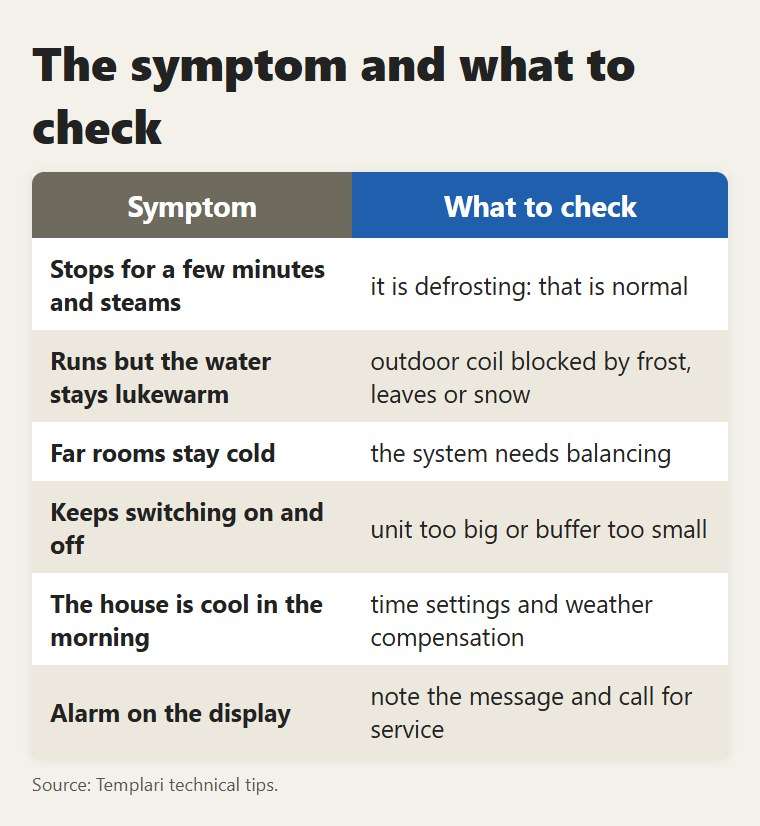
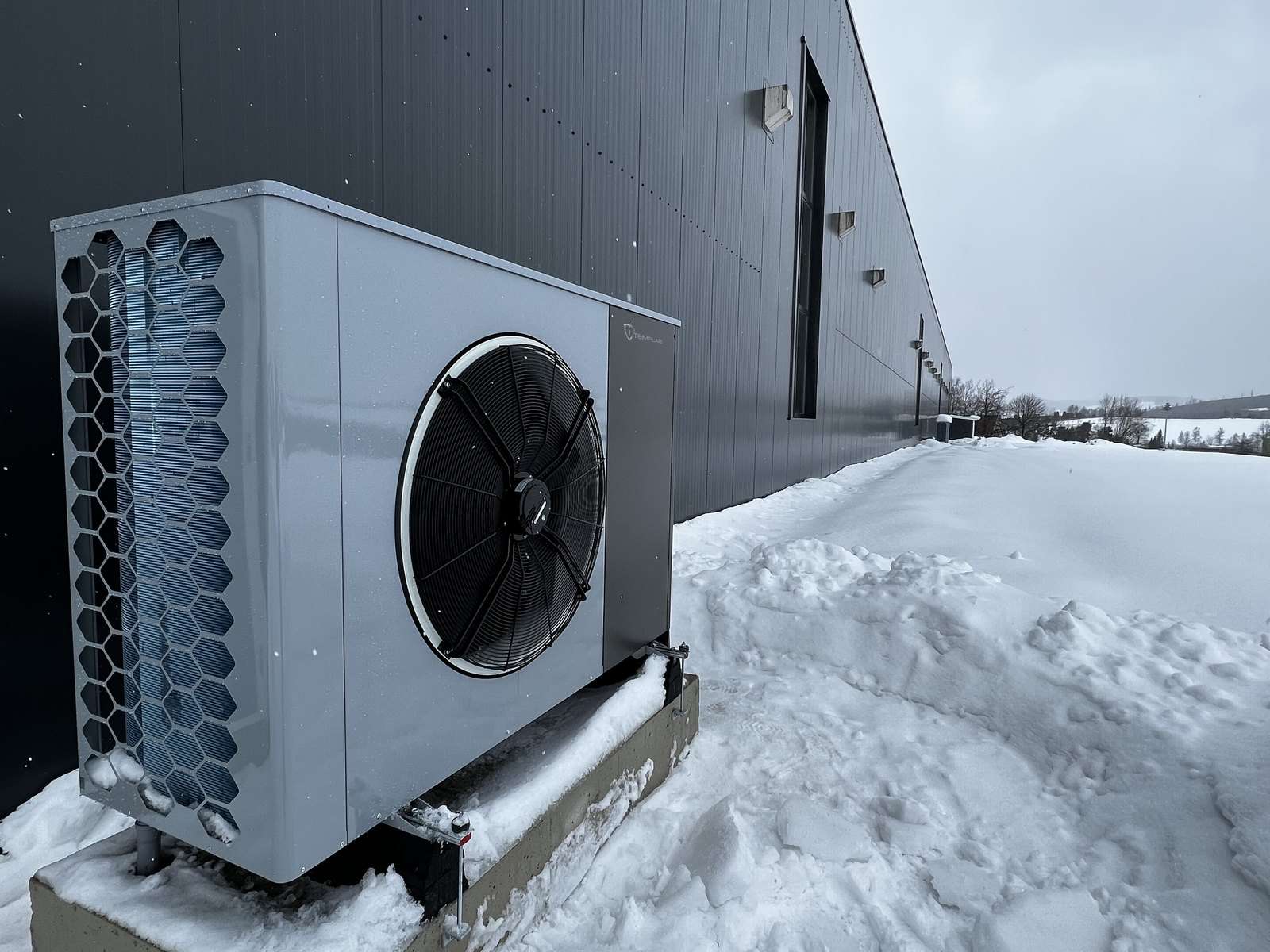
If the unit stops for a few minutes, the fan is still and a white cloud rises from the coil, it is defrosting: that is normal, and it restarts afterwards. See the article on ice and steam.
02
Water side: too little water flows
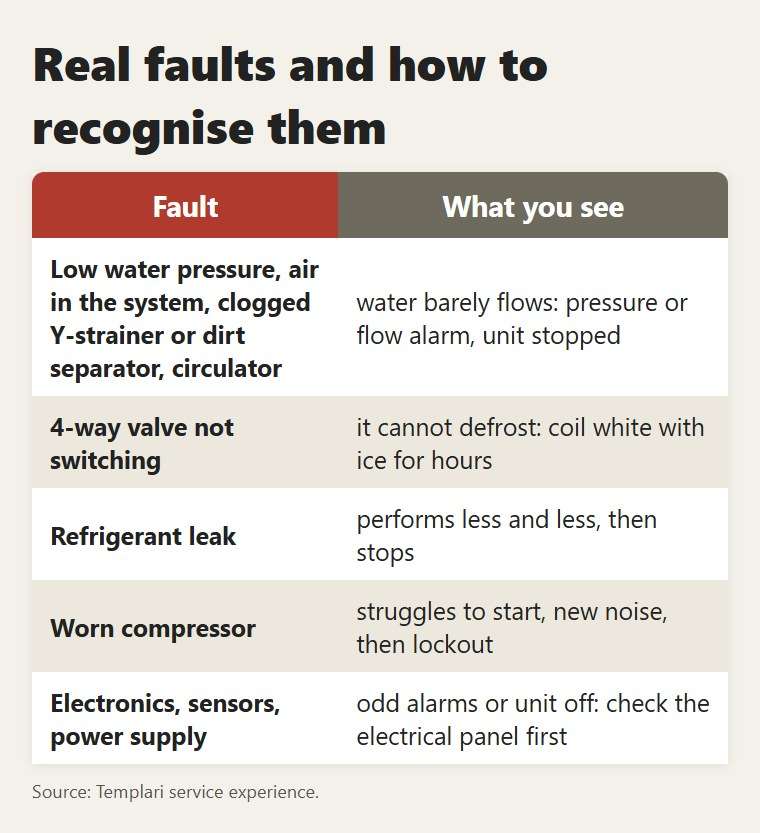
Many shutdowns come from the system, not the unit: low water pressure, air in the system, a clogged Y-strainer or a dirt separator full of sludge, a weak circulator. Too little water flows, the unit cannot hand over its heat and stops to protect itself. Our units measure water flow and pressure and raise an alarm when they drop; strainer and dirt separator are cleaned during annual maintenance.
03
Unit side: the real faults
Ice on the coil: if the 4-way valve does not switch, the unit cannot defrost and the coil stays white for hours (article on defrosting). Refrigerant leak: the unit performs less and less, then stops; our propane units are monobloc with a factory-sealed circuit (article on propane). Worn compressor: it struggles to start and makes new noises, more often in oversized units that start and stop all the time (article on sizing). Electronics: sensors, boards, power supply; before blaming the unit, check the electrical panel, because surges and tripped protections often come from outside. A review by the Technical University of Denmark of 53 large heat pumps found fouled heat exchangers and refrigerant leaks to be the most frequent faults, and compressor faults the most serious.
04
It heats too little but is not broken
Often there is no fault at all: the weather compensation is set too low or with the wrong times (article on weather compensation), the unit is switched on and off like a boiler (article on why it is not a boiler), or the system is not balanced and far rooms stay cold (article on balancing).
05
It uses too much
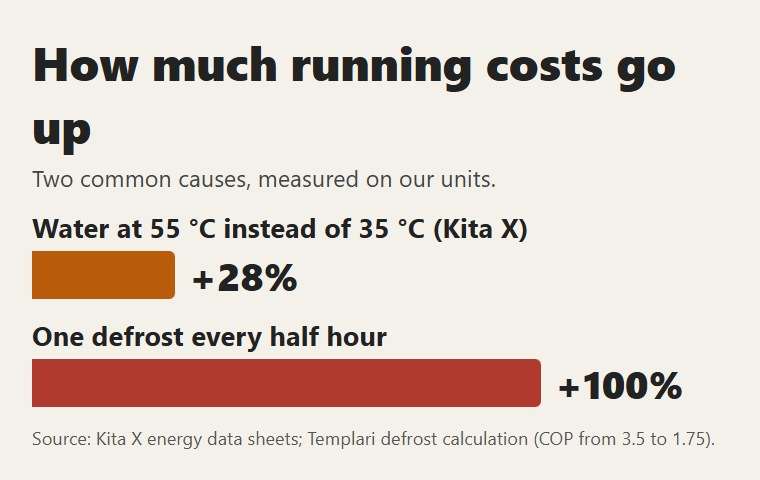
We measure the two heaviest causes on our units: water at 55 °C instead of 35 °C makes the Kita X use 28% more, and a defrost every half hour doubles consumption, because COP drops from 3.5 to 1.75. Then an oversized unit, a small buffer that makes it start all the time (article on buffer tanks), and the electric heater running for no reason. The real limits are on the page on pros and cons.
06
When to call for service
With an alarm on the display, a coil white for hours, a compressor that will not start or new noises: note the message and call for service. With the HCC electronics, service can see the alarms remotely. For an opinion, ask us for information.
07
Frequently asked questions
Why is my heat pump not heating?
Often for water-side reasons (low pressure, air, clogged Y-strainer or dirt separator, circulator) or wrong settings. Among unit faults: ice on the coil from a 4-way valve that does not let it defrost, refrigerant leak, worn compressor, electronics.
My heat pump runs but does not heat: why?
Usually too little water flows (strainer, dirt separator, air, circulator, pressure) or the outdoor coil is blocked by ice. If it is defrosting, it restarts after a few minutes.
Why does my heat pump use so much electricity?
The heaviest causes are water that is too hot and constant defrosting: with the Kita X, water at 55 °C instead of 35 °C uses 28% more, and a defrost every half hour doubles consumption.
Why won’t my heat pump start?
Check the electrical panel and power supply first, then any alarm on the display: water pressure or flow, sensors, compressor. Note the message and call for service.
My heat pump is covered in ice: is it broken?
A layer of frost that comes and goes is normal. If the coil stays white for hours, the unit cannot defrost: it may be the 4-way valve, so call for service.
What are the most common heat pump faults?
In a review by the Technical University of Denmark of 53 large heat pumps, the most frequent are fouled heat exchangers and refrigerant leaks; the most serious are compressor faults.


