

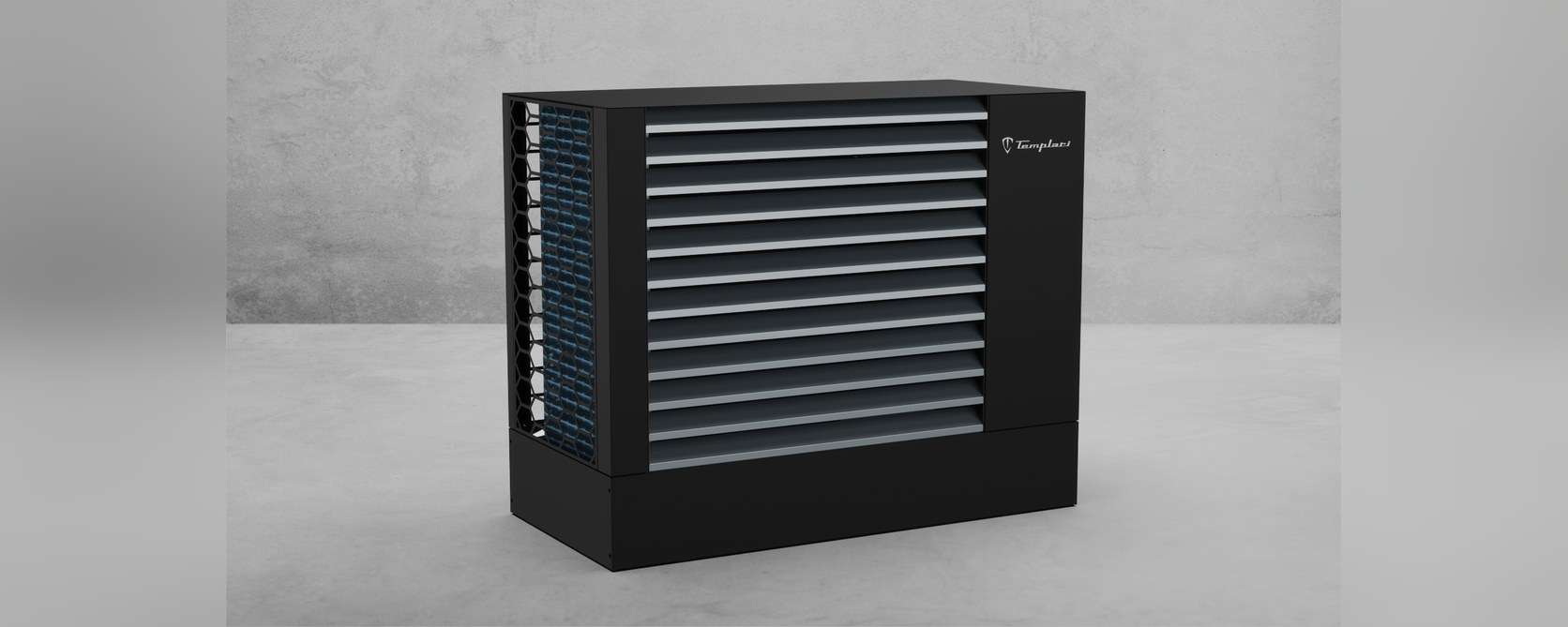
Heat pump backup heater: when it switches on, how much it uses and when it is a warning sign
“Auxiliary heat pump” is searched 210 times a month in the UK; in Germany “Wärmepumpe Heizstab” 390, in the Netherlands “bijverwarming warmtepomp” 390. The electric backup heater is where a heat pump can become expensive: it delivers one kWh of heat for each kWh of electricity, while the unit delivers three, four or five. Here is when it is needed and how much it really works.
01
What the backup heater is for
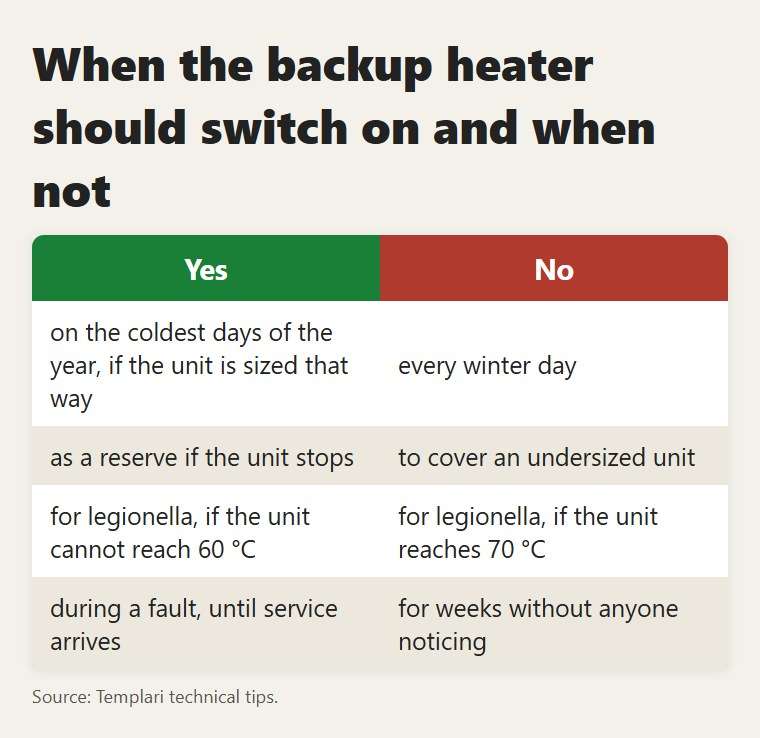
Many heat pumps have an electric heater in the buffer, in the cylinder or on the flow pipe. It is needed in three cases: on the coldest days of the year, if the unit is sized to leave it those few hours; as a reserve if the unit stops; and to bring the cylinder to 60 °C against legionella, if the unit cannot get there on its own. The rest is done by the heat pump, as we explain in the article on how it works.
02
How much it really works
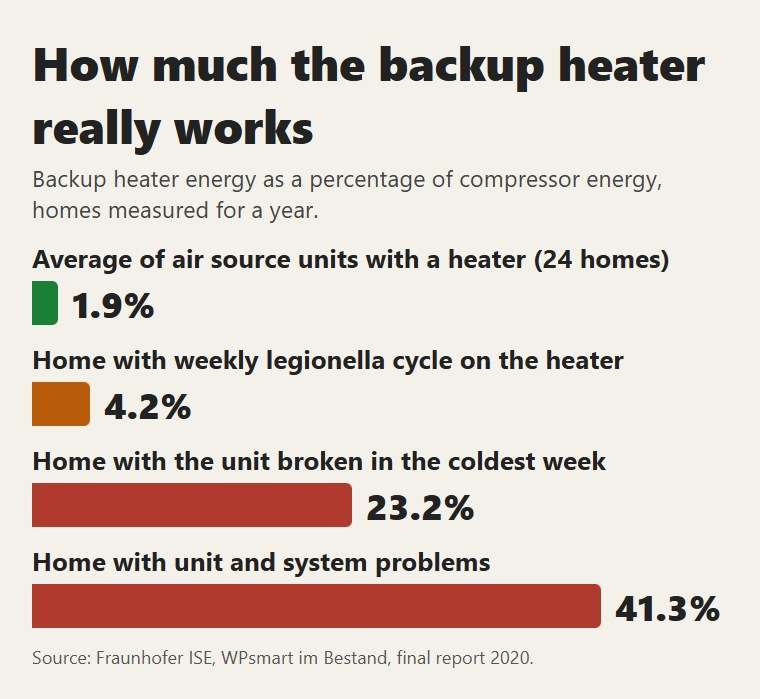
Fraunhofer ISE measured heat pumps for a year in dozens of existing homes. Of the 29 air source units, 24 had a backup heater: on average it used 1.9% of the compressor’s energy. Where the heater ran the weekly legionella cycle it reached 4.2%, almost all for that cycle. In a home with the unit broken in the coldest week the heater rose to 23.2%, in another with unit and system problems to 41.3%.
03
If it works a lot, something is wrong
A heater that runs often is a symptom: an undersized unit, a badly set threshold, defrosts that never end, a fault nobody noticed. You see it on the bill, because every hour of heater costs three or four times an hour of heat pump. The most common causes are listed in the article on when it is not heating.
04
Ours: the heat pump does the legionella cycle
Our heat pumps reach 70 °C for hot water too: the unit takes the cylinder above 60 °C without the heater. That is why our heater is only a safety reserve for the days it is needed, as we explain in the article on hybrids and on the page on hot water. In real cold the unit keeps working, as we explain in the article on sub-zero temperatures.
05
What to ask the installer
Three questions: at what outdoor temperature the unit is sized and how many hours a year would be left to the heater; who decides when it switches on and at what threshold; how the legionella cycle is done. For an opinion, ask us for information.
06
Frequently asked questions
When does a heat pump backup heater switch on?
On the coldest days, if the unit is sized to leave it those hours; as a reserve if the unit stops; for legionella, if the unit cannot reach 60 °C. It should not switch on every winter day.
How much does a heat pump backup heater use?
One kWh of electricity for each kWh of heat, three to five times the heat pump. In homes measured by Fraunhofer ISE it used on average 1.9% of the compressor’s energy.
Why is my backup heater always on?
It is a symptom: undersized unit, badly set threshold, defrosts that never end or a fault. In a home measured by Fraunhofer with a broken unit it reached 23%.
Is the backup heater needed for legionella?
Only if the unit cannot take the cylinder to 60 °C. Ours reach 70 °C for hot water too, so the heat pump does it.
Can I disconnect the backup heater?
Better to keep it as a reserve and check how much it works: if it works little it costs little, if it works a lot there is a problem to find.
Can a heat pump cope with frost without the heater?
If it is sized for the house, yes: ours keep working in real cold. The heater remains a safety reserve.
Source: Fraunhofer ISE, WPsmart im Bestand, Abschlussbericht (2020)
All the technical tips are on the series page.


