

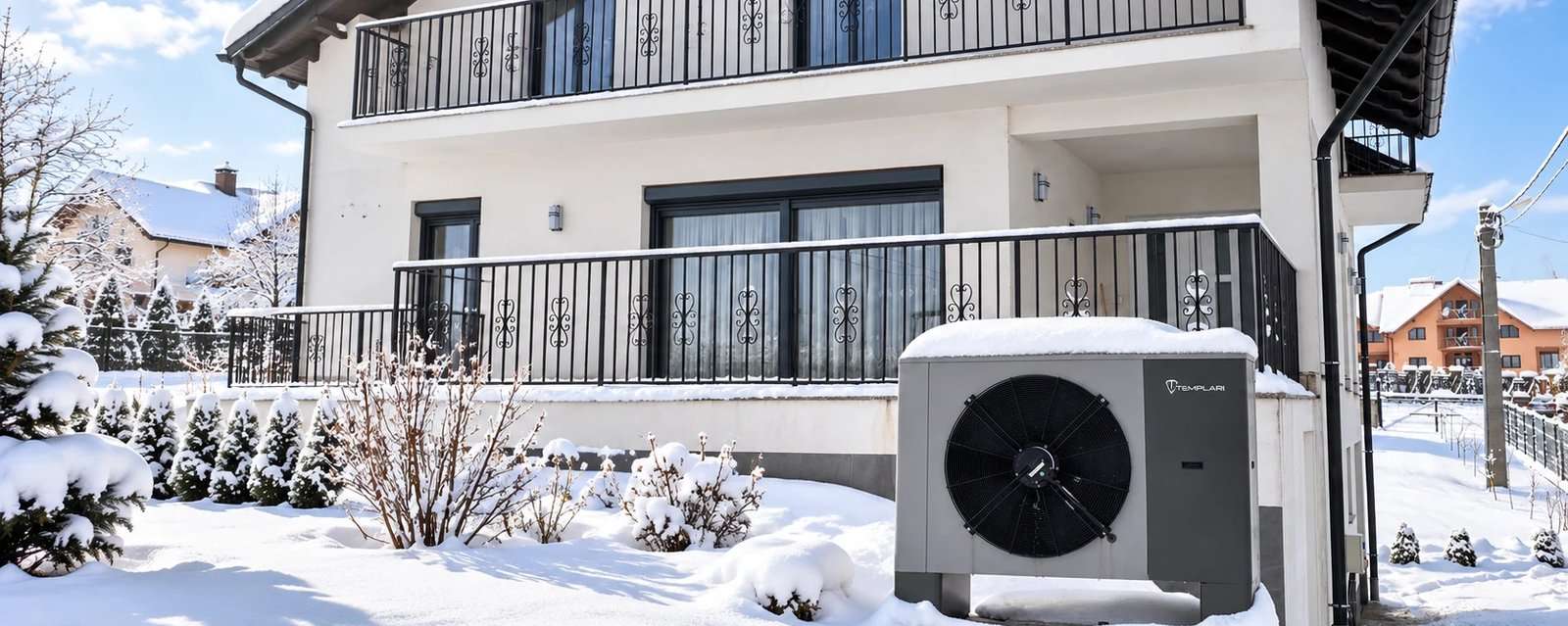
Heat pump in cold weather: down to what temperature does it work? Below freezing, at -20 and -25 °C
It is the question that comes every winter: does a heat pump work when it is freezing outside? Yes. Our propane air-to-water units are built to work below zero: propane evaporates down to -30 °C, so the unit works comfortably down to -25 °C, and the certified data sheets of the Kita XS, SP and MP give figures down to that temperature. When it is colder it uses more, like any heating. Here are the numbers: how much it gives, how much output remains, how many winter hours are really below zero, and what happens with frost and snow.
01
Why it heats even when it is freezing
To us -25 °C is bitterly cold, but air at that temperature still has heat to give: true zero in physics is -273 °C. Heat always flows from warmer to colder, so all that is needed is a refrigerant inside the outdoor coil that is colder than the air. Propane evaporates down to -30 °C: with the air at -25 °C it is still 5 degrees colder, and heat flows from the air into the gas. The compressor then compresses it, the temperature rises and the heat goes to the water of the system, as we explain in the article on how a heat pump works.

02
The compressor makes the difference
Not every machine that takes heat from the air is built for the cold. Air conditioner compressors usually work down to -10/-15 °C evaporating temperature; heat pump compressors are sturdier, preferably scroll, and reach -30/-35 °C. Below zero the compressor has to handle a pressure lift about twice that of an air conditioner, and that needs a heavier mechanical build. We explain it in the article on air conditioner or heat pump and in the one on compressors.
03
How much it gives below freezing: the data sheet figures
Take the Kita SP 10 and its full-load data sheet to UNI EN 14511-2. With water at 35 °C, the temperature of underfloor heating, it reaches COP 5.44 at +7 °C, COP 3.52 at -7 °C, COP 2.86 at -15 °C and COP 2.12 at -25 °C. With water at 55 °C, the temperature of radiators, it goes from COP 3.53 at +7 °C to COP 1.53 at -25 °C. So even on the coldest day each kWh of electricity gives 1.5 to 2 kWh of heat; an electric heater gives 1. It uses more, but it is still cheaper than a plug-in heater. What COP means is in the article on COP.

04
Output drops: that is why the design temperature matters
With colder air the unit loses not only efficiency but also output. With water at 35 °C the SP 10 gives 10.0 kW at +7 °C, 7.36 kW at -7 °C and 4.37 kW at -25 °C: 44%. The same goes for the MP 16, from 15.04 to 6.68 kW, and for the XS 9, from 9.00 to 3.70 kW. That is why the unit is chosen on the output it gives at the local design temperature, not the rated one, as we explain in the article on useful capacity. The design temperature depends on the place and is set by national standards; in Italy it is around -5 °C on the plains and reaches -15 °C and below in the mountains. How to size is in the article on sizing.

05
How many winter hours are really below freezing
European energy labels use three reference climates, each with the hours of a typical winter split by temperature (EU Regulation 811/2013). In the average climate, Strasbourg, winter has 4,910 heating hours: 686 are below zero, 14%; those at -7 °C or colder are 73, 1.5%; below -10 °C there are none. In the colder climate, Helsinki, there are 6,446 hours: 2,426 below zero, 38%; 370 at -10 °C or colder, 5.7%; at -20 °C or colder 20 in the whole year. The yearly bill is therefore decided by the hours between 0 and +10 °C, when COP is high. The hours at -20 °C count for output, not for the bill.

06
Frost: the enemy is zero, not -20
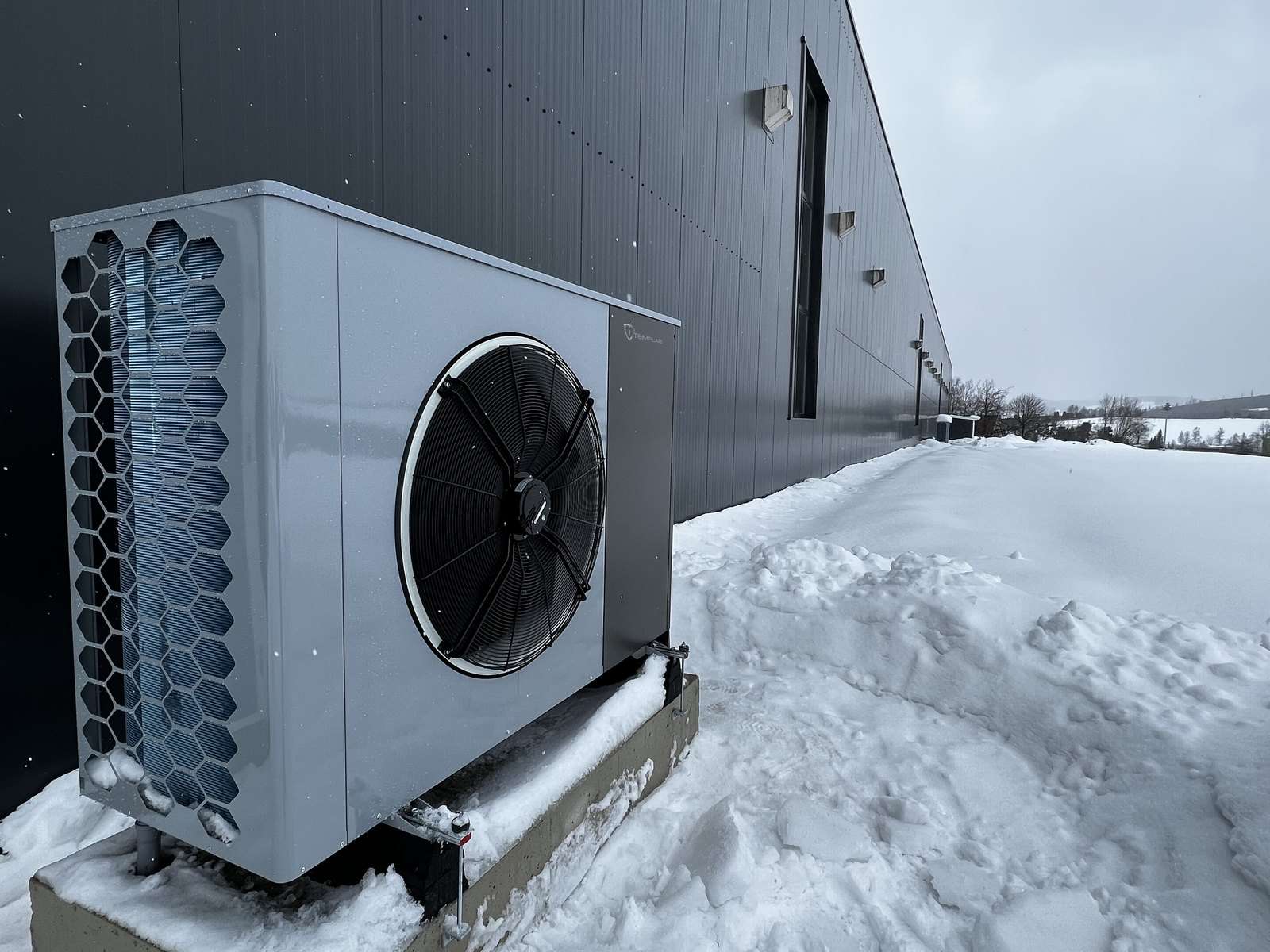
Below zero frost forms on the outdoor coil, and the unit has to melt it from time to time. Experimental studies show that most frost forms when the air is around 0 °C and humid: a 2008 study finds the peak around 0 °C, a 2014 study, run between -18 and +6 °C at 70-90% humidity, finds it between -3 and +3 °C. With air at -15 °C, much drier, less forms. That is why two things matter: the spacing between the coil fins, which must be wide so frost does not close it quickly, as we explain in the article on fins, and a defrost that starts when needed rather than on a timer, as in the article on defrosting.
07
Electric heaters hardly run
Many fear that in winter the electric heater does the work instead of the heat pump. Field measurements say otherwise. Fraunhofer ISE, the German institute for solar energy systems, measured 77 heat pumps in one- to three-family houses, old ones included, for four years: the air-to-water units averaged a seasonal performance of 3.4, between 2.6 and 4.9, and the heaters covered only 1.3% of the electricity. The institute itself notes that the measured winters were mild. With a unit of the right size the heater stays a back-up and a boiler alongside is not needed: we explain it in the article on hybrids.
08
In Europe's coldest countries the heat pump is normal
If heat pumps did not work in the cold, the northern countries would not have chosen them. Norway, Sweden and Finland have Europe’s coldest climate and also the most heat pumps per household: more than 40 per 100 households in each of the three, and Norway reached 60 per 100 in 2020. Many are air-to-air, but the point stands: where the cold is real, homes have been heated with heat pumps for decades.
09
Snow and ice: how to install
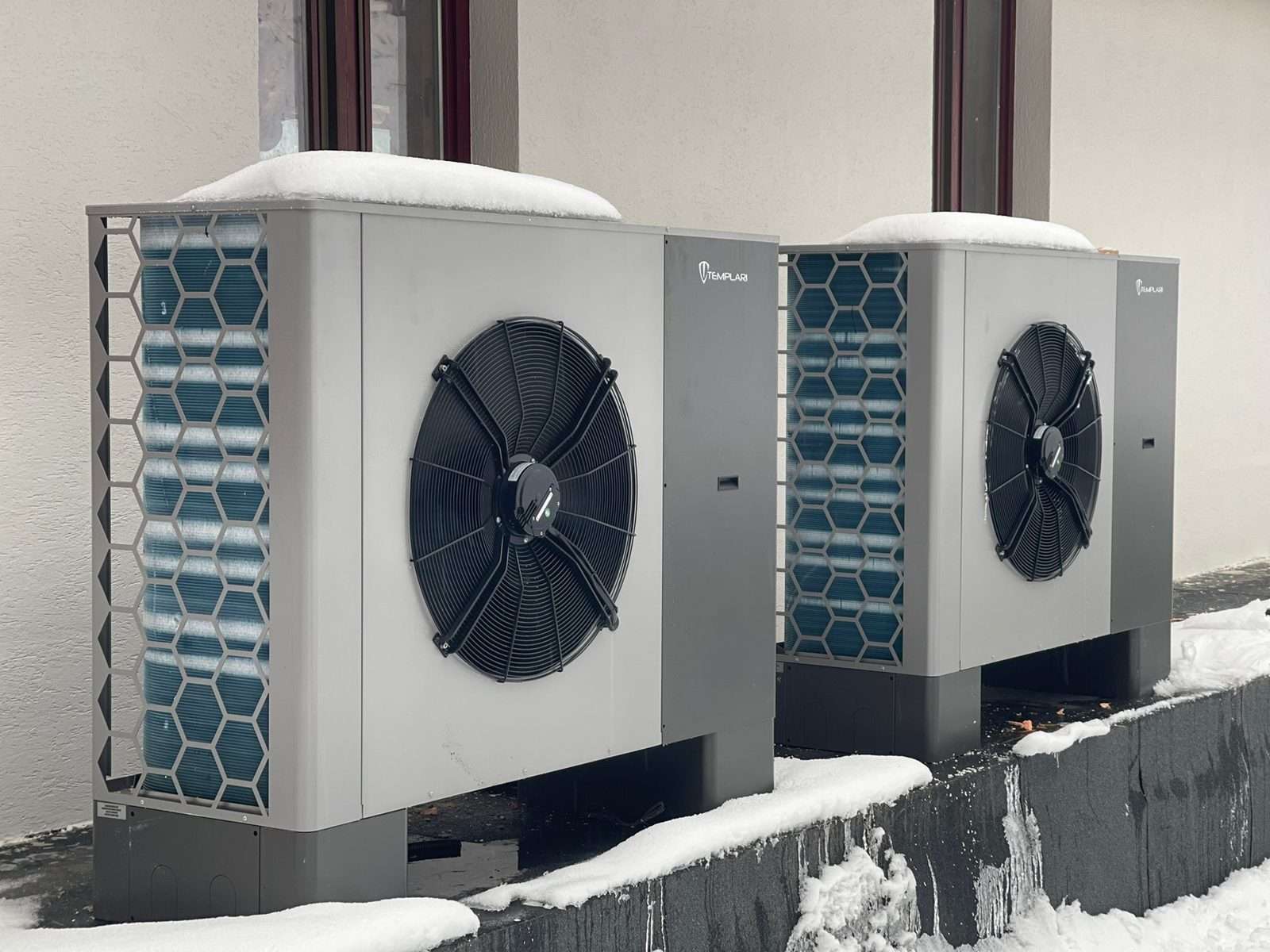
With snow, the way the unit is installed matters. It must be raised off the ground, on a base, so that snow does not reach the coil and defrost water can run down and away: if it stays under the unit it freezes into a block of ice. Front and back need free space for the air to pass. The unit is not covered with sheets, and frost is not removed by hand: it melts by itself with the defrost.
10
What to check if you live where it is cold
Three things. The design temperature of your location and the heat loss calculation, which say how many kW are needed on the coldest day. The output the unit gives at that temperature, read on the data sheet, not the rated one. The water temperature the system needs: with underfloor heating COP stays high even below zero, with radiators you need a unit that reaches 70 °C, as we explain in the article on old houses. If you live in the mountains or in a cold country and want to know which unit you need and how much it will use, ask us for information.
11
Frequently asked questions
Down to what outdoor temperature does a heat pump work?
It depends on the unit. Our propane air-to-water units work down to -25 °C: the certified data sheets of the Kita XS, SP and MP give output and COP down to that temperature. Propane evaporates down to -30 °C.
Does a heat pump work below freezing?
Yes. Even at -25 °C the air has heat to give, because the refrigerant in the coil is colder. The Kita SP 10 with water at 35 °C reaches COP 3.52 at -7 °C and COP 2.12 at -25 °C.
How much does a heat pump use when it is very cold?
More, because COP drops: with water at 55 °C the SP 10 goes from COP 3.53 at +7 °C to COP 1.53 at -25 °C. Even then each kWh of electricity gives 1.5 kWh of heat, against 1 for an electric heater.
Does a heat pump lose output in the cold?
Yes: at -25 °C it gives about 41-44% of its output at +7 °C. That is why it is chosen on the output at the local design temperature, not the rated one.
How many hours a year are below freezing?
In the European average reference climate 14% of heating hours, in the colder Helsinki climate 38%. At -20 °C or colder, even in Helsinki, 20 hours a year.
Is an electric heater or a back-up boiler needed?
Not with the right size. In Fraunhofer ISE measurements on 77 systems the heaters covered 1.3% of the electricity. At most a small back-up heater.
What happens with snow and ice?
The unit must be raised off the ground so snow does not block the coil and defrost water can drain. Frost melts by itself: it is not removed by hand and the unit is not covered.
See also: Heat pump noise: how many decibels, how far from the neighbours and why it is louder in winter · Heat pump with ice, steam or water underneath: what is normal and when to call for service · Ground source vs air source heat pump: running costs, lifetime and system cost compared
All the technical tips are on the series page.


