

Heat pump short cycling: a heat pump is not a boiler and has to run without stopping
The first three tips explained the exchanger, defrosting and the right size. This one explains something that applies to any heat pump, even the best: it is not a boiler, and it must not be used like a boiler.
01
The boiler starts at once, the heat pump does not
A boiler lights its flame and a moment later it heats. A heat pump burns nothing: it takes the heat that is in the outdoor air and moves it inside, into the water of the system if it is air-to-water, into the air of the building if it is air-to-air. To do that it has to set in motion a compressor, a circuit full of refrigerant, two exchangers and a fan. All of this has mass, and mass does not start in an instant.
02
What happens in the first ten minutes
At start-up the compressor has to warm up, the oil has to become fluid again, the refrigerant begins to circulate and the circuit looks for its working temperatures: the one at which it evaporates outside and the one at which it condenses inside, which depend on the outdoor air and on the system. It takes five to ten minutes. Only from then on does the unit really work, at the efficiency it was designed for. Before that, no: it consumes and heats little.
03
Why switching on and off costs
Every start costs twice. It costs energy, because the first minutes are the least efficient. And it costs lifetime, because the life of a compressor is measured in start and stop cycles, as for a car the cold starts count more than the kilometres. A well-managed heat pump starts a few times a day and then runs continuously, modulating its output. It is slower than a boiler to start, but once at full working temperature it consumes much less: the comparison is won on the hours, not on the minutes.
04
The buffer tank is small, the house is big
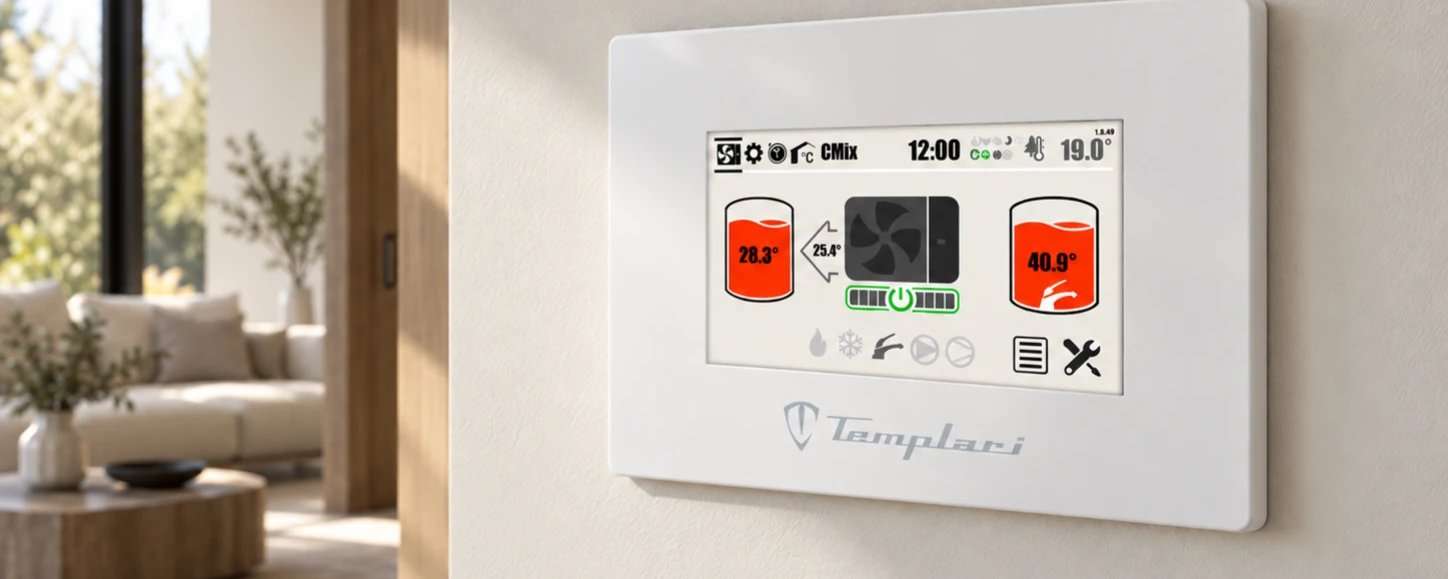
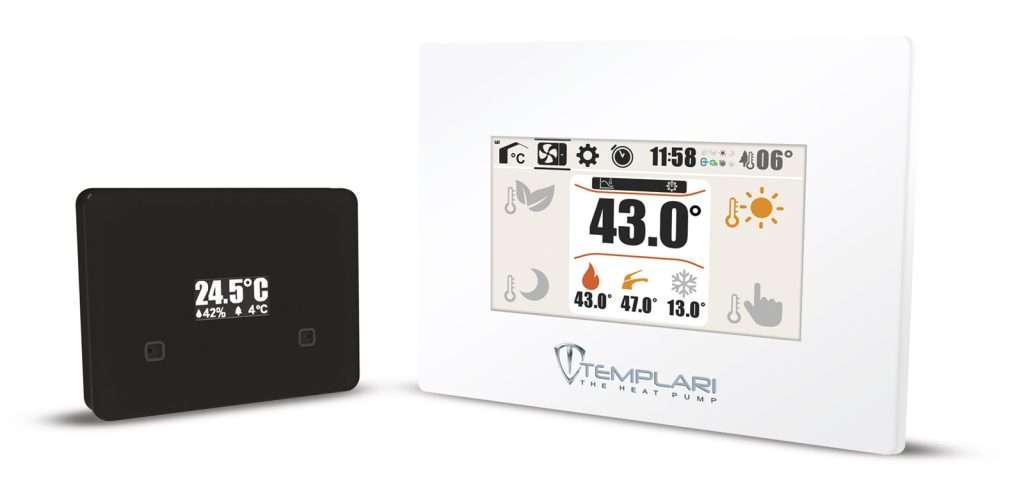
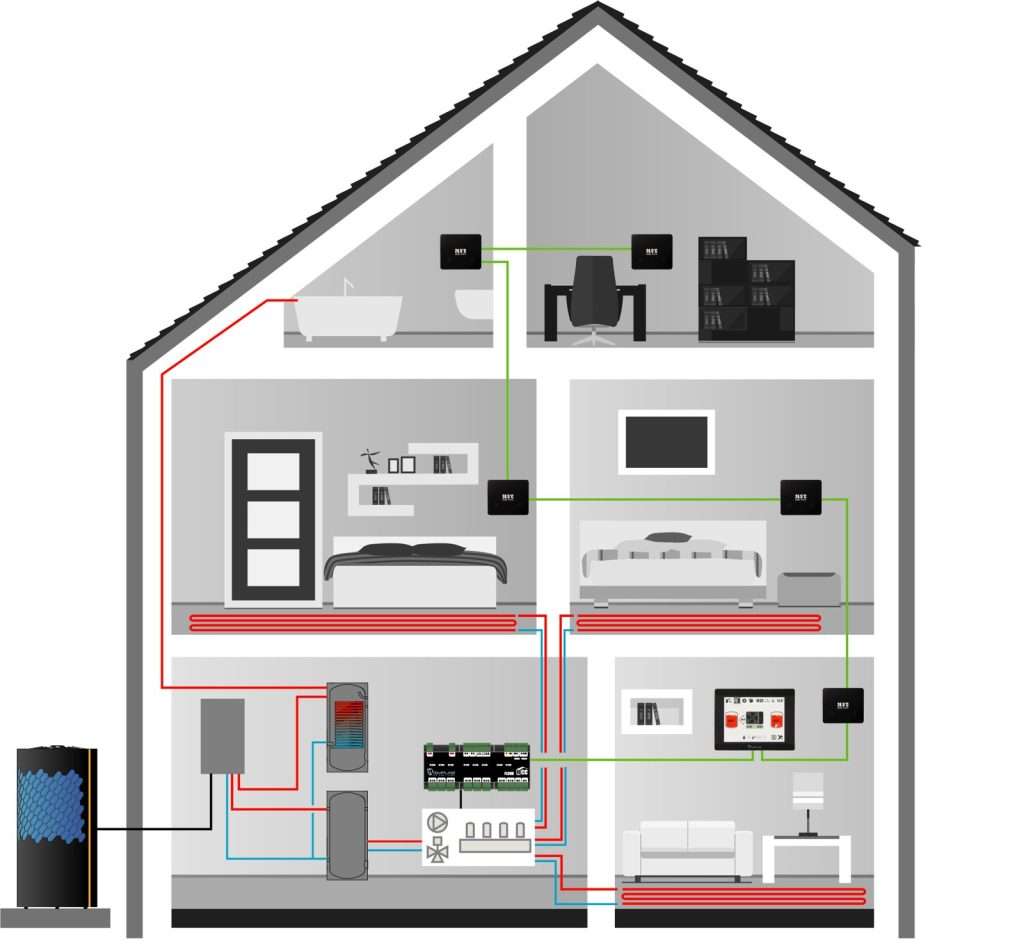
Here is the most common mistake. Almost all heat pumps are controlled by the sensor in the buffer tank, the water tank of the system. The tank is small: it heats up fast and cools down fast, and the unit chases it, switching on and off all the time. An imported heat pump without a system that looks at the house is a good piece of iron governed badly. That is why we developed HCC, House Climate Control: our own electronics and software that control the unit on the temperature of the rooms, not on that of the tank. Rooms have an enormous inertia compared with a tank: they change temperature in hours, not minutes. So the unit starts, reaches its working point and stays there.
It is worth saying plainly. An Asian-import heat pump without a control of this kind, what the trade calls building automation, also has a smaller exchanger and a weaker fan: at equal output ours weigh twice as much, and that is the whole reason. Without advanced software governing it, a heat pump ends up using twice the energy.

05
When to switch it on
In winter the ideal is to switch it on in the morning, around seven, and off in the evening, around nine. At night, with the cold and humidity typical of Europe, the outdoor exchanger frosts more and defrosts more often: a unit that works by day does one defrost in the morning and that is all. If the house is old and loses a lot of heat, it is kept on at night too, but at reduced output. In a well-insulated house the heat stored during the day lasts until morning.
06
How to reduce short cycling
In Germany “Taktung verringern”, reducing cycling, is searched 210 times a month. When a heat pump keeps switching on and off, there are almost always four causes:
- it is controlled by the buffer tank sensor instead of the room temperature: the tank heats up quickly and the unit chases it;
- it is too big for the house: in spring and autumn even its minimum output is more heat than needed, so it stops and restarts;
- the heating curve is too high: the water reaches temperature at once and the unit switches off;
- the system has too little water, for example with many valves closed: the unit has no volume to work on.
The remedies follow the causes: control it on the rooms; choose the right size and ask how low its output can go, as we explain in the article on sizing; lower the curve, as in the article on the heating curve; give the system its minimum water volume with a plain buffer tank, as in the article on buffer tanks. In spring and autumn, when the house needs very little heat, a few more starts are normal.
07
How to check, before you buy
- ask what controls the unit: the buffer tank sensor or the room temperature;
- ask how many times it starts on a typical winter day: few starts and long hours of running, not the other way round;
- ask whether the time programme belongs to the unit or to the thermostat: the unit must decide output and hours, not a relay that cuts it off.
Our heat pumps, from the smallest to the Kita Air for industrial buildings, have HCC as standard, on every model.
08
Frequently asked questions
Should a heat pump be left on all the time?
It should run steadily, with few starts a day. In winter the ideal is to switch it on around seven in the morning and off around nine in the evening; in an old house that loses a lot of heat it is also left on at night, at reduced output.
Why does my heat pump keep switching on and off?
Often because it is controlled by the buffer tank sensor: the tank is small, heats up and cools down quickly, and the machine chases it. Controlled on the room temperature, as HCC does, it starts and stays at steady running.
How long does a heat pump take to reach steady running?
Five to ten minutes: the compressor must warm up, the oil must become fluid and the circuit must find its working temperatures. Before that it uses energy and heats little.
What is HCC?
It is the electronics and software we developed to control the heat pump on the room temperature instead of the buffer tank. It is standard on all our heat pumps.
See also: Heat pump controls: thermostats, underfloor cooling and fan coils under one system · Heat pumps and radiators: does it work? Yes, and better with propane · Heat pump and solar panels: how much the roof really covers, month by month, and how to make them work together · Heat pump heating curve and weather compensation: what it is, why it is set 5 degrees too high, and how to do without it · Heat pump buffer tank: is it needed, which type, what size and which to avoid · Are heat pumps worth it? The real drawbacks and how to avoid them
Next tip: the energy optimiser, which uses the walls of the house as a battery: read it here.


