

Workshop heating: diesel heaters, infrared or a heat pump
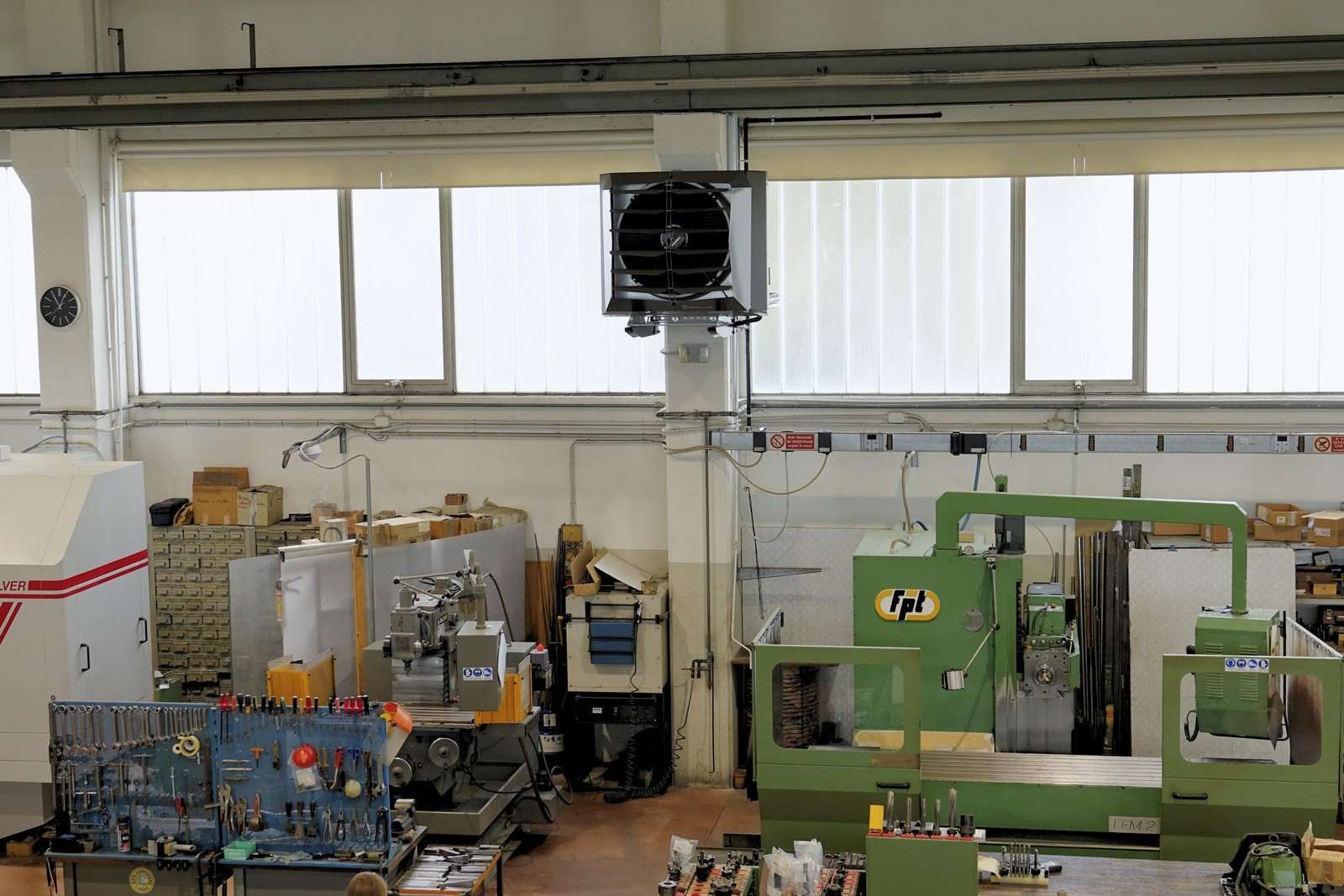
A workshop is hard to heat: high ceilings, a door that opens to let vehicles in, people standing at floor level and heat rising under the roof. Here we compare the most common solutions with an air-to-air heat pump, and say when each one makes sense.
Why a workshop is hard to heat
Warm air rises and stays under the roof, while people work at floor level. The door opens several times a day and cold air comes in every time. And volume matters more than floor area: a 400 m² workshop 7 metres high holds 2,800 cubic metres of air. How to work out the output is in the article on kW for an industrial building.
The most common solutions
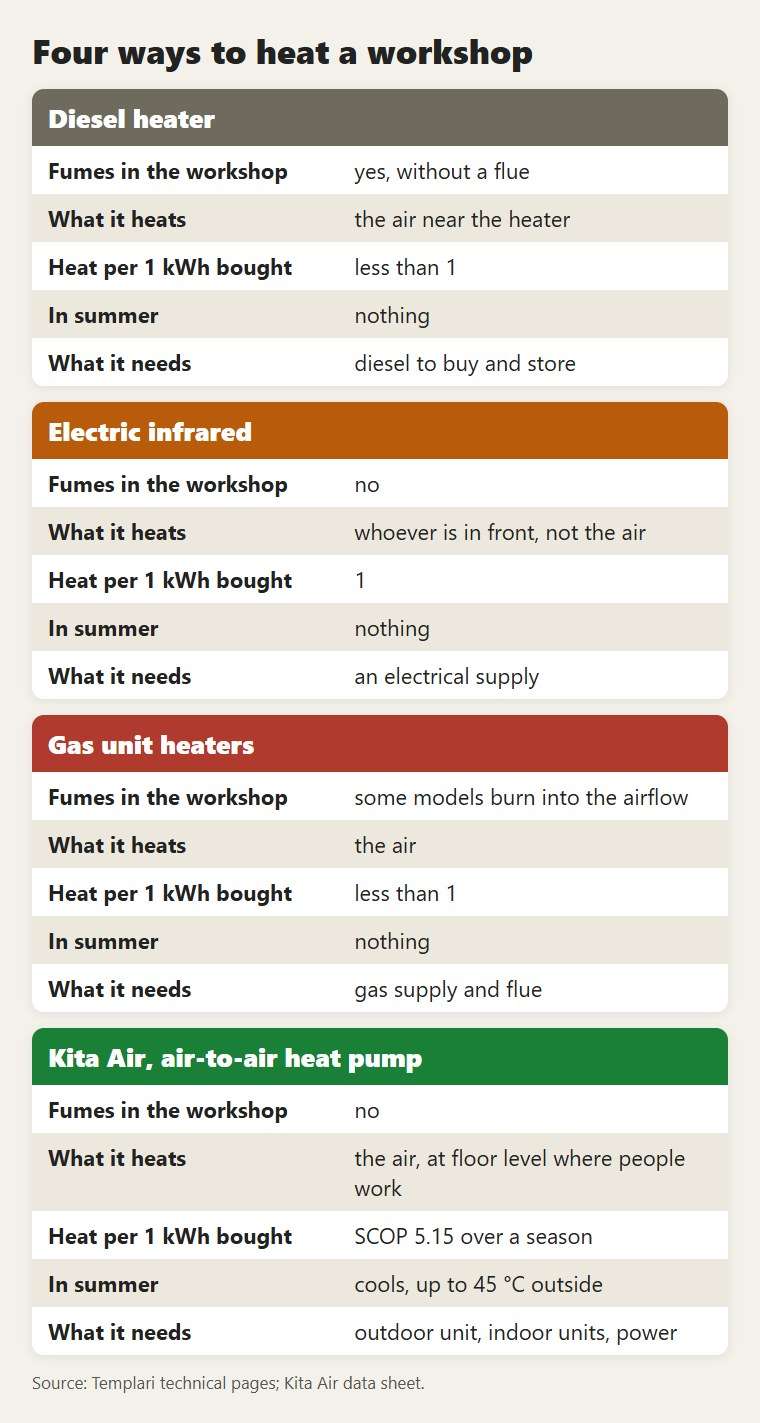
A diesel heater warms up quickly, but without a flue it releases its fumes into the workshop, and the diesel has to be bought and stored. Electric infrared heats whoever is in front of it, not the air: fine for one fixed workstation, not for the whole workshop. Gas unit heaters are quick but give back less than one kWh of heat per kWh of gas, and some models burn into the airflow.
The air-to-air heat pump
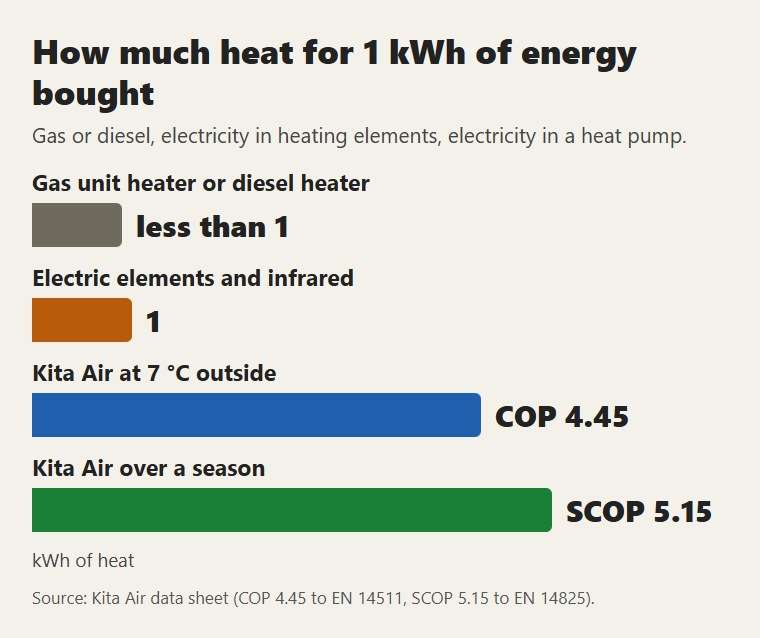
The Kita Air takes heat from the outdoor air and brings it inside through the refrigerant circuit, with no water and no combustion: no fumes, no diesel, no boiler. For every kWh of electricity it gives back 4.45 kWh of heat with 7 °C outside (COP 4.45) and 5.15 over the whole season (SCOP 5.15). An electric element or infrared heater gives back one. How to size it is in the article on kW for an industrial building.
Where the units go
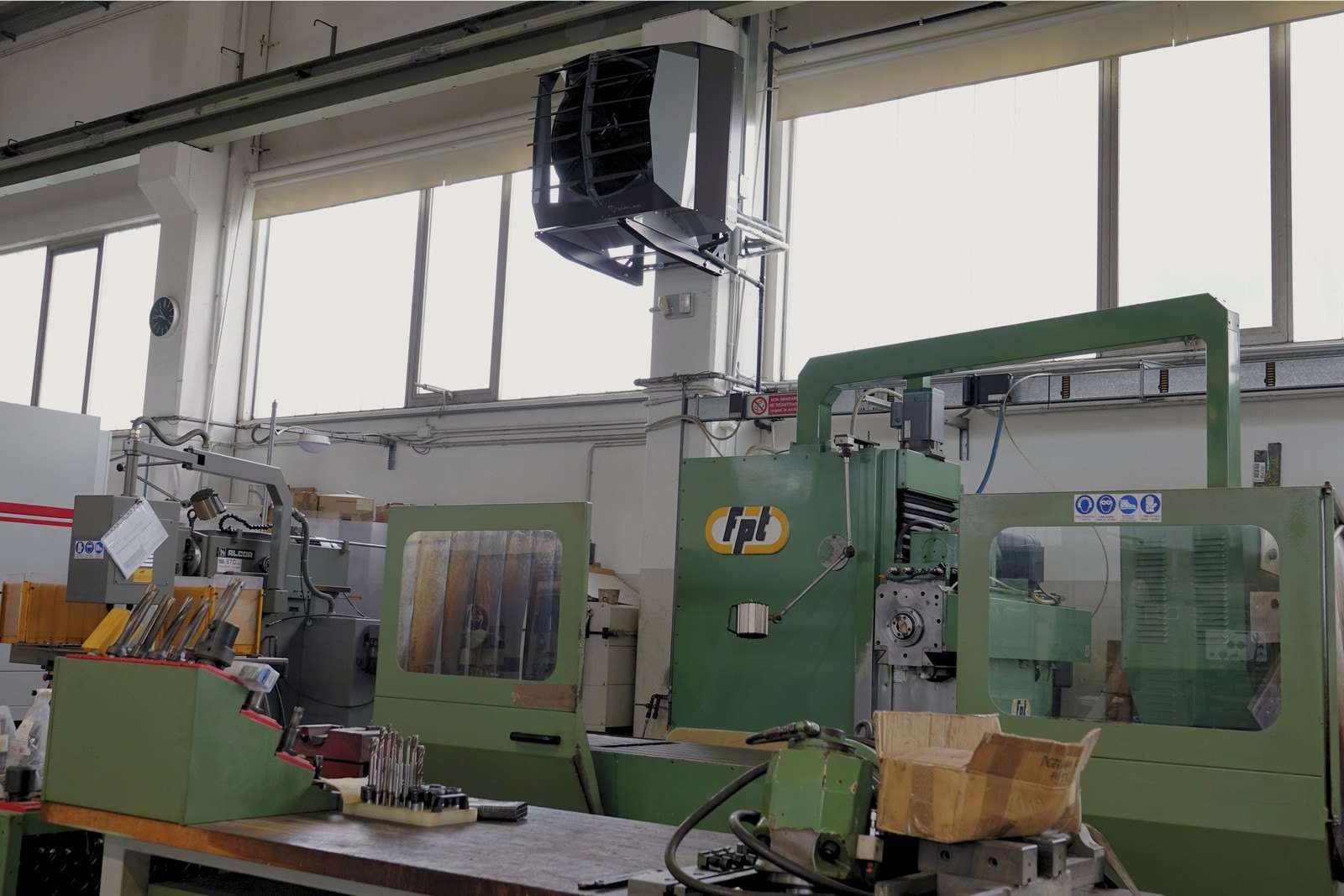
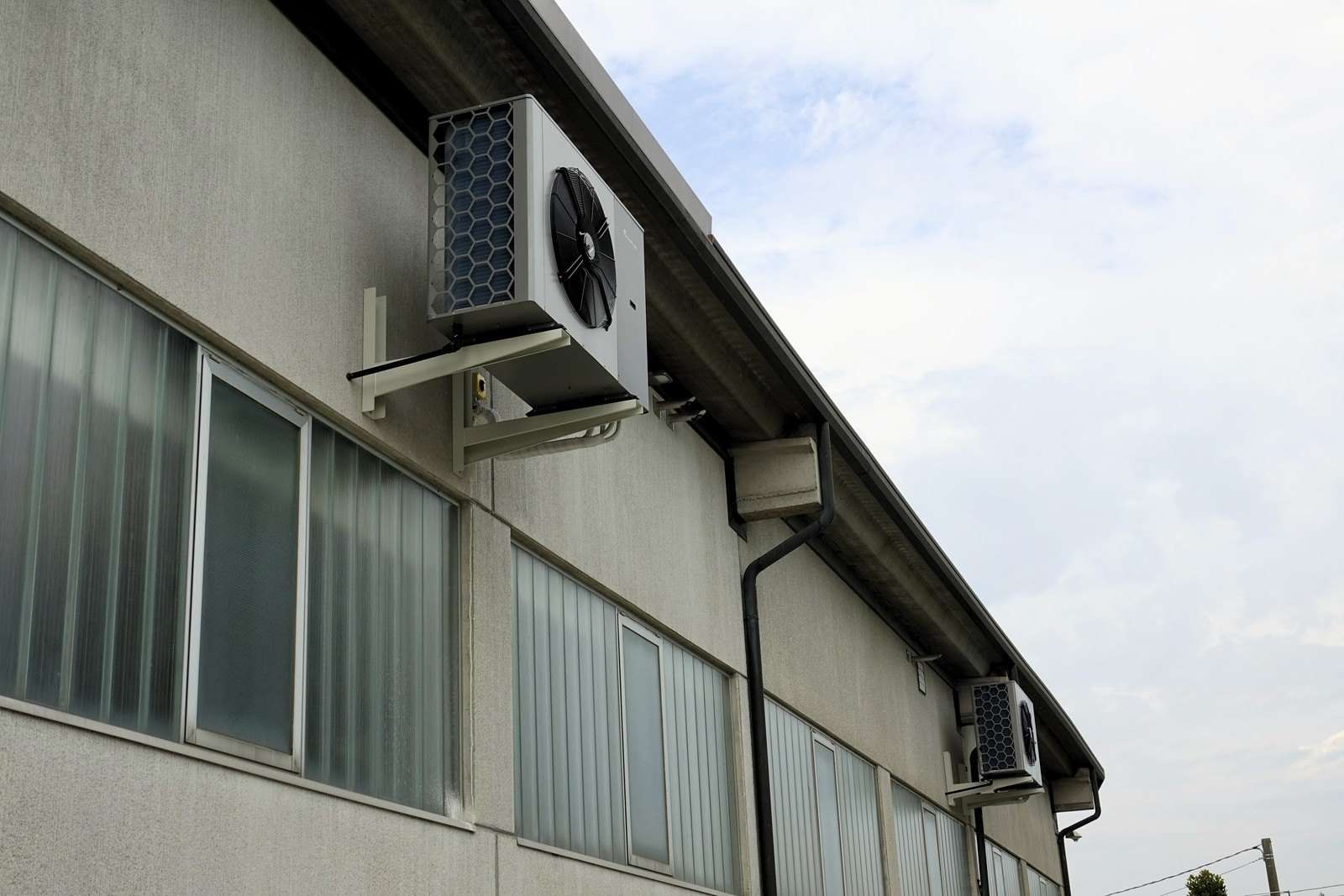
The indoor units hang on walls or columns above the machines and blow warm air downwards, where people work. They go away from the door, so the heat is not pushed out when it opens. The outdoor unit sits on the outside wall: 38 dB(A) at 5 metres. The indoor unit, at 3 metres, is 42 dB(A), quieter than a workshop at work.
How many units you need
As a rule of thumb one Kita Air every 400-500 m², sized on the output at -7 °C: 32 kW for the Kita Air, 42 kW for the Plus. The real number depends on height, insulation and how long the door stays open. The Kita Air makes sense from 300 m² upwards: for a 50 m² garage it is too big. Full data are on the Kita Air page.
It cools in summer
The same unit cools in summer, with outdoor air up to 45 °C. In a workshop with a hot roof and machines running, this is often what people appreciate most. How air-to-air works is in the article on air-to-air heat pumps.
Frequently asked questions
What is the cheapest way to heat a workshop?
Per kWh of energy bought, an air-to-air heat pump gives the most heat: the Kita Air has SCOP 5.15 over the season, against less than 1 for gas and diesel and 1 for electric elements and infrared.
Is a diesel heater OK in a workshop?
It heats quickly, but without a flue it releases its fumes into the workspace, and the diesel has to be bought and stored.
Is infrared enough to heat a workshop?
It heats whoever is in front of it, not the air: fine for one fixed workstation, not for keeping the whole workshop warm.
How many Kita Air units does a workshop need?
As a rule of thumb one every 400-500 m², sized on the output at -7 °C. The real number depends on height, insulation and doors.
What happens when the door opens?
Cold air comes in: the units go away from the door, and the heat pump heats the air directly, with no water to bring back up to temperature.
Does the heat pump also cool in summer?
Yes, the same Kita Air cools with outdoor air up to 45 °C.
For a workshop from 300 m² upwards, ask us for information, or look at the case studies.


