

Air to air heat pump: how it works, pros and cons, and when it makes sense for heating
An air to air heat pump takes heat from the outside air and delivers it straight into the air of the room, without going through water. At home it is what most people call an air conditioner with heat pump. In a factory it is a different machine built on the same idea. This article explains how it works, what it does better than an air to water heat pump, what it cannot do, and when it really makes sense for heating.
01
How it works
The cycle is the same as in every heat pump. Outside, the coil of the outdoor unit takes heat from the air even when it is cold; the compressor raises it to a higher temperature; inside, the coil of the indoor unit releases it into the air that a fan blows into the room. The two units are connected by two copper pipes carrying the refrigerant. In summer the cycle reverses and the same machine cools. In an air to water heat pump, by contrast, the heat goes into water first, which then carries it to radiators, underfloor heating or fan coils.
02
What it does better than air to water
- No water system is needed: no water pipes, pumps, expansion vessels, and no water that can freeze in a factory shut down over Christmas.
- It heats quickly: the air is warm at once, there is no need to heat the water and the system mass first. In a factory working shifts or opening its doors often, that is what counts.
- It cools in summer with the same machine and the same pipes.
- It costs less to install, because there are fewer parts.
03
What it cannot do
- It does not make domestic hot water: showers and washrooms need something else, such as a small air to water unit or a heat pump water heater.
- Warm air rises: in a tall space it stays under the roof unless something sends it back down. That is why the way the air comes out, and how fast, matters.
- It moves air: in an office or a bedroom some people feel it as a draught. Underfloor heating gives more even warmth.
- A small home split is not made for real winter: it heats while the outside air is mild and dry, then frosts and defrosts all the time. We explain the difference in the article on air conditioners and heat pumps.
04
At home or in business
At home, air to air makes sense to heat a few rooms, a loft, a room used rarely, or to support the existing system. To heat the whole house, with hot water for the bathrooms, the usual choice is air to water.
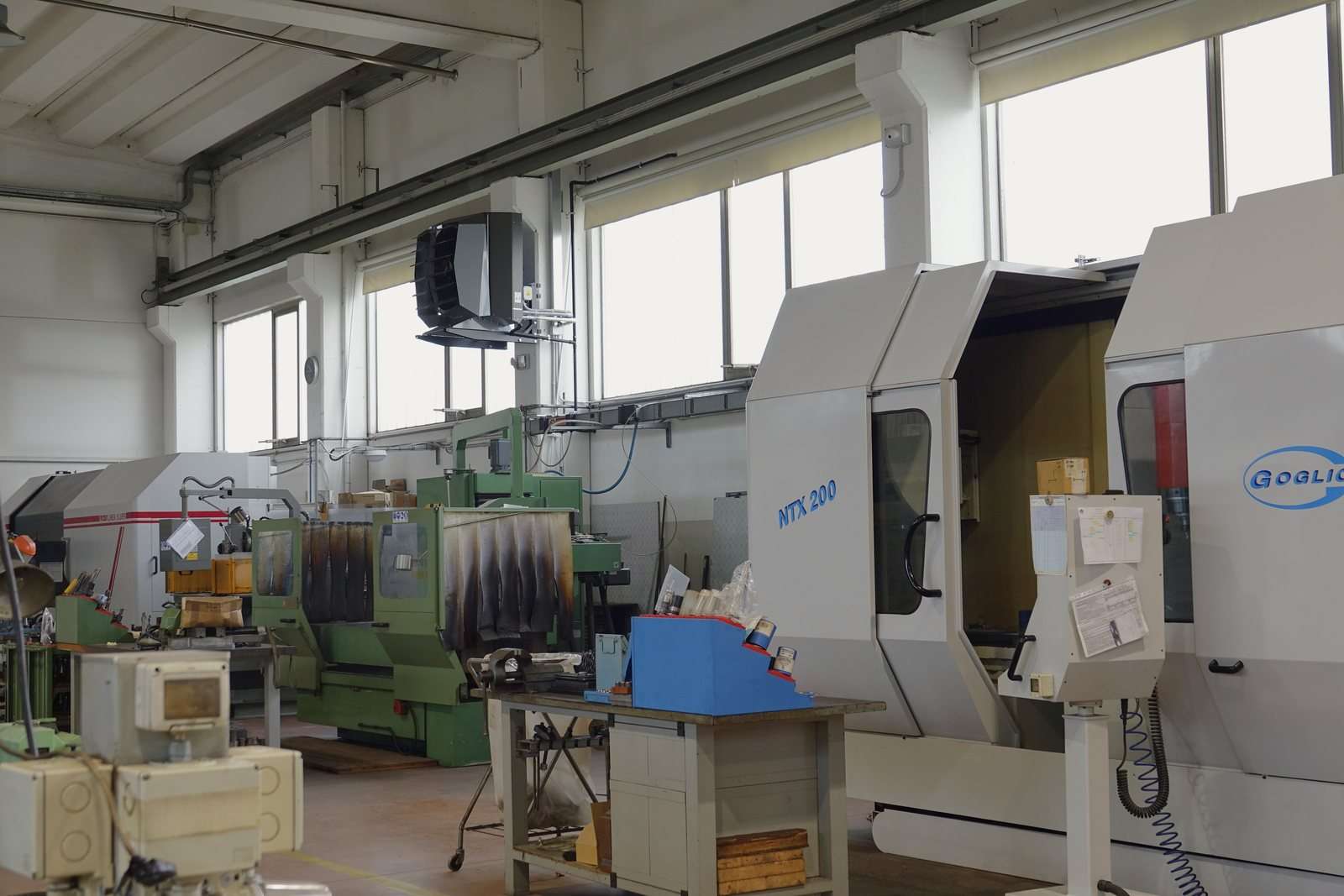
In business it is the other way round. A factory has large volumes, often no water system, doors that open, changing hours, and it gets hot in summer. Here air to air is the most direct solution: it heats and cools the same space with one machine.
05
Kita Air: air to air for factories and warehouses
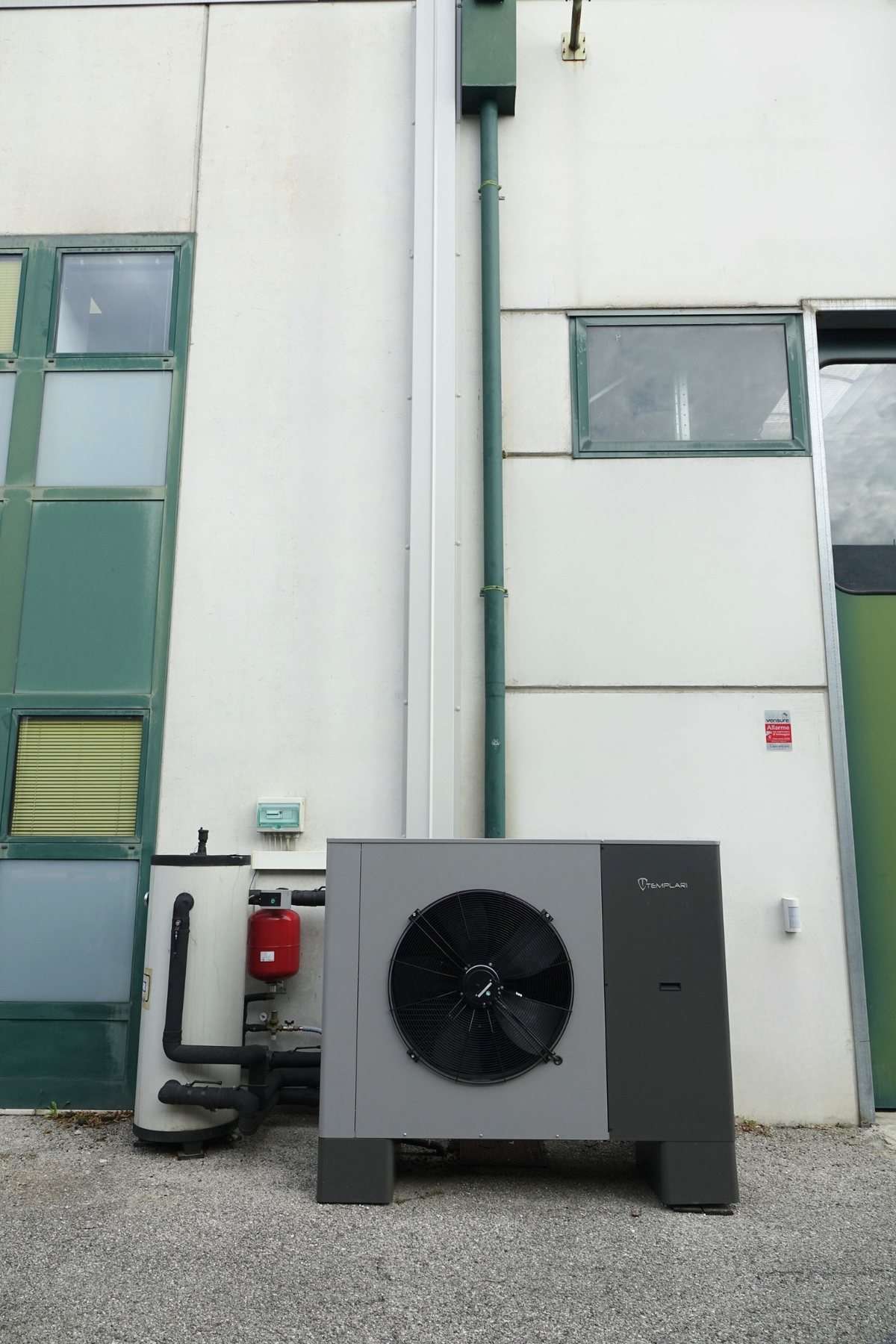
The Kita Air is our air to air heat pump for spaces from 300 m² upwards. It is not an oversized air conditioner: the outdoor coil, the compressor and the electronics are designed to heat in winter.
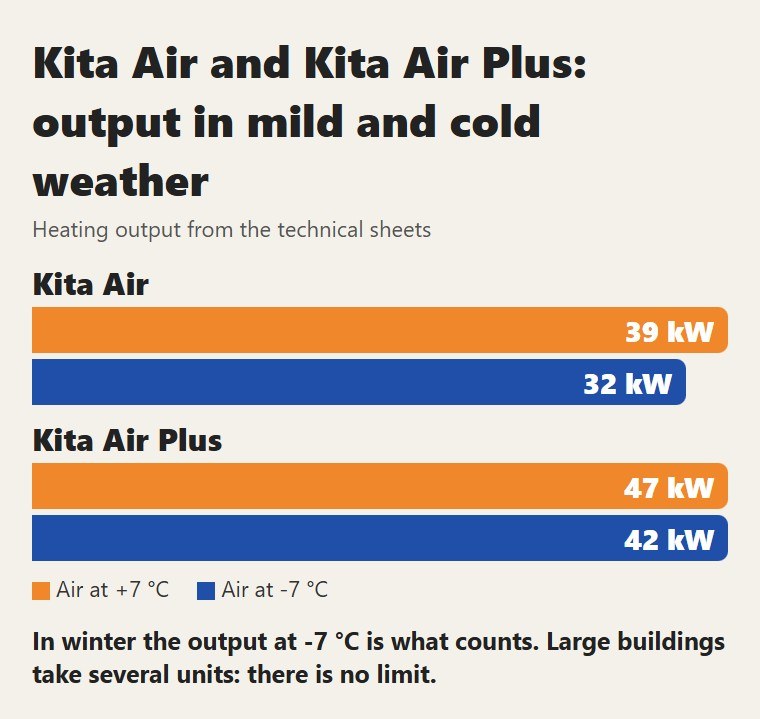
- Output: Kita Air 39 kW at +7 °C and 32 kW at -7 °C; Kita Air Plus 47 kW at +7 °C and 42 kW at -7 °C. Large buildings get several machines: there is no limit.
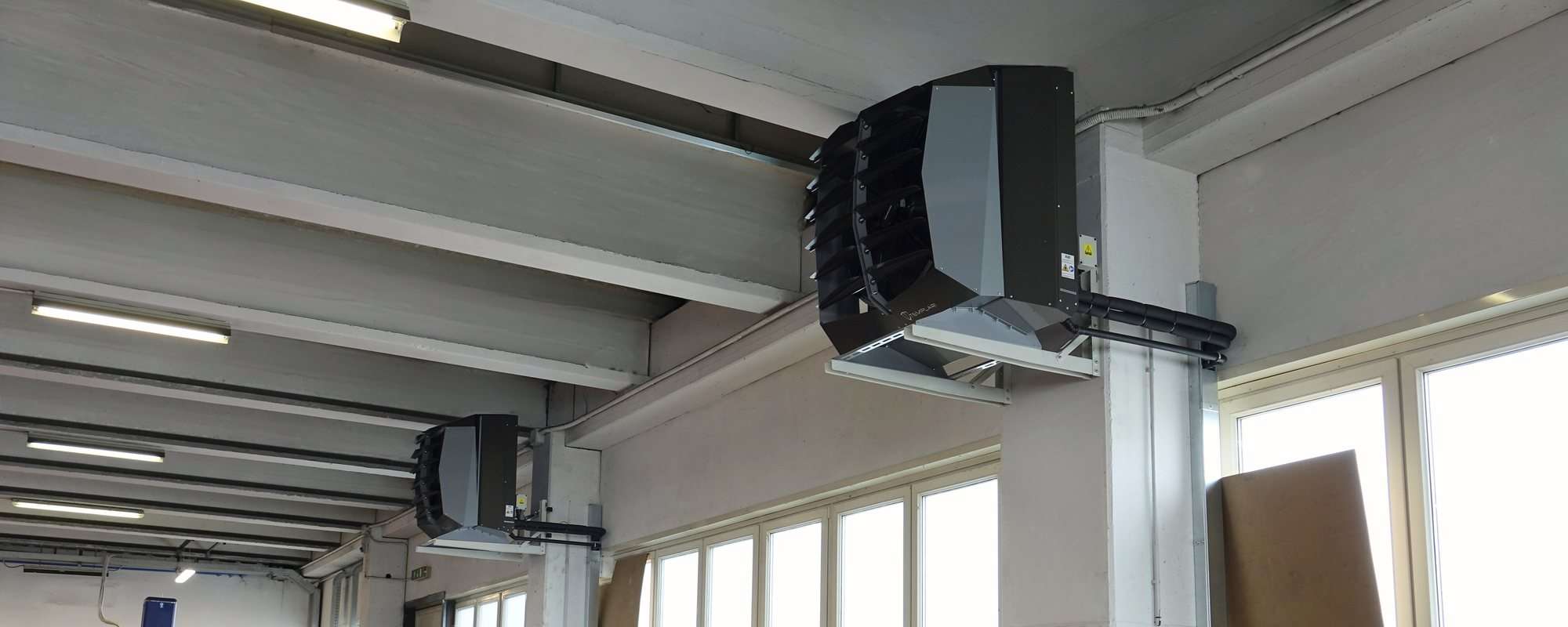
- Indoor unit: 800 mm fan turning slowly, air throw up to 25 metres, 42 dB at 3 metres. A deflector fitted as standard mixes the warm air with the air of the building, so the heat does not all stay under the roof. There is also a ducted version, where direct air bothers the work, and a floor-standing one that keeps the heat low.
- Outdoor unit: 38 dB at 5 metres.
How much output a factory needs is explained in the article on kW; how to choose between rated and useful output, in the one on output.
06
When it makes sense, in practice
- Factory with no water system, or with an old one to be scrapped: air to air.
- Factory that also needs cooling in summer: air to air.
- Departments where work cannot stand draughts: ducted or floor-standing air to air, or air to water with radiant panels.
- Offices, changing rooms and showers in the same building: air to air for the factory and a small air to water unit for the offices and hot water.
- Whole house with radiators or underfloor heating: air to water.
07
Mistakes to avoid
- Choosing the machine on its output at +7 °C: in winter what counts is the output at -7 °C.
- Mounting the indoor units high without thinking about how the air comes back down: you heat the roof.
- Using many home splits for a factory: many small machines, each with its own coil frosting up.
- Forgetting hot water for the washrooms.
08
Frequently asked questions
What is an air to air heat pump?
A heat pump that takes heat from the outside air and releases it straight into the room air, with no water in between. In summer it cools.
Can an air to air heat pump heat a building?
Yes, if it is designed for winter: a large outdoor coil, a compressor suited to cold, well managed defrosting. A small home split heats while the outside air is mild.
Air to air or air to water?
At home, to heat everything through radiators or underfloor heating and make hot water, air to water. In a factory, to heat and cool large volumes without a water system, air to air.
What are the pros and cons of an air to air heat pump?
Pros: no water system, instant warmth, cooling in summer, lower installation cost. Cons: no domestic hot water, moving air, and in tall spaces the rising heat has to be managed.
How noisy is it?
It depends on the machine. On the Kita Air the indoor unit makes 42 dB at 3 metres and the outdoor unit 38 dB at 5 metres.
What area does a Kita Air heat?
It depends on the insulation and height of the building. From 300 m² upwards. Large buildings get several machines, with no limit.
See also: Workshop heating: diesel heaters, infrared or a heat pump
All the technical tips are on the series page. The next one in two weeks.


