

Monobloc heat pump: what it is and when it makes sense
A monobloc heat pump has the whole refrigerant circuit in a single outdoor unit: compressor, heat exchangers, fan and expansion valve are sealed in the factory inside the same casing. Only two water pipes, the heating flow and return, and the power cable go into the house. All our air-to-water heat pumps are built this way.
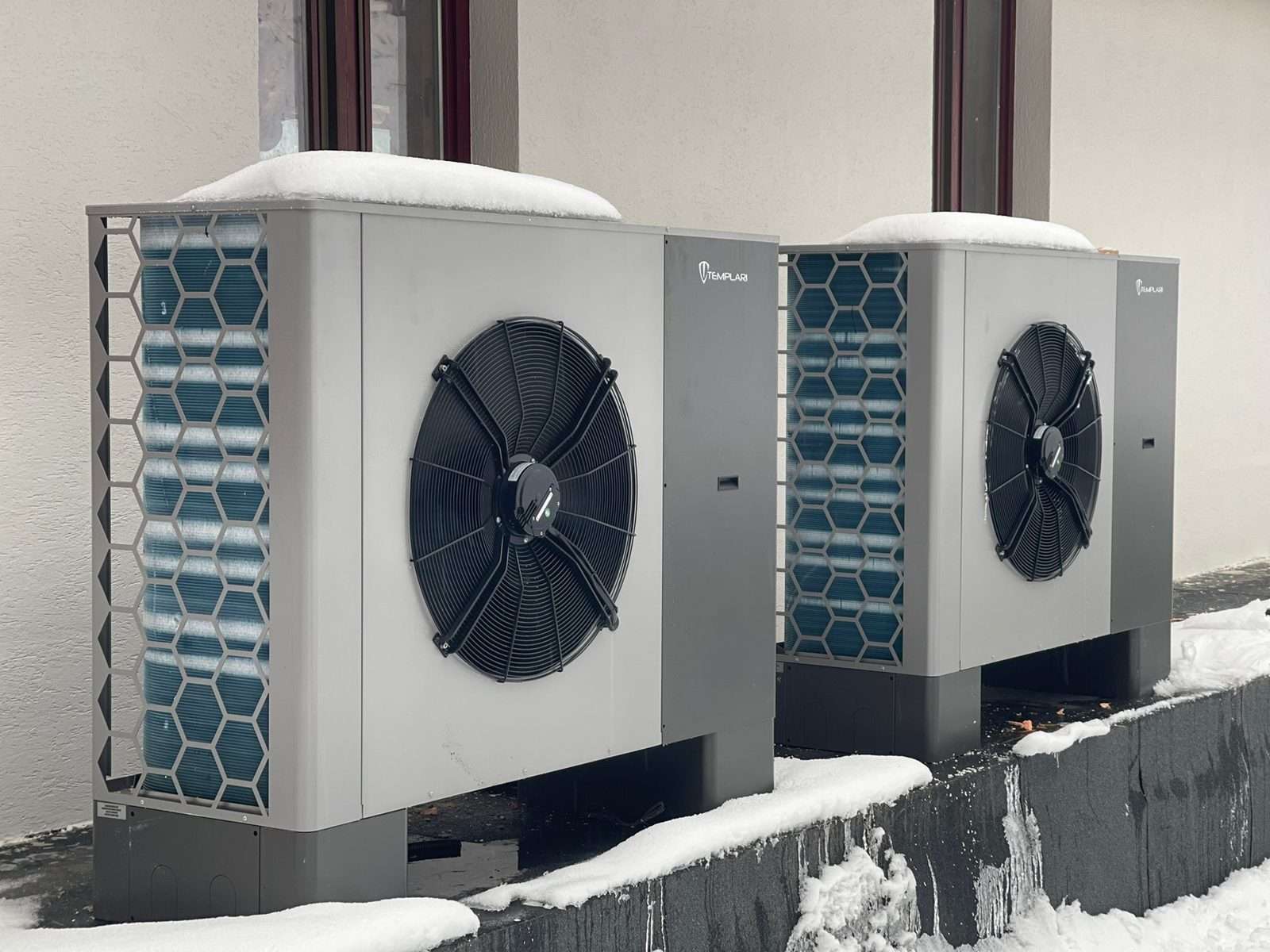
What is a monobloc heat pump
Monobloc means the machine is one single block. Inside the outdoor unit the refrigerant takes heat from the air, the compressor raises its temperature and a plate heat exchanger passes it to the water, all inside the same casing. What comes out is hot water, which goes to the underfloor heating, the radiators or the hot water cylinder, just like the water from a boiler. The refrigerant circuit is charged and tested in the factory and is never opened on site.
For the installer it means working as with a boiler: water pipes, valves, expansion vessel and electrical connection. We explain the refrigeration cycle step by step in the article how a heat pump works.
Why propane R290 goes in a monobloc
R290 is propane: a natural refrigerant with GWP 3. It is not a fluorinated gas, so it has no periodic F-Gas checks. It is, however, flammable, class A3. In a monobloc the whole charge stays in the outdoor unit, in the open air, and no refrigerant enters the house; installation follows the safety rules of EN 378.
That is why all our air-to-water units are R290 monoblocs. We describe what is inside a propane heat pump in the article R290 heat pump: how it is built.
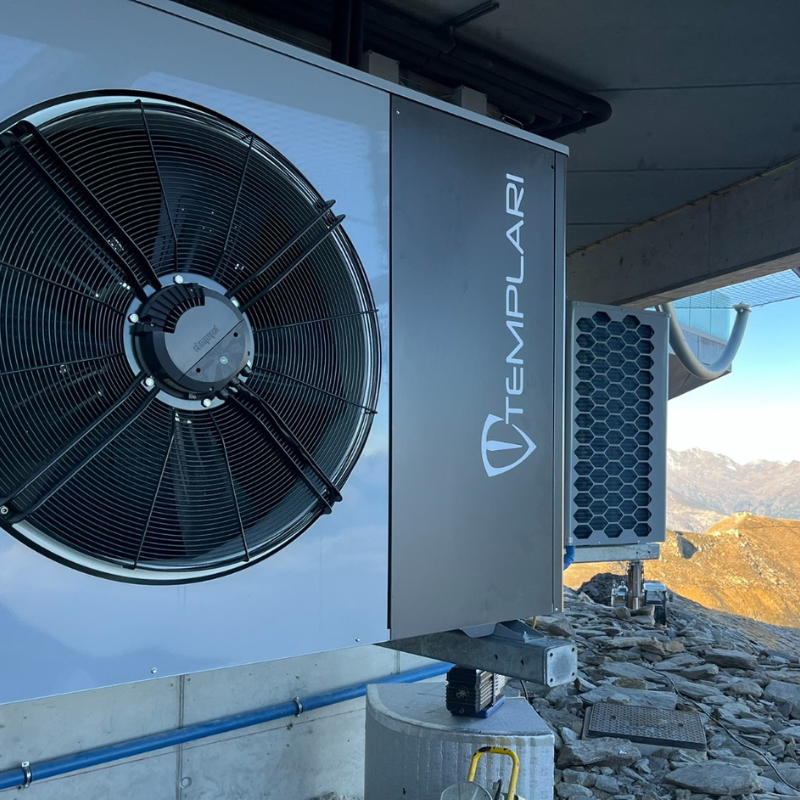
Outdoor or indoor monobloc heat pump
Anyone looking for a monobloc will also find indoor models: the machine sits inside the house, in a plant room, and draws and returns outdoor air through two ducts in the wall. There is nothing in the garden or on the facade, but you need space, two large holes in the wall and a room where the noise of compressor and fan will not bother anyone. Our monoblocs are all outdoor units: only the hydraulic part stays inside.
The weak point: water pipes in winter
In a monobloc the heating water leaves the house and runs to the outdoor unit. If the machine stops during a frost, for example during a power cut, that water can freeze in the pipes or in the exchanger. So the outdoor run must be short and insulated, and the installer adds protection: anti-freeze valves that drain the water below a set temperature, or glycol in the circuit.
Where it goes: space and noise
A monobloc stands outdoors on a base, with free space in front of the fan and behind the coil so the air can circulate. Where you put it matters: away from bedroom windows and not in a closed corner where cold air lingers. Sizes, weights and noise of our monoblocs:
| Model | Output | Sound pressure at 1 m | Dimensions (H x W x D) | Weight |
|---|---|---|---|---|
| Kita XS | 7.5 / 9 kW | 50.5 dB(A) | 1000 x 1000 x 435 mm (low version) 1205 x 1000 x 435 mm (high version) |
155 / 160 kg |
| Kita SP | 8 / 10 / 12 kW | 46.8 dB(A) | 908 x 1406 x 550 mm | 180 kg |
| Kita MP | 14 – 20 kW | 47.2-47.3 dB(A) | 1012 x 1591 x 546 mm | 220 kg |
| Kita LP | 22 – 35 kW | 48.4-53.3 dB(A) | 1257 x 1791 x 641 mm | 280 kg |
| Kita LP Plus | 35 / 40 kW | 50.3 dB(A) | 1414 x 2018 x 956 mm | 320 kg |
Noise values are sound pressure at 1 metre, as given on the product pages.
Installation and cost: what changes with a monobloc
Connecting a monobloc is a job for a plumber and an electrician: water pipes, valves, expansion vessel, hot water cylinder, power cable. The refrigerant circuit arrives sealed and tested from the factory, so on site there is no refrigeration engineer, no evacuation and no gas charging. With propane there is not even the F-Gas logbook with periodic leak checks.
The final cost depends on the heating system in the house: underfloor heating or radiators, hot water cylinder, buffer tank.
Which output: 8, 12 or 20 kW
The next question is the output, and the answer is not in the floor area. As a rough guide, a 150 m² house built to class A needs 4-6 kW on the coldest day; the same house built before 1990 and never insulated needs 12-18 kW. A home usually needs up to 20 kW, up to 30 if it is large and old.
The real figure is calculated from the heat losses of the building, according to EN 12831: we explain how in the article on heat pump sizing. Our monoblocs deliver water up to 70 °C, so they also work with radiators: read heat pump with radiators.
Templari monobloc heat pumps
All Templari air-to-water heat pumps are propane R290 monoblocs, energy class A+++, with domestic hot water up to 70 °C without a backup boiler. Kita SP, MP, LP and LP Plus work with outdoor temperatures below -20 °C.
- Kita XS 7.5 and 9 kW: houses and flats, also with the Armadio Tecnico Mono cabinet;
- Kita SP 8, 10 and 12 kW: detached houses;
- Kita MP 14 to 20 kW: large houses and small offices;
- Kita LP 22 to 35 kW, and the Kita LP Plus at 35 and 40 kW: apartment blocks, commercial buildings, large and old houses.
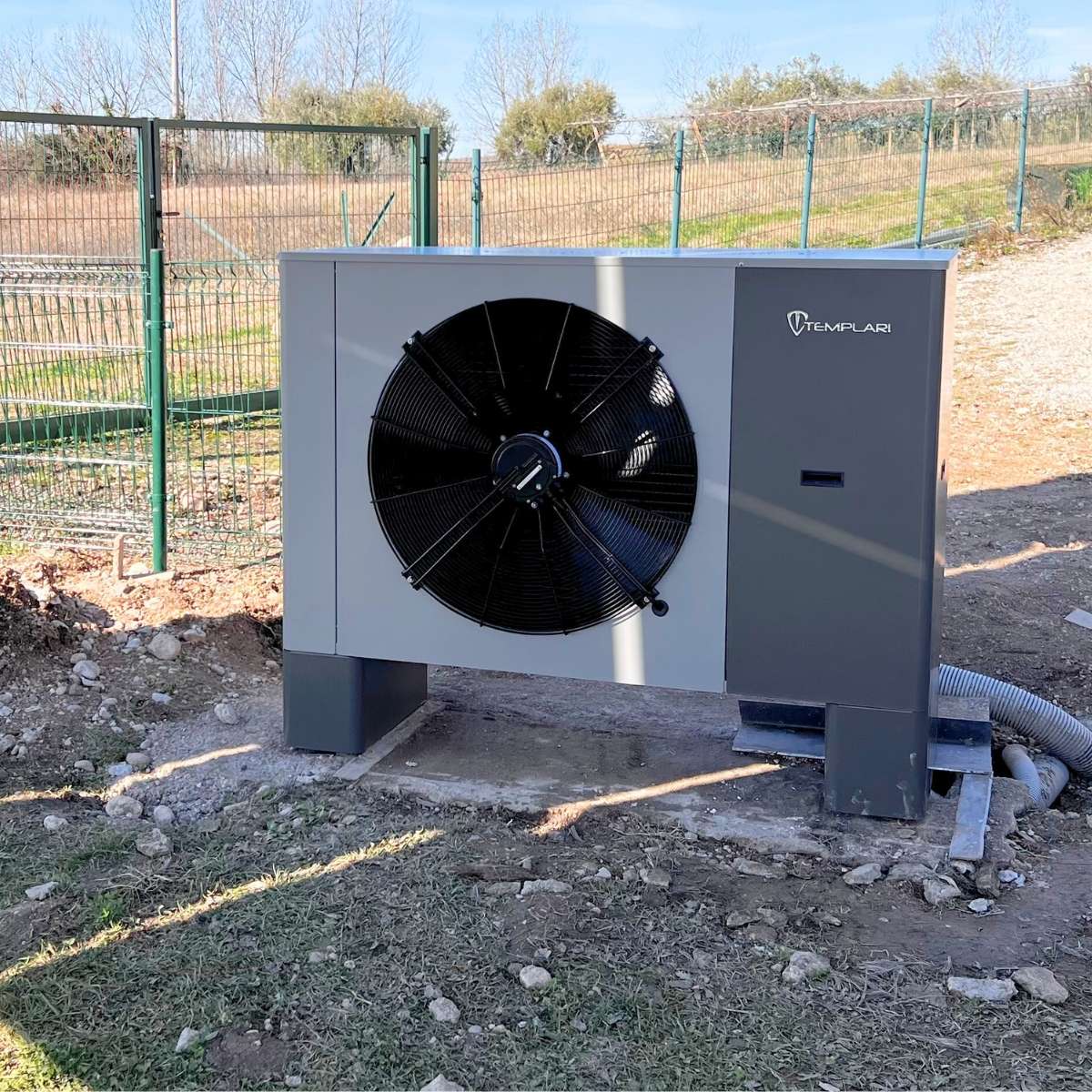
See the whole air-to-water range
Frequently asked questions
What is a monobloc heat pump?
It is a heat pump with the whole refrigerant circuit in a single outdoor unit, sealed in the factory: only the heating water pipes and the power cable go into the house.
Is there an indoor monobloc heat pump?
Yes: the machine sits inside and draws outdoor air through two ducts in the wall. It needs space and a room where the noise does not disturb. Templari monoblocs are all outdoor units.
What happens to the water pipes in a frost?
If the machine stops, the water in the outdoor section can freeze. It is protected with short, insulated pipes and with anti-freeze valves or glycol, as the installer specifies.
Are Templari heat pumps monobloc?
Yes. All Templari air-to-water heat pumps are propane R290 monoblocs, from 7.5 to 40 kW.
Do you need a refrigeration engineer to install a monobloc heat pump?
No: the refrigerant circuit is sealed at the factory. A plumber for the water and an electrician for the power are enough.
What maintenance does a monobloc heat pump need?
The same as any water-based heating system, plus cleaning the outdoor coil. With propane there are no F-Gas checks. Everything else is in our article on maintenance.
Read also
- How does a heat pump work: heat is not produced, it is moved
- Heat pump sizing: an inverter heat pump is sized to run at half capacity
- R290 heat pump: what is inside a propane air-to-water unit
- Heat pumps and radiators: does it work? Yes, and better with propane
- How much electricity does a heat pump use: per day, per year and by size, with the data sheet figures
- Heat pump and solar panels: how much the roof really covers, month by month, and how to make them work together
- Heat pump installation: where to put it, what you need and how it is done, step by step


