

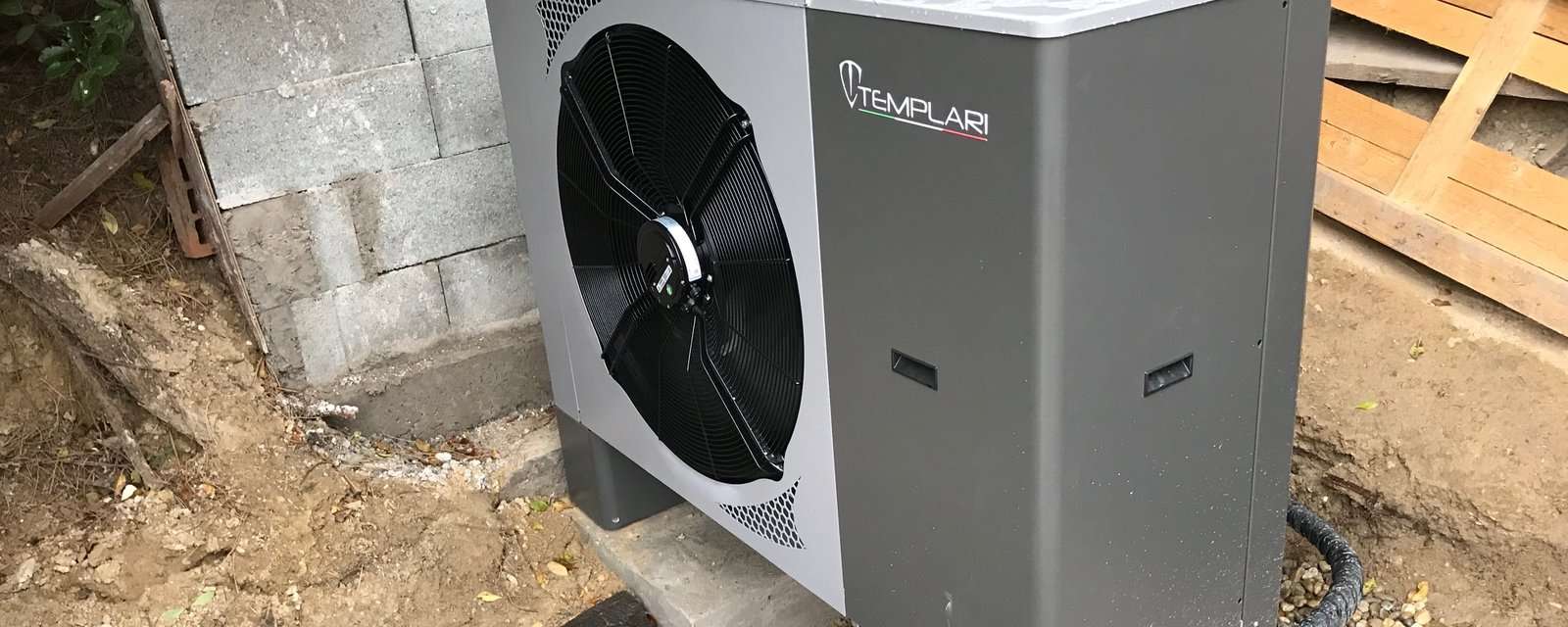
Heat pump sizing: an inverter heat pump is sized to run at half capacity
First tip: the space between the fins. Second: when the unit decides to defrost. The third thing to ask before you buy is how big the heat pump is compared with the building. It sounds like the simplest question, and it is the one where most mistakes are made, because an inverter heat pump is not chosen the way a boiler is.
01
Maximum output is decided on the coldest day of the area
Every location has an outdoor design temperature: the lowest temperature considered when the system is calculated. In Italy a standard sets it province by province: in Alpine areas it reaches -15 degrees, in the plains it is around -5, in the south and on the coasts it goes towards +2. Every area has its own figure, and the heating engineer knows it. The European heat pump standard reasons the same way with three climates: cold, with Helsinki as reference, -22 degrees; average, Strasbourg, -10; warm, Athens, +2. At that temperature the unit must cover the whole demand of the building running at full output. Not before: a unit that is already at full output at zero degrees is too small for that area.
02
The rest of the winter it runs at half
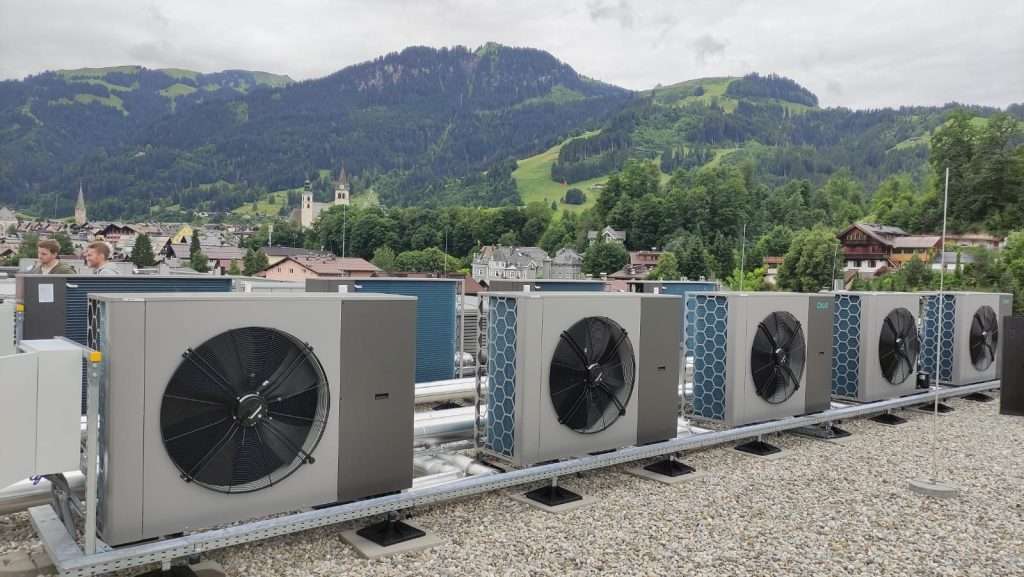
The design day comes a few days a year. Most winter hours, in the plains, sit between 2 and 10 degrees, often with sunshine: the building asks for half the heat, or less. An inverter heat pump does not switch on and off like a boiler: it reduces the compressor speed and follows the demand. Sized well, it spends most of the winter around half output, and in the mid seasons it drops to minimum without stopping. That is how continuous starts and stops are avoided.

03
The inverter: why the silicon carbide one performs better
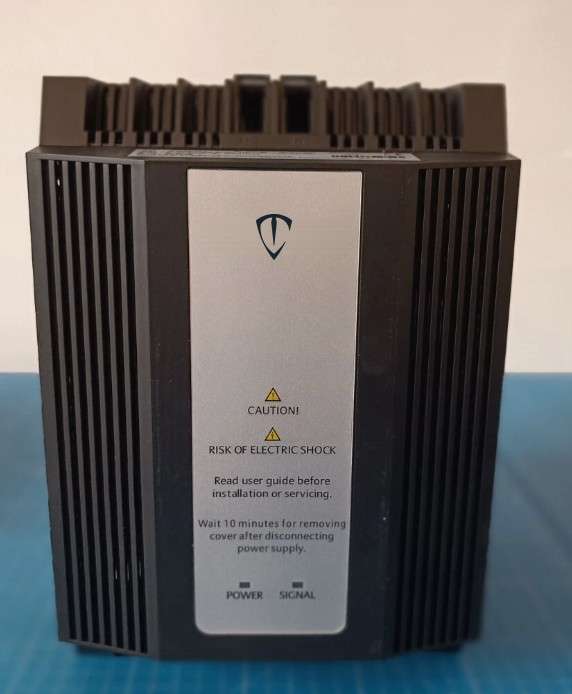
The inverter is the part that turns mains current into the variable-frequency current that runs the compressor at the right speed. It does so by switching power transistors on and off thousands of times a second. Every time a transistor switches, and every instant it conducts, part of the current becomes heat instead of reaching the motor. That heat is energy paid for and lost, and it also has to be carried away from the electronics, otherwise the components heat up and wear out.
For years the transistors in inverters were IGBTs, made of silicon. They are rugged and cheap, but they have two limits. When they conduct they have a fixed voltage threshold that is paid even at low current: precisely at half capacity, where the heat pump spends almost the whole winter, that threshold weighs proportionally more. And they switch slowly, so they heat up at every transition and cannot be run fast.
Silicon carbide (SiC) transistors have no fixed threshold: they behave like a very low resistance, and at low current they lose very little. And they switch in a fraction of the time, with a fraction of the heat. Less heat dissipation means three practical things. More energy to the compressor for the same kWh taken from the meter, so a higher COP, especially at part load. Electronics that run cooler, and an electronic component that runs cool lasts longer. And the possibility of switching faster, which gives the motor a cleaner current, with fewer losses and less noise in the compressor.
The little heat that remains, in our machines, does not need a fan of its own: the inverter's heatsink sits in the coil compartment, in the airflow of the machine's fan, which cools it while doing its normal job. No closed cabinet, no small fan that uses power and breaks down. On our residential machines the inverter is silicon carbide.
04
Half output is where it performs best
At half output the compressor turns slowly and the exchangers are large compared with the heat they have to move: the outdoor exchanger cools little, the indoor one warms little, the compressor works with the smallest possible temperature lift. That is the point of maximum efficiency. At full load efficiency drops, at minimum too. Here the first tip comes back: what in our units is twice as big as in an imported unit is the exchanger, not the compressor. The compressor is the right one for the load; the large exchanger lets it work with small temperature differences. In these conditions our units run with COPs typical of geothermal models, even though they take heat from the air.
05
Too small, too big
An undersized unit always runs at maximum: it uses more because it always sits at the worst efficiency point, it cools the outdoor coil more, so it makes more frost and more defrosts, and on cold days it does not reach temperature. An oversized unit does the opposite: it always runs at minimum and, when even the minimum is too much, it switches off and on continuously. Each start costs the compressor more than hours of steady running: the life of a compressor is counted in start and stop cycles, as for a car the kilometres count but so do the cold starts. The right size is one only: the one that runs at maximum on the design day of the area and at half for the rest of the winter.
06
It is a job for a heating engineer
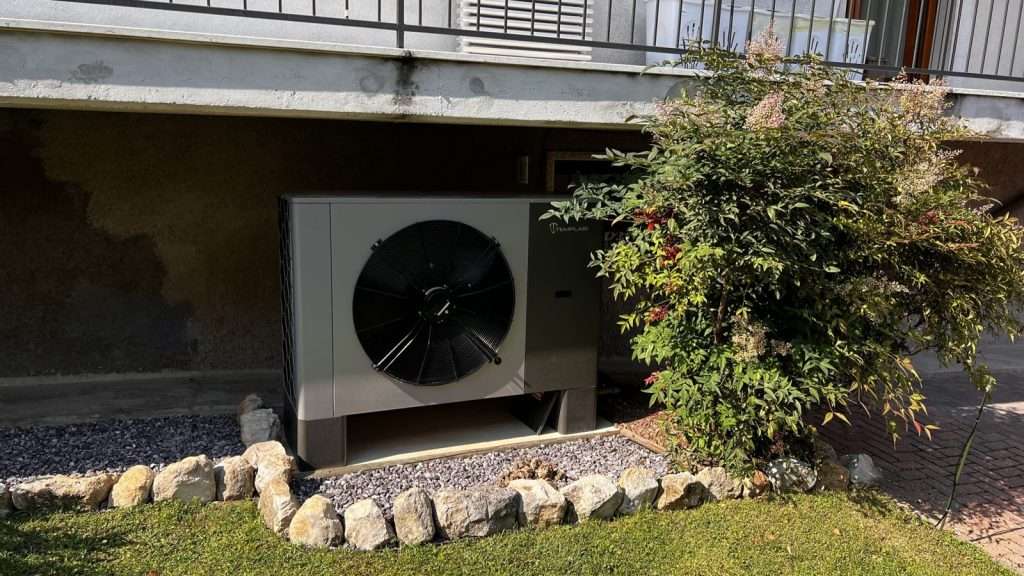
Sizing starts from the heat load of the building: losses through walls, roof and windows, air changes, design temperature of the location. For an industrial building the order of magnitude of the peak is reasoned in watts per cubic metre, not per square metre, because a seven-metre-high building holds three times the air of a house of the same footprint: from 10-15 W/m³ for a new or refurbished building with thick panels, to 18-25 for one built between 2000 and 2015, to 30-45 for a prefabricated building of the 80s and 90s with no insulation; a little more if the doors open often or there is no destratifier to push the warm air back down. That is only the first estimate: the unit is then chosen on its output tables at the design temperature. It is not done by eye, it is not done “one size up to be safe”, and the output of the boiler that was there before is not a reference. A heating engineer takes a few hours and takes responsibility for the calculation: it is the part of the system that costs least and decides the consumption of the next twenty years.
07
How to check, before you buy
- ask for the heat load calculation, with the design temperature of the location written on it;
- ask at what percentage of maximum output the unit will run at 7 degrees outdoors, the most frequent winter condition: the right answer is around half;
- ask the minimum output the unit can modulate down to without stopping.
The technical data sheets of our air-to-water heat pumps and of the Kita Air for industrial buildings give the output at the different outdoor temperatures.
08
Frequently asked questions
How is an inverter heat pump sized?
On the design outdoor temperature of the area: at that temperature it must cover the whole demand at full output, and for the rest of the winter run at around half capacity.
Why does an oversized heat pump use more energy?
It always runs at minimum and, when even the minimum is too much, it switches off and on all the time. Every start costs the compressor more than hours of steady running.
At what output does a heat pump run for most of the winter?
If sized correctly, at around half capacity: in lowland areas most winter hours are between 2 and 10 °C. At half output the heat exchangers are large compared with the heat to move, and that is where the machine performs best.
What changes with a silicon carbide inverter?
It loses less energy as heat, especially at part load: more energy reaches the compressor for the same kWh, the COP rises and the electronics run cooler and last longer. Our residential machines have a silicon carbide inverter.
See also: Heat pump controls: thermostats, underfloor cooling and fan coils under one system · Rated and useful capacity: how much a heat pump heats when it is cold · How much electricity does a heat pump use: per day, per year and by size, with the data sheet figures · Heat pump COP: what it is, how it is measured, and why it is not the same in the fog · Heat pump maintenance and servicing: what to do, how often, and how long a heat pump lasts · Heat pump in cold weather: down to what temperature does it work? Below freezing, at -20 and -25 °C · Heat pump installation: where to put it, what you need and how it is done, step by step · How long do heat pumps last: years of service, what wears out and what makes them last longer
Next tip: why a heat pump is not a boiler and has to run without stopping, and what HCC is: read it here.


