

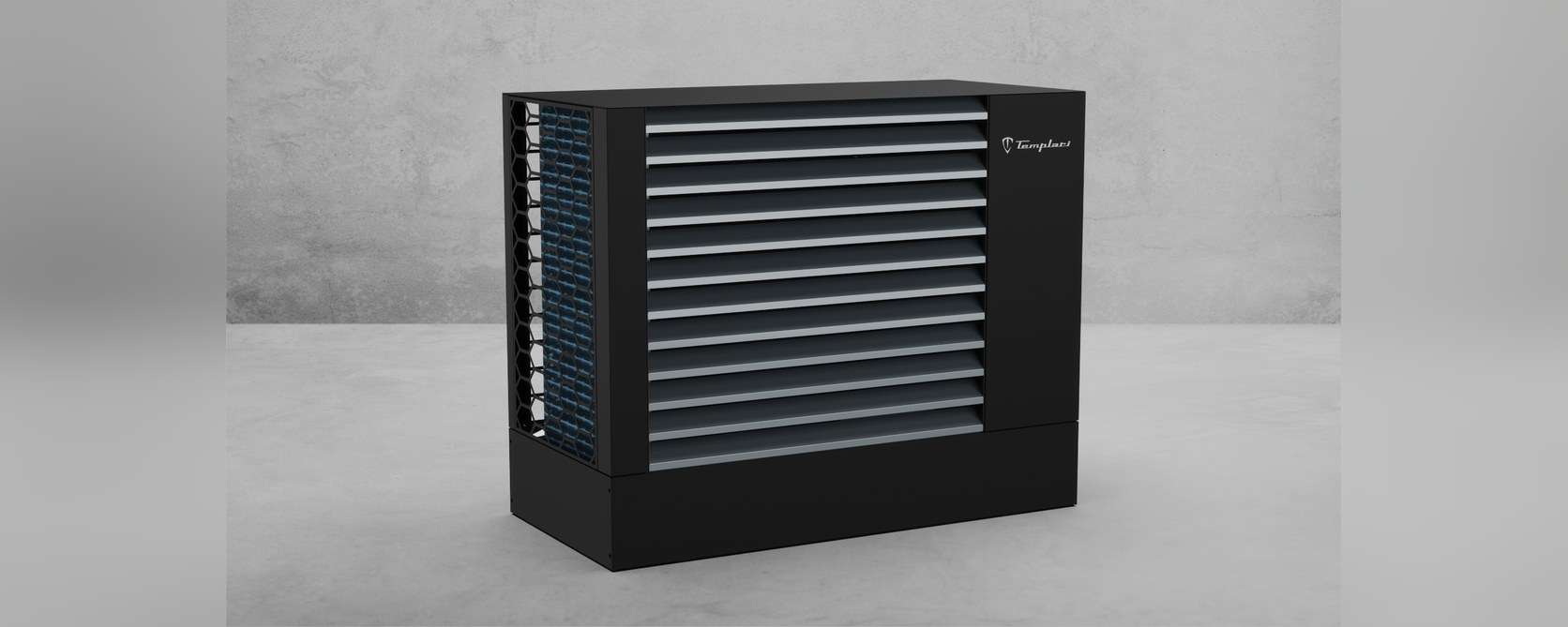
Heat pump noise: how many decibels, how far from the neighbours and why it is louder in winter
“Will I hear it at night? Will the neighbours?” It is the question that comes with almost every heat pump. In Germany “Wärmepumpe Lautstärke” is searched 1,600 times a month and the distance from the neighbours another 880, in France “bruit pompe à chaleur” 880, in the Netherlands 320. Here we explain how to read the decibels on a data sheet, how much noise reaches the neighbour’s window, what the limits are, why the unit is louder in winter and where to put it. With measurements of our new units.
01
Sound power and sound pressure: two different numbers
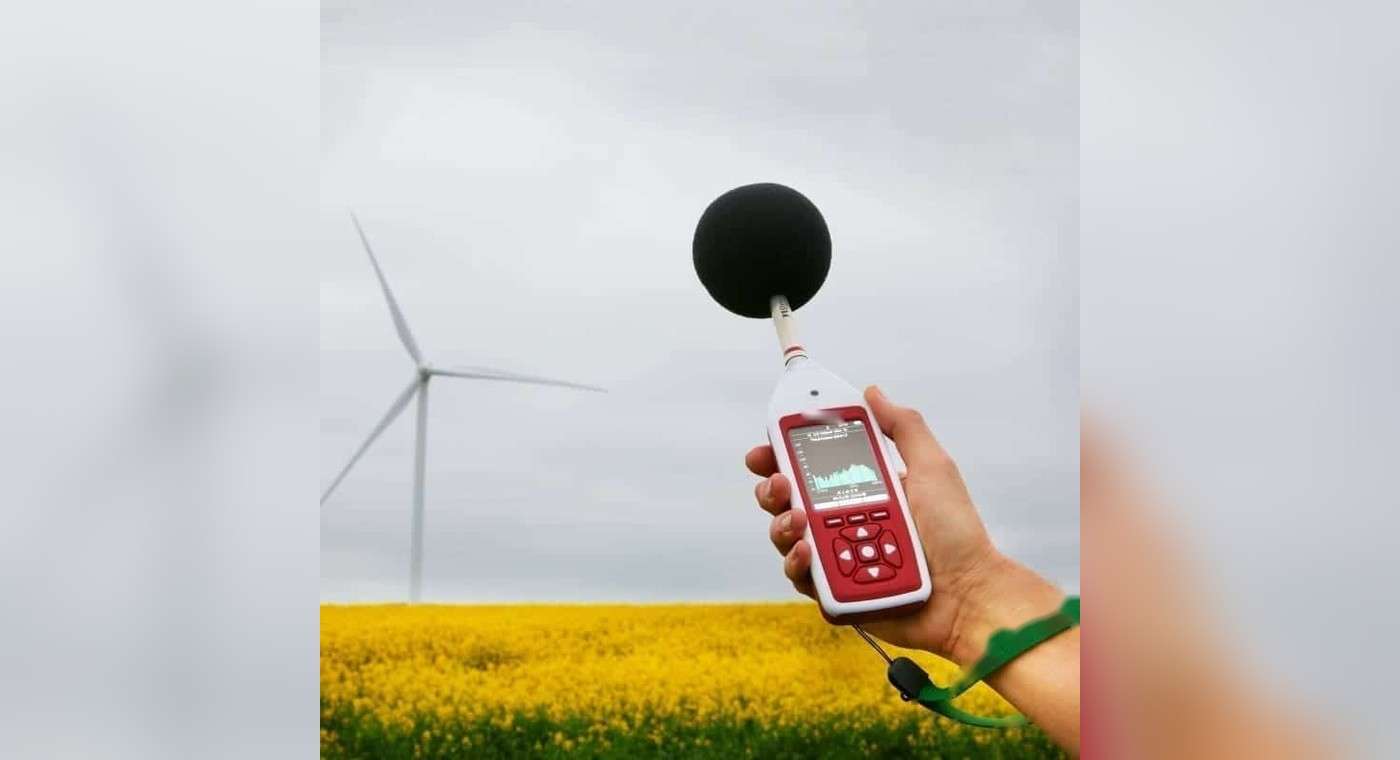
Data sheets give two different numbers, and mixing them up is the most common mistake. Sound power (LWA) is the total noise the unit emits: it does not depend on where you stand, and it is the number on the EU energy label. Sound pressure is what reaches your ear, and it depends on distance and on what is around. For a unit standing on the ground outdoors, at 1 metre the pressure is about 8 dB lower than the power, and each time the distance doubles another 6 dB are lost. The Kita X has a sound power of 53 dB(A): that is about 45 dB(A) at 1 metre, 39 at 2 metres, 33 at 4 metres and 27 at 8 metres. When you compare two units, compare power with power, or pressure with pressure at the same distance: a figure given at 5 or 10 metres only looks low because it is measured far away.
02
Walls and corners: noise bounces back
Where you put the unit matters as much as the unit. A house wall less than 3 metres away reflects the noise and raises it by 3 dB; a corner between two walls raises it by 6 dB, four times the sound energy. The German LAI guide, used in Germany for heat pumps in residential areas, turns this into metres: in a residential area, at night, a free-standing Kita X is fine at about 4.6 metres from the neighbour’s window; in front of a wall it needs 6.8; in a corner almost 10. These are cautious distances, calculated with a safety margin and a surcharge for tones.

03
How much noise is allowed
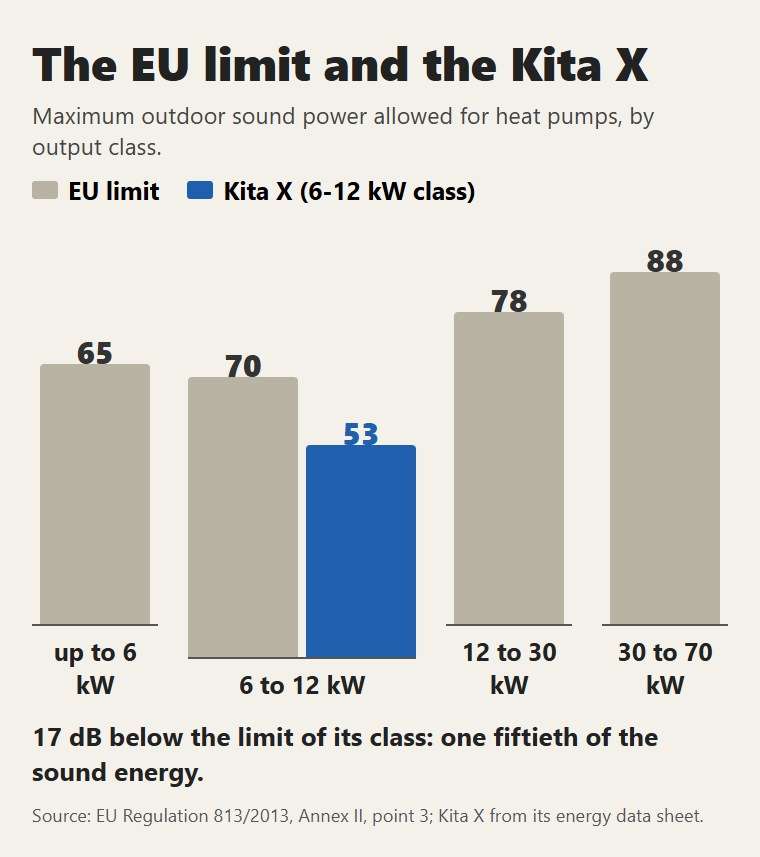
The rules look at three different points. The unit: EU Regulation 813/2013 sets the maximum outdoor sound power by output class, 65 dB(A) up to 6 kW, 70 up to 12 kW, 78 up to 30 kW and 88 up to 70 kW. The neighbour’s window: in Germany the TA Lärm allows at night, from 10 pm to 6 am, 35 dB(A) in purely residential areas, 40 in residential areas and 45 in mixed areas. Inside the neighbour’s home: in Italy the reference is the differential criterion of the Decree of 14 November 1997, which compares the noise with the unit on and off and allows 5 dB more by day and 3 at night; it does not apply if, with windows open, the noise stays below 50 dB(A) by day and 40 at night. Other countries have national and local rules, and it is worth asking the local council before choosing the spot.
04
Where the noise comes from
An air-to-water heat pump has three sources of noise. The fan, which moves air across the coil: it makes a rushing sound, and it is the largest part. The compressor: it makes a low hum that passes more easily through walls and glass; that is why the German guide adds 3 dB when a tone can be heard. And defrosting: in winter, a few times a day, you hear the valve click and see a puff of steam, and that is normal. In our test room we measured the new heat pump for homes, 14 kW size, at 1 metre on the loudest side: with only the fan at 40% it makes 45.1 dB(A), with the compressor at 50% it rises to 47.5. With the fan at 20% the meter cannot tell it apart from the background of the empty room, 36 dB(A).

05
Why it is louder in December and January
In the coldest months the heat pump is louder, and the reason is frost. With cold, damp air the coil gets covered with a layer of ice, air passes with difficulty, and the fan has to spin faster to move the same amount. On top of that the house asks for more heat and the compressor runs higher. Then the unit defrosts and starts again with a clean coil. More space between the fins means less frost and a slower fan: we cover it in the article on fin spacing, in the one on defrosting and in the one on heat pumps below freezing.
06
Our new units
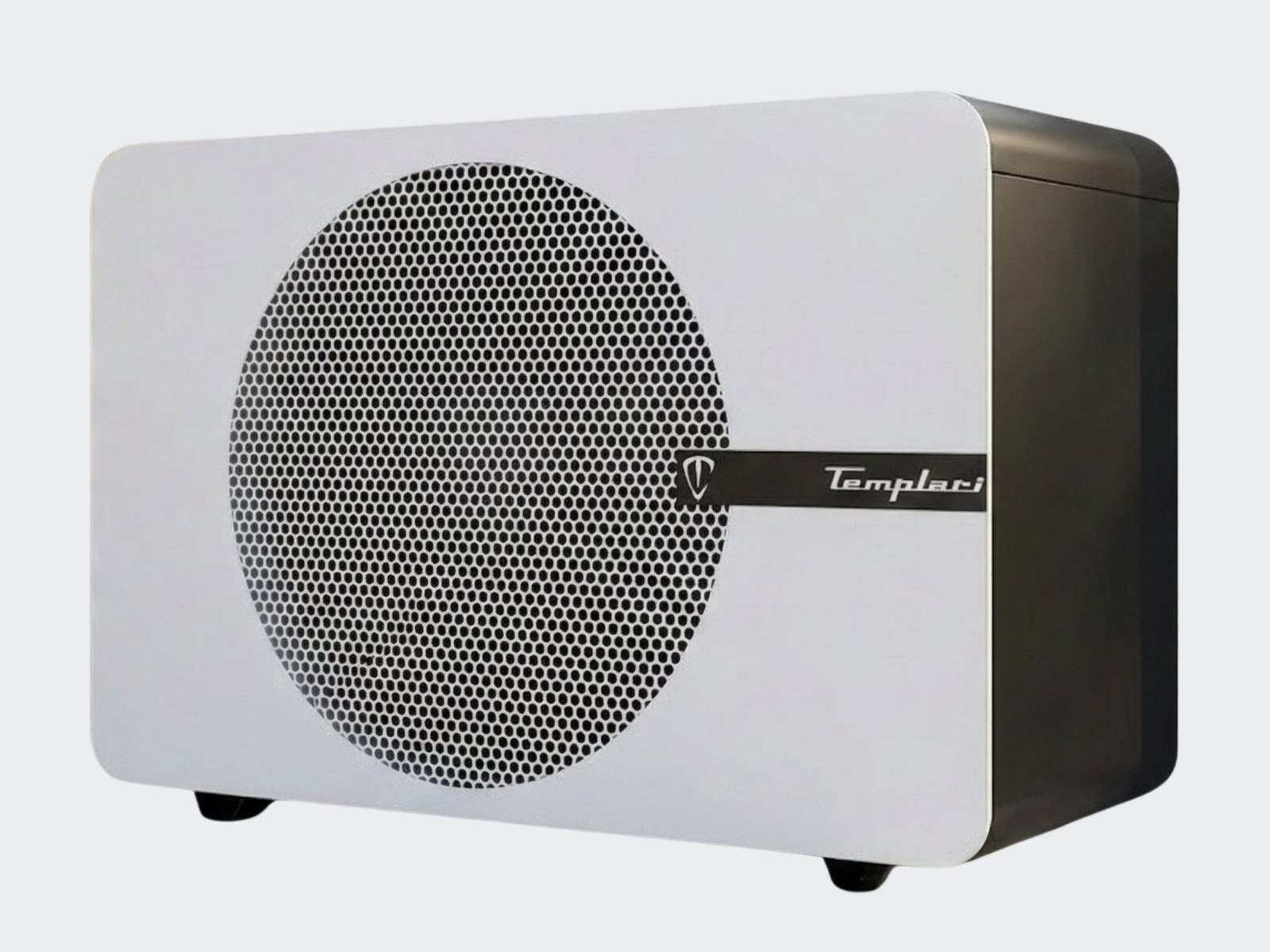
On the new models, the new heat pump for homes and the Kita Air Premium for industrial buildings, the compressor is enclosed in a sound-absorbing jacket that keeps the hum inside. The fan is inverter-driven: it does not jump between on and off, it spins only as fast as needed and, for much of the winter, when the house asks for little, it runs slowly. For flats and small houses there is the Kita X, running on propane, with a sound power of 53 dB(A); we present it in the article on hybrids.
07
Where to put it
A few rules, the same as in the German guide. Away from corners and recesses between two walls, and not under a low canopy. Not under bedroom windows, yours or the neighbours’. With the air outlet facing the garden, not the house next door. On a base separate from the house and on anti-vibration feet, with no screws or rigid pipes carrying vibration into the walls. Never on a balcony or a light structure, which acts as a sounding board. A noise barrier must be designed: if it blocks the air, the unit works worse and the fan spins harder.
08
Noise inside the house
With the unit outside, what you usually hear indoors is the circulation pump and the pipes. A steady hum often comes from a pump running too fast or from pipes fixed rigidly to the walls; a gurgle comes from air in the system, which is removed with the air vents. Flexible connectors go between the unit and the house pipes. What to check and how often is in the article on maintenance.
09
What to ask the installer
Five questions. What is the unit’s sound power, in dB(A), from the energy data sheet. How far from the neighbour’s window it will go, and whether in front of a wall or in a corner. Whether the compressor is insulated and whether the fan slows down when the house asks for little. What it will stand on and how the pipes are connected. And how it behaves in winter, with frost. If you want an opinion on where to put yours, ask us for information.
10
Frequently asked questions
How many decibels does a heat pump make?
It depends on the unit and the distance. The data sheet gives the sound power: the Kita X has 53 dB(A), which becomes about 33 dB(A) at 4 metres if the unit stands free. The EU limit for its class is 70 dB(A) sound power.
How far from the neighbours should a heat pump be?
The German LAI guide, for a residential area at night, gives about 4.6 metres from the neighbour’s window for a free-standing 53 dB(A) unit, 6.8 metres in front of a wall and almost 10 in a corner.
Why is a heat pump louder in winter?
Because the coil gets covered with frost: air passes with difficulty and the fan spins faster. On top of that the house asks for more heat and the compressor runs higher. After defrosting the unit is quieter again.
Can you hear a heat pump at night?
At night the background is lower and every noise is more noticeable. A unit with an inverter fan, which runs slowly when the house asks for little, placed away from bedrooms, is barely heard.
Can a heat pump go on a balcony?
We advise against it: a light structure acts as a sounding board and carries vibration into the house. Better a ground base separate from the house, on anti-vibration feet.
Where does a heat pump’s hum come from?
Usually from the compressor, which makes a low sound that passes through walls and glass. On our new units the compressor is enclosed in a sound-absorbing jacket; anti-vibration feet and flexible pipes also matter.
What are the legal noise limits?
EU Regulation 813/2013 sets the unit’s maximum sound power, 70 dB(A) between 6 and 12 kW. In Germany the TA Lärm allows 35-45 dB(A) at night at the neighbour’s window depending on the area. In Italy the differential criterion applies: 5 dB more by day and 3 at night inside the neighbour’s home.
See also: Heat pump installation: where to put it, what you need and how it is done, step by step
All the technical tips are on the series page.


